Tag Archives: China Travel

Revisiting Xi’an: Old Memories & New Experiences

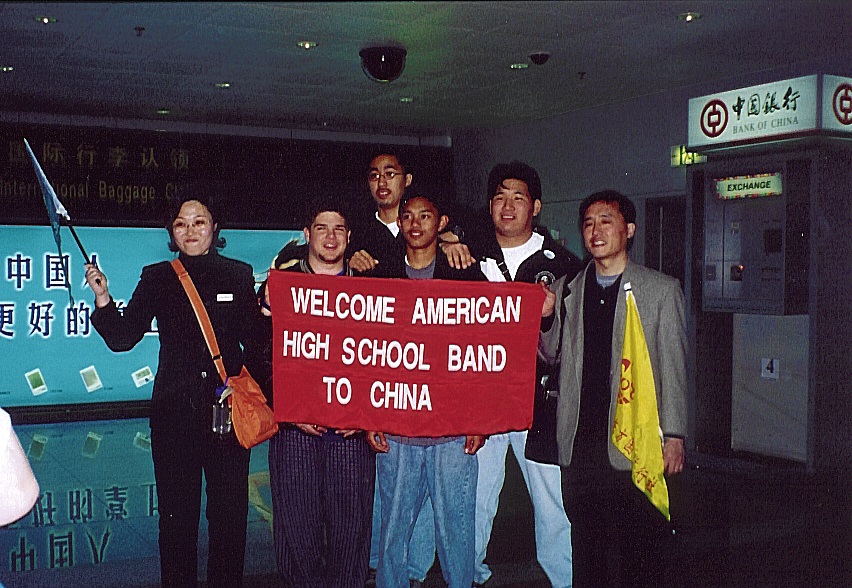
I first visited the city of Xi’an during my first trip to China, early in 2001, when I was still in my final year at North Monterey Country High School in Castroville, California. The high school band, of which I was a member, had achieved a small degree of fame through enthusiastic performances across the United States, and was invited to visit China by one of the local government entities. Thus began my first trip to China, which included trips to Shanghai, Beijing, Xi’an, and Shijiazhuang, and would lay the foundation my two-decade-long (so far!) relationship with China and its people.

Returning to Xi’an was more memorable than previous trips to Shanghai and Beijing, perhaps because of its distance from China’s eastern coast where I have made my home for more than 10 years. It might also be due to the fact that while Xi’an has also modernized just like other Chinese cities, its progress does not appear as visually obvious as it does in other cities, allowing me to more easily connect, both mentally and emotionally, with my very first experiences in China.

Take a video tour of the #Chinese city of #Xian, including sumptuous street food and the ancient city wall!

And so, earlier this year, I was very excited to return to my roots, as it were, and experience both the Xi’an I had known so long ago, as well as the new city that Xi’an had become. My trip, from January 02 – 06, was somewhat of a whirlwind, trying to fit in a number of things every single day. But overall, there were four main experiences, which I shared in a previous vlog and would like to share with you here, today. I visited a local university to discuss education in Xi’an, I sampled a wide variety of street foods that the city has to offer, I visited the ancient city wall, and, last by not least, I found out what it’s like to vacation at a Chinese-style hot spring resort.

For those of you more visually-minded, you can take a look at the video, linked below. However, I will also provide additional commentary on the trip for those of you who are interested in learning more, not just about the trip, but about my reflections on China. In any event, Xi’an is a very exciting city and I highly recommend visiting if you have the opportunity.

Education in Xi’an

As it turns out, while I had many reasons for returning to Xi’an, what started the process was a conversation with a good friend. My friend Rui had previously accepted a position as Deputy Dean at a university in Xi’an and was working with the local faculty to improve the international-focus of the education provided to Chinese students. I originally prepared a short video lecture in Chinese to share with the students months ago, and after its success, Rui invited me to visit Xi’an and talk with the faculty at his school, in addition to taking a tour of the city.

For those of you who may not know, internationalized education is a big deal in China. On one hand, in the past, it’s been very common for parents with the money and the means to send their children to study overseas in reputable universities, as overseas degrees were long-viewed as the path to good jobs and success (things are changing now, but that’s a story for another time). On the other hand, Chinese universities aim to provide their students with knowledge on international businesses and practices, not simply because of the global companies doing business in China, but because of the increasing number of Chinese companies expanding overseas.

However, providing this knowledge effectively can be a challenge at times, due to differences in China’s educational practices, cultural differences, and other factors. Thus, it is not uncommon for Chinese universities to employ professors from overseas universities, or as in my case, bring in experts from various backgrounds to consult. Which is how I ended up in a small classroom on a cold Xi’an winter morning, talking about my own experience studying for a business degree as well as working in global marketing and PR roles.

There was a lot of enthusiasm in the room, as there often is in China, as well as an interest in and a willingness to listen to what I had to say. I talked a lot with the teachers about curriculum design and the type of courses generally offered to Western business students. In China, language and cultural barriers can prevent progress early on, but once the Chinese can see and learn from successful examples they often pick things up rather quickly. Needless to say, I enjoyed this opportunity to interact with the faculty, learn more about their own challenges, and see how to help them overcome them.

Xi’an Street Food

With the real work out of the way, I was able to head over to a famous food street (only slightly touristy) called Yong Xing Fang to sample a number of local Xi’an dishes. Street food was once extremely popular and prevalent in China, and it’s a fond part of my earlier memories in China, such as when I was studying abroad in Chengdu, from 2004 to 2005. In those days, while street food indeed felt more authentic, it was also a good deal less hygienic, with the street food scene more often than not characterized by quaint roadside carts and messy, oily grills.

Things have changed in recent years, with actual roadside carts an uncommon sight in many big cities, as authorities have attempted to modernize and pursue policies aimed and greater health and wellness. But the Chinese, ever-innovative, almost always have a solution. While late-night kabob stands have vanished, they have been replaced by a number of actual restaurants, in some cases high-end ones, that cater to the street food-loving crowd. And, all in all, it’s a change for the better, as unregulated and dirty food carts are indeed not the best for our health.

However, that’s not to say that those of us in China don’t get a tad nostalgic about the good old days of freewheeling street food, and that’s one reason I particularly enjoyed the street food I had in Xi’an. The winding streets of Yong Xing Fang featured both stalls and small restaurants, and it really took me back to my study abroad days, as I sampled a number of treats including, lamb kabobs, steamed noodles, a soup with what tasted like wet cornbread (it was tasty), and other items as well.

If you haven’t watched my Xi’an vlog yet, I would highly recommend at least watching the food street section, as I feel it really portrays how exciting food can be in China, with all of the different sights, sounds, and tastes the dining experience can offer.

Xi’an City Wall

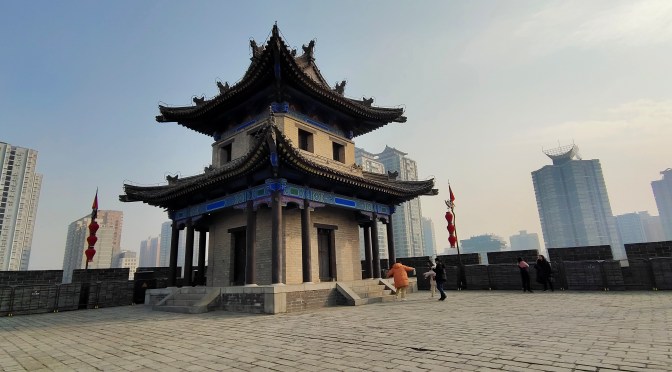
Next, I headed over to the city wall, which was a special place to me for several reasons. First, when I visited Xi’an in 2001, the city wall featured prominently. Not only were we able to walk along the city wall (it’s actually a tourist attraction), but my high-school band (a marching band, in fact) was able to perform on the wall in front of a live crowd, something I recall clearly to this day. Therefore, one of my first priorities was to walk the wall again, and experience the city – by walking the entire circumference of the wall I was able to view the city in all directions, and from a significant height, which really gives one an appreciation of the size of this amazing city. It also brought back fond memories from those early days – the excitement of experiencing China for the first time, when the country was still in the midst of its opening-up, and everything seemed both incredibly old and incredibly new, all at the same time.

Second, while China’s opening-up and modernization has brought many benefits, one of the downsides has been that much of China’s traditional architecture has been slowly vanishing. Older houses have slowly been torn down, including Beijing’s traditional Hutong alleys and courtyard homes. I, therefore, feel its a very unique experience to experience China’s traditional architecture firsthand, and have the opportunity to walk among (and on) the literal history of a country, and to experience the same sights that others have, hundreds, if not thousands of years before.

Lastly, it’s also a great spot for pictures.

Xi’an Hot Spring Resort

My final stop was at a five-star hot spring resort outside the city limits. I can’t say I’m an expert on what a hot spring resort is supposed to be like, as the only similar place I’ve been to was a garden-sized sauna in California, with only several hot and cold tubs, and for only a stretch of one-two hours. In contrast, a Chinese hot spring resort is the size of an entire park in an of itself. This is without counting all the other attached facilities, including the hotel, dining complex, and other recreational facilities, including a massage parlor (the PG variety, thank you very much).

Aside from the actual hot springs, the resort was very much in line with what I have experienced at resorts in China over the years – good rooms, so-so food (the good places are all off-site), etc. What was a nice surprise was the unexpected variety of hot springs – 20+ different pools scattered across a lush and vibrant landscape, each filled with a different herbal mixture, including milk and various types of Chinese traditional medicines.

The big surprise was how physically draining a trip to a Chinese hot spring resort could be. For this was a trip that lasted an entire day, and from what I gathered from other Chinese guests, the usual practice was to spend two-three hours soaking in both the morning and afternoon, interspersed with meals, rests, and massages. Needless to say, I was exhausted afterward, though in a mostly positive way. Afterward I finished the trip in the traditional Chinese fashion – with a good meal among friends.

So, that’s about it for my trip to Xi’an. I hope you enjoyed the video as well as my description of the trip. I also hope it inspired you to learn more about China, and hopefully visit Xi’an yourself one day. If you have any questions about Xi’an, feel free to let me know if the comments below.


If you’re interested in learning more about China, Chinese culture, and business in China, please feel free to subscribe to the China Culture Corner to have future posts sent directly to your inbox. You can also follow and interact with me on social media or send me a message on Twitter.
Join 788 other subscribers

8 Tips for Surviving the Holidays in China

As Christmas and the Chinese Spring Festival have already come and gone, I thought it might be a good time to address a topic that can easily frustrate foreigners living and working in China. Basically, what the heck are you supposed to do during the holidays?

This can be a complicated issue as different companies have different rules on vacation time and there are different cultural norms between Chinese and Western firms. It’s also often a long and expensive flight home, often requiring more than half a day in a stuffy, cramped, and bacteria-filled plane cabin.

However, no matter how stressful and uncomfortable making the trip home for the holidays can be, it’s still an important part of many of our lives. After all, what’s more important during the holidays than spending time with family? And with that in mind I’ve prepared a few pointers based on my own experience in the Middle Kingdom. Take a look and it may lead to easier and more relaxed holidays in the future!

When you CAN go home for the holidays:

The best situation possible, in my opinion, is when you have both the time and means to travel home for the holidays. However, for those living and working in China, there are several unique challenges to be aware of.

  1. Book plane tickets early: As in other countries, it is common for the price of plane tickets to begin increasing in the time leading up to major Chinese holidays, especially Chinese New Year and National Day. Sometimes during the last several weeks, prices can skyrocket to extraordinary levels. This is partly due to the extraordinarily large number of people on the move in China during this time of year. Therefore, in order to be able to pay a reasonable price, it’s important purchase a plane ticket early, at least 60-90 days in advance in my experience.
  2. Make sure you have a multi-entry visa: One very easy, yet extremely wasteful mistake to make is leaving the country only to return to discover you can’t get back in due to a single-entry visa. One reason this can occur is because many Chinese companies’ HR departments have yet to get their act together in terms of hiring foreign talent, and most staff members display an amazing lack of awareness of what needs to be done on the visa side of things. On the other hand, for those coming over on a tourist visa, it’s important to make sure you take charge to a certain extent and ensure you have the correct visa.
  3. Make sure you can get time off: This one is the kicker, and often overlooked by foreign talent in China. When working in China, it’s easy to forget that most Chinese companies don’t schedule time off for non-Chinese holidays. This can be compounded by the fact that many departments in Chinese companies are unlikely to employ more than one foreigner (if any). So not only is there no pre-scheduled time off for the holidays, but there may be no one available to cover your shift if you do want to go home. It’s therefore crucial to have an early and upfront conversation with your manager, otherwise it may be impossible to get time off in the future.

When you CAN’T go home for the holidays:

Unfortunately, not all of us can make it home for the holidays every year. Sometimes money is tight, and at other times it’s impossible to get away from work. However, this doesn’t mean you have to stay at home by yourself .

  1. Don’t spend the holidays alone: This is a very important point for visitors to China, as we all suffer from certain degrees of culture shock, which can get worse over the holidays. This is a time of year we are taught from birth is supposed to be spent among friends and family, and not doing so, especially while in an unfamiliar country and culture, can feel very draining. So do what you can to be around people if you find yourself in China over the holidays – go to a mixer, have dinner with coworkers, meet up with local friends for coffee – every little bit helps.
  2. Get a good meal: One nice thing about many larger Chinese cities that can make culture shock easier is not only growing expat populations, but also more and more foreign-owned restaurants. Many family-centered foreign holidays (e.g. Christmas and Thanksgiving) also have a big focus on food. And missing out on that can be a big disappointment if you’re staying in China over the holidays – I always think of my family’s signature stuffing over Thanksgiving! So do a little checking in advance, and see what restaurants are planning to serve holiday specials.
  3. Decorate a little: Sometimes it’s the simple things that can help you get by. No matter if you are putting up colorful turkeys for Thanksgiving, scary ghosts and goblins for Halloween, or a cheerful tree for Christmas, a little extra color can make a holiday alone feel that much easier to endure. And this is made very easy by the fact that many decorations are available on Chinese e-commerce sites – they’re just a few button taps away (Chinese translation assistance may be required).
  4. Don’t forget to call home: Another easy way to cope while feeling under the weather in China during the holidays is to just make a call home. In addition to cheaper than ever overseas calling plans offered by Chinese carriers, there are a number free online services, Skype chief among them. So when you’re feeling down, comfort is just a phone call away.
  5. Create your own China holiday tradition: After living in China for many years, I’ve found that not only have I adapted to the a new holiday schedule, but my family back home has as well. To date, I’ve never really had the time to make it home for Christmas. So instead of feeling bad during Decembers in China, I simply wait excitedly for a few more months to pass, until the Chinese Spring Festival rolls around. In practice, this Chinese holiday is my Christmas – it’s the key time during each year when I get to travel back to the USA to see my family. And that i what I’ve found is really important to me – not what specific date I’m back home, but being able to spend time with family at all.

Final Thoughts

In the end, there are multiple way to ensure you aren’t feeling down in the dumps over the holidays. This partly requires some pre-planning and early communication. It also needs a little extra effort to step out the front door and go do something. No matter where you are in China, there is always a way to cope and to get through the holidays largely happy and intact.

I also think this potentially difficult issue is something that must be faced squarely and openly – culture shock is a horrible feeling, and one that not only strikes unexpectedly, but also takes away from the wonderful experiences and memories China can provide. And while my own experience tells that culture shock does indeed fade over time, it never really truly leaves  completely. Or perhaps it’s better to say that a part of us will always remain in our beloved homelands, making our hearts ache whenever the holidays roll around.

Therefore, I hope the above tips can be of use to China travelers young and old, new and experienced, so we can all enjoy our time in China a little bit more. So happy holidays in advance – for next time!


Thanks for reading!

Do you have any comments or questions on staying in China over the holidays? What do you usually do when returning home for the holidays? Please feel free to post your thoughts in the comments section below.

Follow the China Culture Corner to receive regular updates by email!

It Began with a Band Trip: Snapshots of China’s Past and Present

The NMC Band traveled to China in 2001In 2001 when I was finishing up my final year of high school, my own China journey was about to begin, though I couldn’t know it at the time. Back then, I lived as an average American teenager: going to school, hanging out with friends, playing video games, and generally not paying much attention to the outside world.

But everything suddenly changed when my high school band, of which I was a member, was invited to travel to China and participate in a musical and cultural exchange. At that time, the band traveled with a group of around 200-300 people (students and chaperons), and visited four Chinese cities: Beijing, Shanghai, Xi’an and Shijiazhuang. A whole new world was opened to me, and while more of my interest in China developed when I studied abroad there several years later, my band trip to China was unquestionably the starting point.

At first I thought it would be interesting to share some of my experiences from that life-changing trip, and contrast them to China today, but then I had another idea. My trip to China in 2001 was unique in that not only did I get to go, but my entire family did as well (my brother as a band member and my parents as chaperons). Therefore, in order to provide some interesting insights on China then vs. now, I sat down and talked with my parents, Richard McLaughlin and Diana Upton. In the following interview, they share their impressions of China in 2001, and then discuss how they differ with their more recent experiences touring southern China, with me, in October of 2015.

I hope their experiences in both 2001 and 2015 will serve as an interesting lens for you, the reader, to learn more about China, its people and the rapid pace at which the country has developed.

The First Visit (2001): A Band Trip to China

China Culture Corner: What was your first reaction when you arrived in China?

Richard: Anticipation and excitement.

Diana: First, after flying for perhaps 14 hours we arrived in Beijing and had to go through customs when we were really tired. That whole process was very confusing. I think I was interested and curious about what we would see, and perhaps a bit anxious since we did not speak Chinese. I think the anticipation was made more exciting since we were traveling with friends who had children in the band. We felt proud that our children’s’ school had been chosen to represent the US in a cultural music exchange.

China Culture Corner: What preconceptions did you have before trip?

Richard: A  closed, very controlled society with limited freedom.

Diana: I think I still held the view that the Chinese were very controlled by the government. Even though it was more than 10 years after Tiananmen Square, that picture was still very much in my mind.

China Culture Corner: What did it feel like being in China the first time?

Beijing's Tiananmen Square
Taking a turn around Tiananmen Square.

Richard: Our movement was controlled to a high degree and it took several days before we were able to go out on our own.

Diana: I was exhausted when we arrived in Beijing after our long flight. One thing I remembered about our first few days was a lovely garden we toured in Shanghai; as a gardener, I love to see gardens and learn about plants. We then we came across a Starbucks. That familiar association brought me pleasure and a sense of the familiar which always helps one to feel comfortable. One disadvantage of the trip was that we were traveling with over 200 people, and it constrained what we could do. Of course since we were with a tour group, the itinerary was very set and determined by the band’s musical performances. We soon found that we had a tour guide that remained with us throughout the trip, Jason, and this was very comforting. He was very personable and explained a lot of history to us as well as giving us helpful tips about traveling in China.

Another thing that was very moving was the massive scale of the city spaces. In particular, I was fascinated by the size of Tiananmen Square. Another community space that impressed me was Xi’an’s city wall. The idea of a wall that surrounded the city was intriguing to me. Our relatively short history in the US has always been based on the freedom of movement and security of laws, so the idea of a city needing fortification was foreign to me. In addition, the sense of history could be felt and that was awe-inspiring.

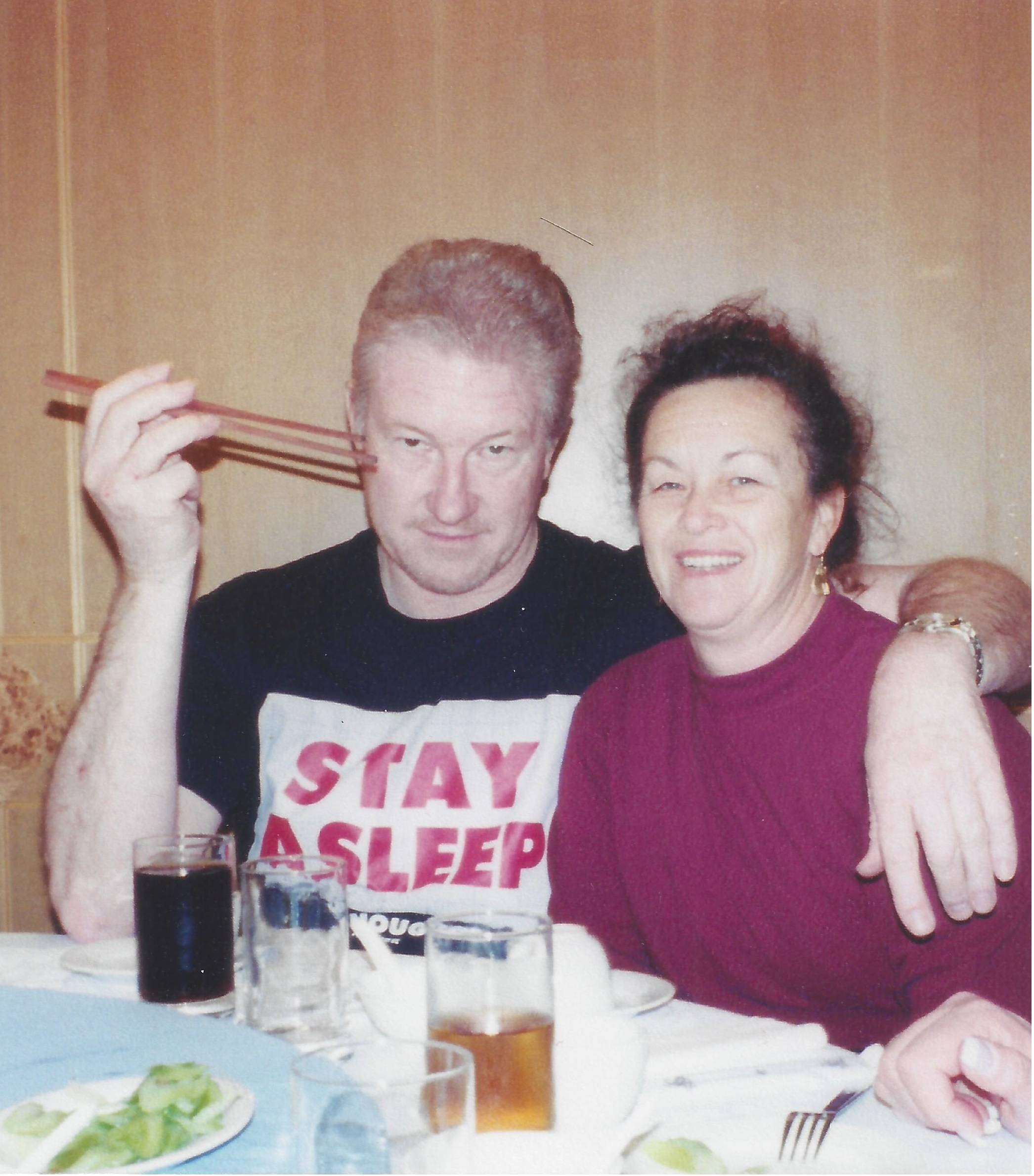
Enjoing a meal in China
“Yes, we know how to use chopsticks.”

Another difference that was amazing to me was all the construction going on. I remember traveling on the bus through one city in particular, Shanghai I believe, and seeing bamboo being used as scaffolding everywhere. Again, I was amazed – I was worried that it would all collapse.  I do not remember ever seeing so much construction happening at once in the US.

China Culture Corner: What cultural differences stood out?

Richard: Everyone was spitting. People would make insulting remarks within your hearing and did not care if you heard or not. Traffic was heavy and not managed well.

Diana: I felt, in general, that the people did not seem friendly. Often, we found streets to be dirty. In the large cities traffic was unsafe and felt crazy – that was a surprise. I enjoyed the variety of cultural performances that we saw. I remember a Chinese acrobatic performance that we saw that was very impressive. I seem to remember hearing some Chinese singing somewhere on the trip, and it was not melodic or pleasing to me…it was strange and I could not see how people would appreciate it.

China Culture Corner: What was it like conversing with regular Chinese people?

Richard: Generally pleasant, though we needed the help of an interpreter as few people spoke English.

Diana: I did not feel that we got to converse with regular Chinese. This was a disadvantage of traveling in a large group. Aside from our tour guide, I felt that our encounters with the Chinese were either the street vendors who practically accosted us, and the staff of the Friendship Stores who had the impression that all Americans are rich.

China Culture Corner: What did you enjoy most about your trip?

Musical exchange with Chinese highschool students
Meeting with Chinese students.

Richard: A trip through a back alley in Beijing which looked like a 1930s movie set; the Terracotta warriors; the walled city of Xi’an.

Diana: I enjoyed the musical exchanges and seeing our kids perform. Aside from that, what I remember enjoying most was Tiananmen Square, the Great Wall, Xi’an’s city wall, and the Terracotta Warriors. I loved these for the sense of history that they conveyed. As I said before, the US is a relatively young country and so experiencing a culture that is so old gives one a very different way to think about the world.

China Culture Corner: Can you describe an interesting experience?

Richard: Once, we left our hotel in one city and saw dozens of people stealing power by tapping into the 440 Volt three phase line which was hanging almost at eye level because of all the lines attached to it. No one seemed concerned about this.

Diana: As we drove from Beijing to another city, the freeway was cleared for us – it was totally empty. That was a mystery. Also, our experiences in the Friendship Stores were also interesting; the Chinese seemed to have the idea that Americans were rich.

China Culture Corner: What was the hardest part about adapting to China at the time?

Old bike in China
“Maybe I’ll go for a ride…”

Richard: Having a rigidly controlled itinerary, including only being able to shop at Friendship Stores.

Diana: I think the hardest thing was the pressure when shopping that I HAD to buy stuff. I am someone who takes time when shopping and chooses carefully. The idea that I was supposed to buy, buy, buy was uncomfortable for me.

China Culture Corner: How did your perception of china change during the trip?

Richard: There seemed to be more freedom than I expected, especially the number of small entrepreneurs that existed.

Diana: I don’t think my perception of China changed, but I would say I was intrigued to learn more. This is a benefit of travel. In fact, the trip, as well as my son studying China, led me to read extensively about China. In enjoyed reading Red Dust, Foreign Babes in Beijing, Three Swans, Mongolia, and Last Days of Old Beijing, among others.

The Second Visit (2015): Touring Southern China

China Culture Corner: During your most recent trip, what differences did you notice compared to 2001?

Richard: There were many more taxi cabs, much better driving, and the cities were much more crowded. There were no fat people at all, and there were many Western businesses, such as KFC, Pizza Hut, 7-11, as well as shopping malls.

Diana: Well, the obvious one is that we were traveling with three of us rather than more than 200. I don’t remember this when we traveled in 2001, but there were so many people with babies or young children on the backs of motorcycles or Vespas. I could not get over how casual they were about this. We have a lot of laws in the US that govern behavior and safety practices. Driving on motorcycles with young children would be unheard of here.

China Culture Corner: How did your experiences differ?

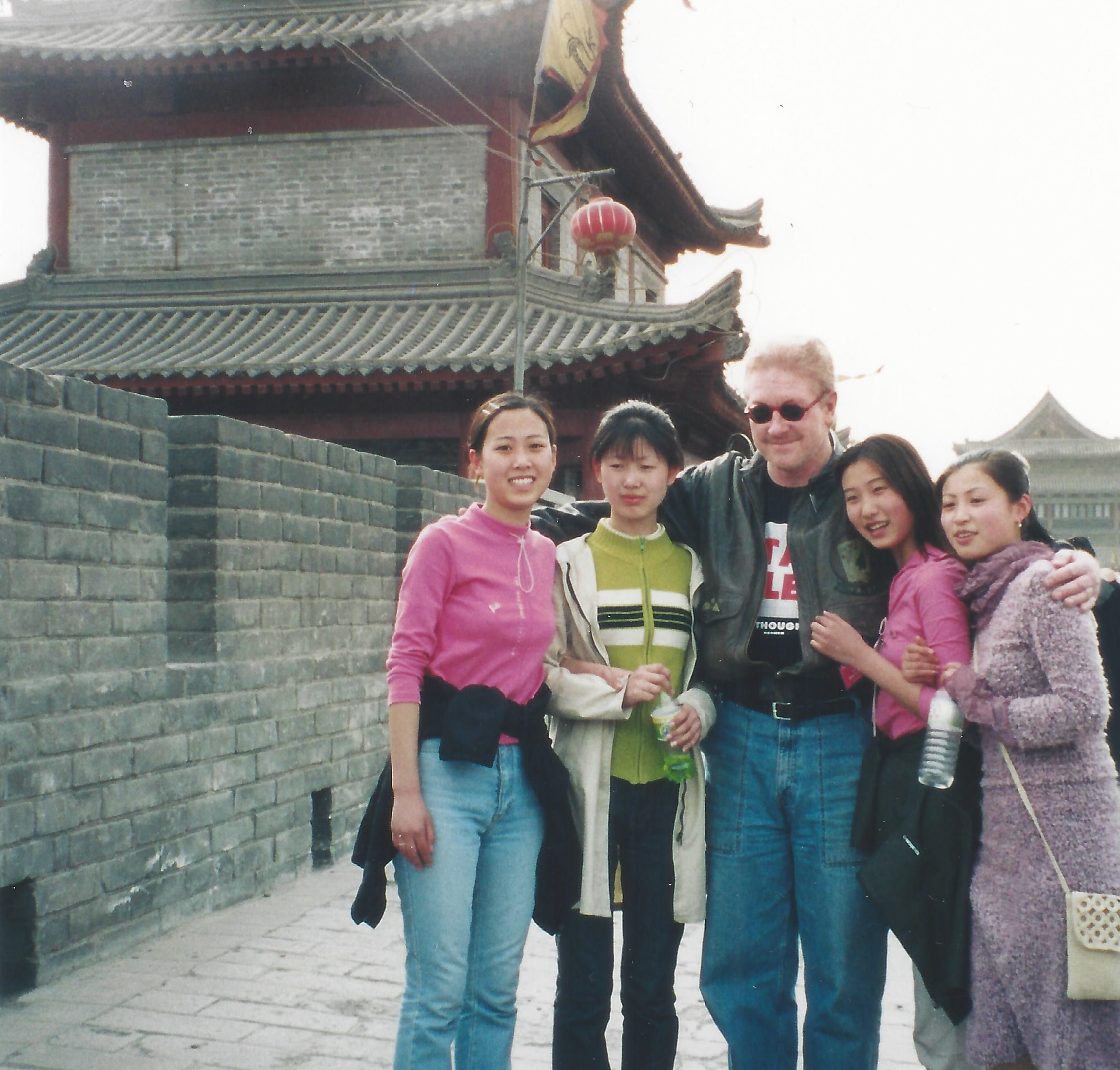
Making friends on Xi'an's city wall
Making friends in Xi’an.

Richard: We were not controlled and had freedom of movement. We also got to interact with regular Chinese citizens. However, the climate on this trip, in contrast to Beijing and the other cities we visited in 2001, was quite hot, humid and very uncomfortable.

Diana: I think that having freedom of movement allowed us to see more of the nitty-gritty of the cities we visited.

China Culture Corner: What experiences did you most enjoy with regard to Chinese people, cultural and society?

Richard: I enjoyed interacting with the tour group, how friendly they were, the freedom of movement, riding the bullet train to Guilin, and not drowning in the Li River [Editor’s note: Richard was worried about the seaworthiness of the tour boats].

Diana: Although most people spoke Chinese, I found them to be very friendly for the most part. When we traveled for several days with a small tour group, the Chinese were very deferential to us, perhaps because we were older or American, which was very sweet. One of my favorite experiences on this trip was talking with the two Chinese women who did speak English. They were very nice, and we thoroughly enjoyed talking with them.

China Culture Corner: How has your impression of China changed in the last fifteen years? How much has your time in China influenced these perceptions?

Richard: I’ve really been impressed by the sheer industriousness of the Chinese people and the apparent freedom of movement in day-to-day life without evidence of police control.

Diana: I think most of my impressions have come from the media, though I try to choose what I read carefully and keep an open mind. As I stated earlier, travel is a great way to broaden the way we think about the world. Because we have just been there for two short trips and seen different parts of China on each trip, I don’t think I can speak of my impressions changing. Instead I am getting a better and better picture of the country and the people each time I visit. But it would take a long time and many trips to get a full picture of the people and the culture.

China Culture Corner: What would you tell other Americans about the “real China?”

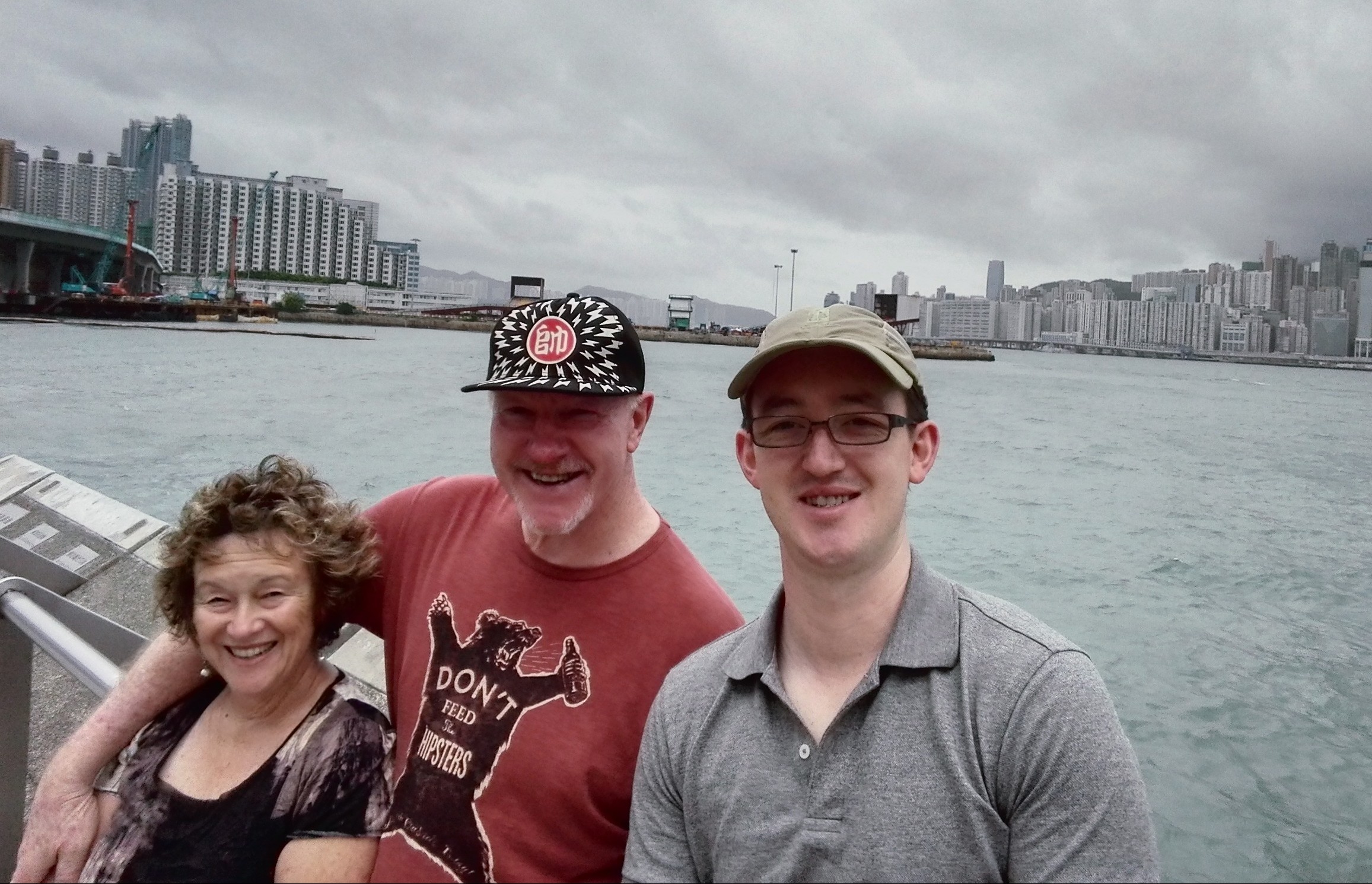
Hong Kong's Victoria Harbour
Enjoying the Hong Kong waterfront in 2015.

Richard: The Chinese are very hard-working, they are willing to sacrifice and save to a degree not seen in the US. They work harder than Americans, the save more, they are more active – everyone was walking. They impressed me as very hardworking, serious and hungry for the things Americans take for granted.

Diana: Well, I still feel I have so much to learn about “the real China”. After two weeks there, my curiosity was piqued and I wanted to stay and learn more. I certainly want to go back to visit, though not when the temperature is 30 degrees Celsius.

China Culture Corner: Do you think it’s worthwhile to study Chinese and learn about China?

Richard: I don’t think it’s worthwhile to learn Chinese unless you’re going to work or live there. It’s difficult and there is no place to practice the language skills. Learning about china on the other hand is important because they are a major geo-political competitor and our economies are closely intertwined.

Diana: I agree. China is a civilization thousands of years old that we can learn from, and having a knowledge and understanding of their culture, as part of the human experience, enriches ourselves.

Thanks for reading!

Do you have any questions or comments about traveling in China and learning about the Chinese people? Would you like to know more about the two China trips mentioned in this interview? Please feel free to post your thoughts in the comments section below.

Follow the China Culture Corner to receive regular updates by email!