Category Archives: LIFE IN CHINA

Revisiting Xi’an: Old Memories & New Experiences

I first visited the city of Xi’an during my first trip to China, early in 2001, when I was still in my final year at North Monterey Country High School in Castroville, California. The high school band, of which I was a member, had achieved a small degree of fame through enthusiastic performances across the United States, and was invited to visit China by one of the local government entities. Thus began my first trip to China, which included trips to Shanghai, Beijing, Xi’an, and Shijiazhuang, and would lay the foundation my two-decade-long (so far!) relationship with China and its people.

Returning to Xi’an was more memorable than previous trips to Shanghai and Beijing, perhaps because of its distance from China’s eastern coast where I have made my home for more than 10 years. It might also be due to the fact that while Xi’an has also modernized just like other Chinese cities, its progress does not appear as visually obvious as it does in other cities, allowing me to more easily connect, both mentally and emotionally, with my very first experiences in China.

Take a video tour of the #Chinese city of #Xian, including sumptuous street food and the ancient city wall!

And so, earlier this year, I was very excited to return to my roots, as it were, and experience both the Xi’an I had known so long ago, as well as the new city that Xi’an had become. My trip, from January 02 – 06, was somewhat of a whirlwind, trying to fit in a number of things every single day. But overall, there were four main experiences, which I shared in a previous vlog and would like to share with you here, today. I visited a local university to discuss education in Xi’an, I sampled a wide variety of street foods that the city has to offer, I visited the ancient city wall, and, last by not least, I found out what it’s like to vacation at a Chinese-style hot spring resort.

For those of you more visually-minded, you can take a look at the video, linked below. However, I will also provide additional commentary on the trip for those of you who are interested in learning more, not just about the trip, but about my reflections on China. In any event, Xi’an is a very exciting city and I highly recommend visiting if you have the opportunity.

Education in Xi’an

As it turns out, while I had many reasons for returning to Xi’an, what started the process was a conversation with a good friend. My friend Rui had previously accepted a position as Deputy Dean at a university in Xi’an and was working with the local faculty to improve the international-focus of the education provided to Chinese students. I originally prepared a short video lecture in Chinese to share with the students months ago, and after its success, Rui invited me to visit Xi’an and talk with the faculty at his school, in addition to taking a tour of the city.

For those of you who may not know, internationalized education is a big deal in China. On one hand, in the past, it’s been very common for parents with the money and the means to send their children to study overseas in reputable universities, as overseas degrees were long-viewed as the path to good jobs and success (things are changing now, but that’s a story for another time). On the other hand, Chinese universities aim to provide their students with knowledge on international businesses and practices, not simply because of the global companies doing business in China, but because of the increasing number of Chinese companies expanding overseas.

However, providing this knowledge effectively can be a challenge at times, due to differences in China’s educational practices, cultural differences, and other factors. Thus, it is not uncommon for Chinese universities to employ professors from overseas universities, or as in my case, bring in experts from various backgrounds to consult. Which is how I ended up in a small classroom on a cold Xi’an winter morning, talking about my own experience studying for a business degree as well as working in global marketing and PR roles.

There was a lot of enthusiasm in the room, as there often is in China, as well as an interest in and a willingness to listen to what I had to say. I talked a lot with the teachers about curriculum design and the type of courses generally offered to Western business students. In China, language and cultural barriers can prevent progress early on, but once the Chinese can see and learn from successful examples they often pick things up rather quickly. Needless to say, I enjoyed this opportunity to interact with the faculty, learn more about their own challenges, and see how to help them overcome them.

Xi’an Street Food

With the real work out of the way, I was able to head over to a famous food street (only slightly touristy) called Yong Xing Fang to sample a number of local Xi’an dishes. Street food was once extremely popular and prevalent in China, and it’s a fond part of my earlier memories in China, such as when I was studying abroad in Chengdu, from 2004 to 2005. In those days, while street food indeed felt more authentic, it was also a good deal less hygienic, with the street food scene more often than not characterized by quaint roadside carts and messy, oily grills.

Things have changed in recent years, with actual roadside carts an uncommon sight in many big cities, as authorities have attempted to modernize and pursue policies aimed and greater health and wellness. But the Chinese, ever-innovative, almost always have a solution. While late-night kabob stands have vanished, they have been replaced by a number of actual restaurants, in some cases high-end ones, that cater to the street food-loving crowd. And, all in all, it’s a change for the better, as unregulated and dirty food carts are indeed not the best for our health.

However, that’s not to say that those of us in China don’t get a tad nostalgic about the good old days of freewheeling street food, and that’s one reason I particularly enjoyed the street food I had in Xi’an. The winding streets of Yong Xing Fang featured both stalls and small restaurants, and it really took me back to my study abroad days, as I sampled a number of treats including, lamb kabobs, steamed noodles, a soup with what tasted like wet cornbread (it was tasty), and other items as well.

If you haven’t watched my Xi’an vlog yet, I would highly recommend at least watching the food street section, as I feel it really portrays how exciting food can be in China, with all of the different sights, sounds, and tastes the dining experience can offer.

Xi’an City Wall

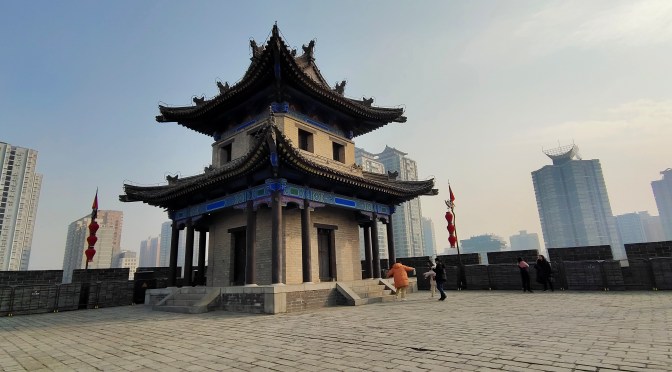
Next, I headed over to the city wall, which was a special place to me for several reasons. First, when I visited Xi’an in 2001, the city wall featured prominently. Not only were we able to walk along the city wall (it’s actually a tourist attraction), but my high-school band (a marching band, in fact) was able to perform on the wall in front of a live crowd, something I recall clearly to this day. Therefore, one of my first priorities was to walk the wall again, and experience the city – by walking the entire circumference of the wall I was able to view the city in all directions, and from a significant height, which really gives one an appreciation of the size of this amazing city. It also brought back fond memories from those early days – the excitement of experiencing China for the first time, when the country was still in the midst of its opening-up, and everything seemed both incredibly old and incredibly new, all at the same time.

Second, while China’s opening-up and modernization has brought many benefits, one of the downsides has been that much of China’s traditional architecture has been slowly vanishing. Older houses have slowly been torn down, including Beijing’s traditional Hutong alleys and courtyard homes. I, therefore, feel its a very unique experience to experience China’s traditional architecture firsthand, and have the opportunity to walk among (and on) the literal history of a country, and to experience the same sights that others have, hundreds, if not thousands of years before.

Lastly, it’s also a great spot for pictures.

Xi’an Hot Spring Resort

My final stop was at a five-star hot spring resort outside the city limits. I can’t say I’m an expert on what a hot spring resort is supposed to be like, as the only similar place I’ve been to was a garden-sized sauna in California, with only several hot and cold tubs, and for only a stretch of one-two hours. In contrast, a Chinese hot spring resort is the size of an entire park in an of itself. This is without counting all the other attached facilities, including the hotel, dining complex, and other recreational facilities, including a massage parlor (the PG variety, thank you very much).

Aside from the actual hot springs, the resort was very much in line with what I have experienced at resorts in China over the years – good rooms, so-so food (the good places are all off-site), etc. What was a nice surprise was the unexpected variety of hot springs – 20+ different pools scattered across a lush and vibrant landscape, each filled with a different herbal mixture, including milk and various types of Chinese traditional medicines.

The big surprise was how physically draining a trip to a Chinese hot spring resort could be. For this was a trip that lasted an entire day, and from what I gathered from other Chinese guests, the usual practice was to spend two-three hours soaking in both the morning and afternoon, interspersed with meals, rests, and massages. Needless to say, I was exhausted afterward, though in a mostly positive way. Afterward I finished the trip in the traditional Chinese fashion – with a good meal among friends.

So, that’s about it for my trip to Xi’an. I hope you enjoyed the video as well as my description of the trip. I also hope it inspired you to learn more about China, and hopefully visit Xi’an yourself one day. If you have any questions about Xi’an, feel free to let me know if the comments below.


If you’re interested in learning more about China, Chinese culture, and business in China, please feel free to subscribe to the China Culture Corner to have future posts sent directly to your inbox. You can also follow and interact with me on social media or send me a message on Twitter.

Join 788 other subscribers

All About Xiaomi: Smart Homes and Cool Tech

Chinese culture and society have long been one of my interests, and it’s been fascinating to observe how the country has developed over the past 20 plus years. I’ve also been working in the Chinese high-tech sector for several years, and it’s been extremely enlightening to be on the ground in China, and watch how continued technological innovations have impacted the Chinese people and their society.

When it comes to the important technologies that Chinese companies are working on right now, we can see a number of industries that Westerners may have assumed were being solely led by their own countries. But things like solar power, artificial intelligence, electric cars, and phones have all seen impressive developments from Chinese firms. Which leads me to the subject of today’s post, a Chinese company called Xiaomi, which has been making exciting advances in the smart home and Internet of Things spaces.

I previously started using Xiaomi products a few years ago following a recommendation by a friend. Since then, I have become both a fan of their affordable products as well as their connected ecosystem, which in my experience far surpasses in scope that of their closest overseas competitors. In the below video I share the founding story of Xiaomi, the type of products they offer, and how they are doing more to bring their company to overseas markets.

I hope you’ll take the time to watch for a few minutes and learn about this exciting Chinese company and everything they are doing to further connect consumers’ lives.

Thanks for watching!

Do you have any additional questions about the Chinese tech industry or smart home products by Xiaomi? Have you ever used smart home technology or products before? How do you feel they might influence human society in the future? Please feel free to post your thoughts in the comments section. You can also send a send a message directly to the author on social media.

Follow the China Culture Corner to receive regular updates by email!

How to Successfully Take a Taxi in China

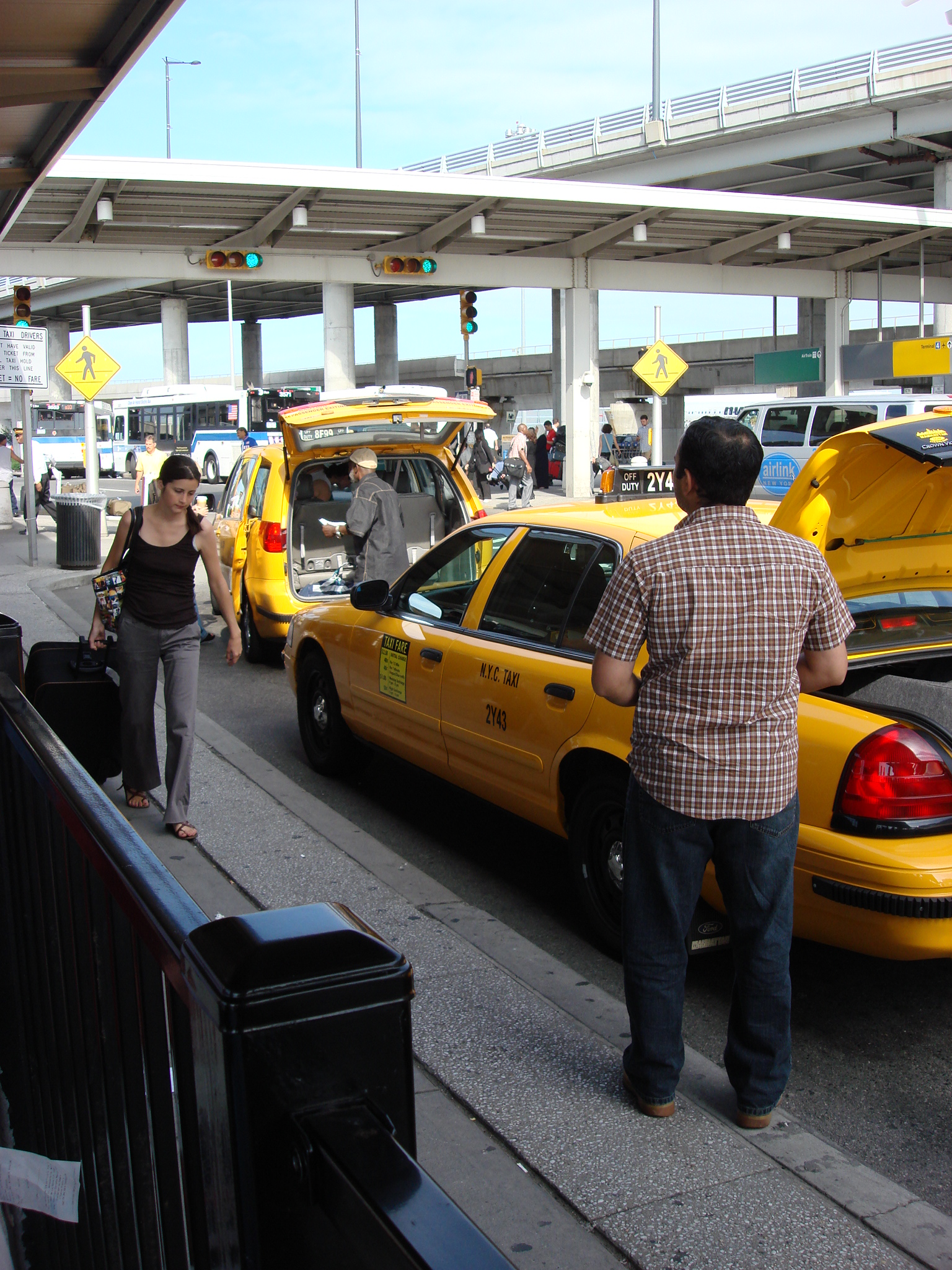
One thing that stands out about China is its massive size, not just the country but its many mega cities, such as Shanghai, Beijing, Guangzhou, and Shenzhen. Therefore, knowing how to get around quickly is important for getting by. Thankfully, there are many transportation options that foreign visitors can take advantage of, including subways, buses, bikes, taxis, not to mention walking (though it may take you a while).

You can also take a taxi, though in my experience this can be one of the more difficult ways to travel, as unlike other modes of transportation, directing a taxi to yourself, as well as your destination, requires a much greater degree of communication in Chinese. Therefore, based on my own experience with Chinese taxis, I’d like to share what I consider essential tips for foreign visitors in China, especially those that speak little of the local tongue. So take a few minutes to read through the below tips and before you know it you’ll be an expert at taking a taxi, Chinese style.

Hailing a taxi on your own

  1. Choose a good location: The first step to having a good “China taxi experience” starts with actually getting one. And for those not familiar with the often chaotic conditions of Chinese traffic, it may not always be clear where the best place is to find a taxi. Based on my own experiences some of the best places include intersections (corners), bus stops, and subway stations exits, and outside major shopping centers. It’s also useful to remember that some, but not all, higher-end hotels can help guests call a taxi, or even have a queue outside where guests (or anyone) can wait.
  2. Avoid the crowds: One thing many visitors to China are not prepared for is the sheer amount of people. It is not uncommon to see five to ten different people at a single location waiting for a ride, especially during peak hours and at busy locations. One way to improve your chances of grabbing a taxi is to shift locations. At popular locations that draw lots of taxis you can simply walk along the road in the direction cars are coming from to stake out a less competitive spot. Another option is trying a different intersection to try for better luck.
  3. Be proactive and visible: Another issue that defines life in China is many people competing for a scarce amount of resources. Therefore with taxis it’s first come first serve. Out on the dusty streets of urban China, few people care if you were there first, and there is no line to wait in. Therefore, if there is a free taxi coming (light on and no yellow placard indicating they were reserved by an app) you have to jump out and get it. Also, when waiting by the side of the road, it’s important to make yourself as visible as possible – so step out into the road a little (when safe) and wave your arms to get a driver’s attention.
  4. Have your address written down: There are never any guarantees that a driver will be able to speak English (almost never) or even understand any Chinese phrases you know. The safest bet is to always keep a list of addresses (or even just place names in Chinese) on your person at all times. If you are coming to China for a business trip or tour, make sure you prepare the Chinese names of your hotels and intended destinations.

Hailing a taxi with an app

  1. Download Didi Chuxing: The first step to using a ride-hailing app in China is of course to download the app. Didi Chuxing is the main ride-hailing app in China, and therefore the one you’ll want to use no matter what city you’re in. The nice thing about this app is that it comes with an English version, making it easy for visitors to China to start using, right off the bat.
  2. Know how to say your starting location in Chinese: A major issue that will prevent visitors to China (who don’t speak Chinese) from successfully using ride-hailing apps is the language barrier. Not only do most Chinese drivers not speak English, but there is an enormous reluctance to rely on customers’ GPS locations. As such most drivers, almost without exception, will immediately call a customer upon accepting a fare to ask where they are. So it doesn’t matter if you switch on a ride-hailing app’s English version, the driver will still call you and ask in Chinese for your destination. Therefore, the easiest way to resolve this issue is to learn the Chinese names of the places you often frequent, such as your home, office, and favorite hangouts.
  3. Have a Chinese friend help you out: An even easier way to use a ride-hailing app for non-Chinese speakers is to enlist the aid of a Chinese friend or coworker. And while it certainly is easier, it is not something I would recommend over the long term, simply because it prevents you from being able to get around Chinese cities, independently. However, if you’re ever in a rough spot and can’t describe a specific location, this technique can save you a lot of time.
  4. Wave and show your phone: Interestingly, many drivers will assume a foreigner cannot use a Chinese ride-hailing app, even if you’re not able to converse in Chinese over the phone. I’ve therefore found it useful to not only wave to get an incoming driver’s attention (after spotting their license plate) but to wave while clearly showing my phone. This makes it much easier for drivers to understand that you are their fare, and prevent them from continuing down the street and missing you.
  5. Enable phone payments: I personally recommend that anyone in China for a few months or more enable payments via their smartphones. This is usually fairly easy enough to manage providing you open a Chinese bank account. Once you have a Chinese bank card, you should be able to link that card directly to difference payment services, such as WeChat Pay or AliPay.

Additional Tips

  1. Know where different colored taxis can go: Some large Chinese cities restrict certain types of taxis to certain areas of the cities. For example, in Shenzhen all green-colored taxis are not allowed to enter the city center, while red and blue taxis have free run of the entire metropolis. This is important to be aware of, not just due to differences in price, but because a very small minority of drivers may try to take advantage of passengers by taking on fares they know they cannot complete, and simply dropping them at the boundaries of their no-go zones.
  2. Learn some Chinese: In the end, the more Chinese you can speak, even only simple sentences, the easier it will be for you to give more complicated directions to taxi drivers. So it’s worth putting in a little more time, if only to make your time in China more enjoyable. To start you off, I’ve listed some simple yet important phrases below that you can using when taking a taxi.
  3. Make use of hand gestures: Even if you don’t speak Chinese, there is a lot of communication that can be achieved via a liberal use of hand gestures, especially when combined with basic directions in Chinese. This can help you get to your destination quicker, especially when you are familiar with where you are going and the driver may not be.
  4. There is no tipping in China: While it may be second nature in some countries like the United States, tipping is basically unheard of in China. And while there are certainly no laws that prevent you from doing so, I would recommend disabusing yourself of the habit while in China. Basically, there is no sure way of knowing how someone will react. Some Chinese certainly will be happy to accept extra money, but many more will be embarrassed and refuse to accept your generosity.  Therefore, when in China, do as the Chinese do.
  5. Don’t be a jerk: By and large I have had pretty positive experiences with Chinese taxi drivers over the years, with only a small amount of bad apples. It’s useful to note that many of my bad experiences have been with drivers who themselves have clearly had bad experiences with foreign passengers (e.g. drinking and/or yelling). So please do all visitors to China a favor and treat your driver well (or at least don’t treat them badly). They are simply working to get by, and how you treat them could have a significant impact on the next foreign passenger they meet.

Useful Chinese phrases when taking a taxi

These Chinese phrases are by no means the only ones you could use when speaking to a Chinese driver, but they are the ones I use by far the most on an everyday basis. And if you’re not quite sure how to pronounce some of these Chinese words, you can check out my article on Chinese Pinyin for some in-depth tips.

  1. I don’t speak Chinese (wǒ bù huì shuō zhōng wén; 我不会说中文)
  2. I’m a foreigner (wǒ shì lǎo wài; 我是老外)
  3. Please look at the GPS/navigation system (qǐng kàn dǎo háng; 请看导航)
  4. Here (zhè lǐ; 这里)
  5. Turn right (yòu zhuǎn; 右转)
  6. Turn left (zuǒ zhuǎn; 左转)
  7.  Make a u-turn (diào tóu; 掉头)
  8. Stop on the right side of the road (kào yòu biān tíng; 靠右边停)
  9. Drive straight (zhí zǒu; 直走)
  10. Do you have spare change? (yǒu líng qián má; 有零钱吗)
  11. I want to pay with my phone (wǒ yào shǒu jī zhī fù; 我要手机支付)
  12. Thank you (xiè xiè; 谢谢)

In conclusion, taking a taxi in Chinese can be an unfamiliar and sometimes daunting experience, but if you follow the above tips you’ll have a much better chance, not just of reaching your destination, but of enjoying your trip. Happy trails!

Thanks for reading!

Do you have any additional questions about taking a taxi in China? Do you have any personal experiences you would like to share? Please feel free to post your thoughts in the comments section. You can also send a send a message directly to the author on social media.