




Editor’s note (2026):
This article was originally written in 2020. While the examples reflect that period, the leadership challenges around trust, speed, and cross-border alignment remain highly relevant. I’ve lightly updated it to reflect my current perspective.
Managing cross-border teams and projects can be difficult. Different languages and customs create daily challenges, and frustrations often appear where you least expect them. This kind of cultural friction is a natural part of adapting to any new environment, and with time and effort, things often improve.
However, terms like cultural friction are often relegated to purely personal experiences. The following article will discuss how culture influences organizational thinking and behavior, and how expatriate and foreign managers must adapt.
The management challenge becomes even more complex when working with large cultural gaps and being expected to balance HQ and local team needs while delivering business results.
Whether you are part of a team or leading a department or office, success depends on more than personal adjustment. It depends on how well you manage within a specific business culture, as well as how effectively an overseas HQ can provide support, where many norms and expectations are often left unspoken.
China is a country and market where these types of issues become unavoidable. Management is often more indirect, and context, relationships, and hierarchy play an important role in how work actually gets done.
Beyond internal dynamics, leaders must also understand local consumers, business partners, media, and government stakeholders. Many decisions leaders are expected to make are shaped by our prior experiences in our home markets, which form an internal map of what we believe works and what does not.
While these mental patterns are useful, they can also limit us and blind us to other possibilities when operating in new environments. But they can also be limiting. This can slowly undermine local trust and decision-making and, over time, lead to business failure.
This is where traditional cross-cultural thinking runs into setbacks. The Chinese market is not simply a culture; it is a complex system of doing business. It is also constantly changing with the breakneck development of a country, which is fragmented by region along different cultural and industrial lines.
What is Dual-Culture Management?
With this in mind, I want to introduce a concept I’ve discussed with students and professionals in Mainland China: Dual-Culture Management (双文化管理).
While it may sound similar to cross-cultural management, there are several important distinctions. First, the idea of Dual-Culture Management focuses on the ability to observe and respect multiple cultural systems at the same time, rather than expecting one to dominate the other.
In my work in China, I have often seen cross-cultural collaboration simplified into the culture with less power becoming subservient to the culture with more power.
This can materialize in the form of Chinese teams in Western companies being forced to adopt Western styles, or Western employees in Chinese companies being expected to conform completely to local norms. In both cases, the result is usually surface-level compliance rather than genuine alignment.
In addition to purely cultural ideas, there are also business practices and market realities. In China, we see traditional culture influencing how business is done, but we also see enormous impact from technological innovation, modern consumer preferences, as well as concentrated industrial hubs.
I began using the term “dual-culture” because bridging cultures effectively requires more than switching between styles. It requires the ability to hold multiple ways of thinking at once. Here, success is not only about meeting business objectives, but about building strong, sustainable, and trusted teams across markets.
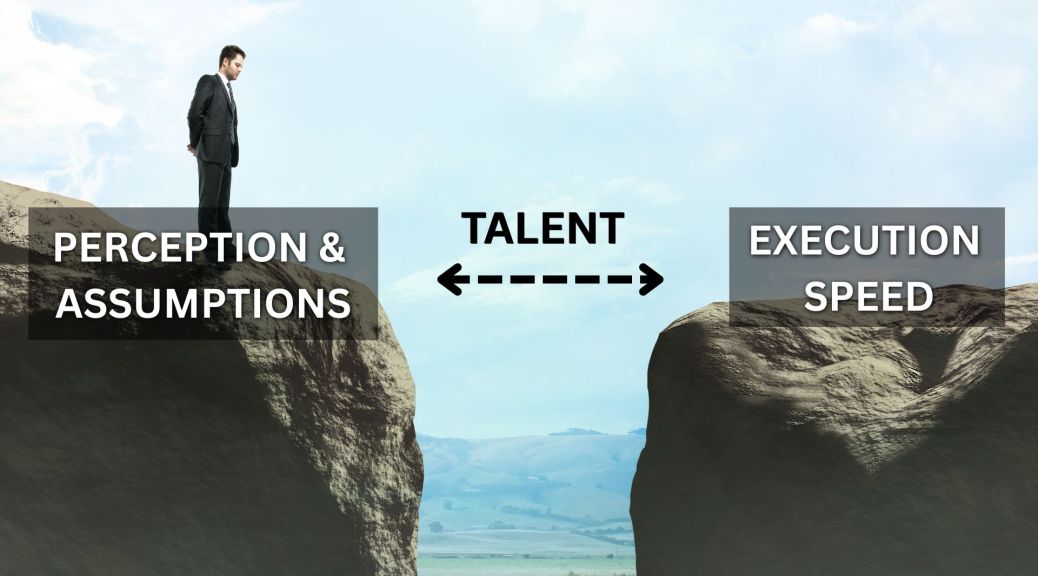
To move toward this more balanced approach, there are several areas where I suggest leaders and managers consider making adjustments: communication style, business instincts, cultural sensitivity, and working speed.
Adjusting Your Management and Communication Style
Taking on a management role in a foreign business environment can be challenging. Differences in hierarchy, organizational structure, and workplace culture often shape how teams expect to be led.
For example, when overseas managers move to China, they may find that teams require more direct instruction. This can sometimes lead to misunderstandings stemming from norms in overseas markets. perceptions of micromanagement or the need for additional training around tasks that might be considered basic in other markets.
Communication itself can also be a challenge, especially when English is a second or third language for most of the team. In these situations, the need for clearer direction often exists alongside the expectation of more respectful and indirect communication, regardless of whether someone is a manager or an employee.
In China, there are also long-standing cultural concepts related to management and behavior, including ideas around face, relationship-building, and appropriate conduct. I’ve discussed some of these previously, including the concept of Suzhi, which touches on expectations around character, etiquette, and social behavior.
While every company is different, these factors help illustrate why management practices that work well elsewhere may need to be adapted in the Chinese context.
From my experience, most Chinese colleagues do not expect foreign managers to adapt perfectly. However, those who make the effort to adjust often see greater success in daily communication, team management, and relationship-building over time.
In the end, Chinese professionals and teams want to feel respected by their boss, organization, and even the overseas HQ. They just want to do it in their own, familiar way.
Adjusting Your Business Instincts
When Western companies establish operations in markets such as China, one of the biggest challenges for managers on the ground and leadership overseeing operations from abroad is how familiar business instincts can quietly steer decisions in the wrong direction.
If you want to hit your business targets, you need to understand local market realities. And the realities in China are fundamentally different, from how consumers buy to how companies operate and how the government views risk.
Senior leaders often rely heavily on their previous experience and an unconscious sense of how things “should work.” In China, these instincts can affect decisions across many areas, including people management, partnerships, media engagement, and interactions with government stakeholders.
A Chinese client told me, “we want to work with you because you understand how Huawei does things.” My Western boss told me, “the Huawei way is wrong.”
One common example is local media relations. In many Western markets, media engagement centers on relationships and expectations of editorial independence. In China, media dynamics are shaped by different commercial arrangements, government influence, and regulatory considerations. For overseas companies, this creates both operational challenges and potential risks if these differences are misunderstood.
Another example comes from my own experience. While advising a Western company planning to expand in China, my team presented insights into new retail models that were already working in the local market. The primary feedback from senior leadership was that these approaches did not fit their existing operating model.
This reluctance to consider alternative approaches is not unusual. However, in China, where domestic competitors understand the market deeply and move quickly, this type of mindset can make it very difficult to compete effectively.
Overall, continuing with “business as usual” in a new market is a common instinct. At best, it leads to poor preparation. At worst, it results in serious market mistakes. Leaders expanding into China need to be willing to recalibrate their instincts if they want to succeed alongside local competitors.
Adjusting Your Cultural Sensitivity
Every market contains cultural landmines, but in China, these can be amplified by the speed and scale of digital communication.
One well-known example was when Dolce & Gabbana faced widespread backlash for releasing advertising content in China that many consumers perceived as racist. The situation escalated quickly, leading to the cancellation of events and a widespread refusal by e-commerce platforms to carry the brand.
Another example comes from IKEA in Shanghai. Over time, some of its stores became popular gathering places for elderly residents. When the company attempted to change this practice by forcing older visitors to leave, the backlash on social media was swift and damaging.
These examples highlight how everyday operational decisions can take on very different meanings when viewed through a local cultural lens.
Foreign companies and senior managers must not only adjust how they think about consumers, but also build habits of including local managers and talent in decision-making processes. Doing so helps surface potential issues early and reduces the risk of costly mistakes.
Adjusting Your Operating Speed
Different cultures operate at different speeds. Many people are familiar with examples such as the so-called “Mañana Culture” in parts of Latin America, where work often moves at a slower pace.
China presents a much different challenge.
In the Chinese tech sector in particular, long working hours and intense workloads are common. Employees, especially engineers, are often expected to handle multiple projects simultaneously. Tight schedules, late meetings, and frequent travel are not unusual.
From my own experience working inside companies like Huawei, these conditions reflect the competitive pressure companies face in the Chinese domestic market. They also tie closely to incentive structures, where compensation and career advancement are strongly linked to performance and results.
Many Chinese employees are highly driven, both by personal ambition and by pride in seeing domestic companies compete successfully on the global stage. As a result, speed becomes deeply embedded in how organizations operate.
This “China Speed” phenomenon, which I often discuss on LinkedIn, is a combination of national-level planning, regional infrastructure hubs, and ingrained company behavior. And it can be difficult for overseas leaders and HQ teams to adapt to. Processes may feel unclear, structures informal, and expectations constantly shifting.
However, as can be seen from China’s massive technical advancements in areas like AI, robotics, new energy, and other sectors, China Speed is a huge advantage for Chinese companies, and a huge risk for overseas companies.
For overseas leaders operating in this environment, there is a clear challenge in learning to move faster to compete locally while maintaining alignment and trust with overseas HQ teams.
Closing Thoughts
In recent years, with the rise of domestic competitors, the Chinese market has become more difficult for overseas firms. Likewise, Chinese companies looking at overseas expansion are being met with rising geopolitical risks and consumer expectations.
Dual Culture Management can act as a helpful tool in reframing how we understand, interact with, and build relationships with stakeholders in different cultures, markets, and organizations.
Success does not come automatically or quickly. Frustration and discomfort are natural, especially early on. Progress requires the willingness to move forward while also accepting that other systems, values, and practices that differ from your own are not fundamentally wrong.
To learn more about the intricacies of navigating, communicating, and managing across China and overseas markets, feel free to connect with me on LinkedIn.
If you’re interested in thoughtful perspectives on China, cross-border work, and how culture, incentives, and organizations shape real outcomes, you’re welcome to subscribe to China Culture Corner and receive future posts by email.
I also share related ideas and longer-form video commentary on LinkedIn and YouTube, and post updates across the channels linked above.
If you or your organization is navigating China execution or cross-border alignment challenges, I work with teams on an embedded and remote basis. Reach out directly: Sean@SageSightConsulting.com