
Tag Archives: China Speed

Why China Keeps Winning: Four Gaps Overseas Executives Miss

Overseas companies are simply not ready for competition from China. For years, China was regarded as the world’s factory, allowing overseas companies to offer high-quality, low-cost products in their home markets.

But Chinese companies have quietly continued to improve their capabilities, increasingly becoming able to compete with overseas companies in China and in overseas markets.

You might remember iRobot, the maker of the Roomba, the first autonomous vacuum cleaner. Not only did the company recently declare bankruptcy, but they were later bought by its own Chinese supplier. This segment is now dominated overseas by Chinese players, including Roborock, Ecovacs, Dreametech, Xiaomi, and others.

In China, overseas brands are also under assault. Starbucks has continued to lose market share to local rivals like Luckin and Cotti. Nike and Adidas are facing competition from local brands. And various overseas fast fashion brands closed their Tmall stores, unable to keep up with local rivals. They all assumed their global brand equity would protect them. It didn’t.

This challenge will only increase for overseas companies, especially for those companies that do not diligently work to close the gaps that leave the door open for hungry Chinese companies that see larger, slower overseas competitors as easy targets.

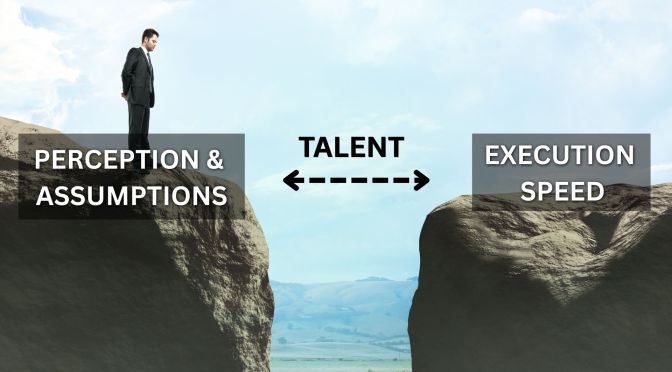
I’ve spent 15 years operating inside Chinese organizations. In that time, I’ve seen four strategic gaps that impact overseas companies when competing with China. These gaps impact how they plan (or don’t) for competition from Chinese companies in China, as well as their home market: Perception, speed, assumptions, and talent.

Overseas companies that do not actively work to close these gaps will not simply fail to grow in the China market. They will also present opportunities for growth for ambitious Chinese competitors in their home markets.

The Perception Gap

What overseas companies and executives think is happening in China, and what is actually happening, is often very different. This results from not having eyes on the ground and only paying attention to surface information without diving deeper.

Being on the ground in China can be helpful for companies aiming to close their own perception gaps, but it’s not enough. It’s not just about having eyes in the right places. It’s also about having the people who are willing to go where others will not, and report uncomfortable truths to HQ management.

I’ve looked at this directly in two sectors – drones and robotics. In both cases, the surface signals failed to convey actual usage cases, and where Chinese tech companies were choosing to concentrate their efforts.

With drones, it’s common for tourists and executives visiting China to gush over the high-tech coffee and food deliveries made possible by delivery kiosks all over cities like Shenzhen. But the reality few talk about is how this is not a viable business – Meituan is focused on last-mile delivery with drones – coffee deliveries are simply good PR and a way to further refine drone systems.

Robotics is another high-tech sector in China that markets and tests publicly using spectacle, but is selling something completely different. Robots serving tea at expos are, in fact, being trained for lab work. Robots being displayed using musical instruments are being trained to handle machine parts. The truth is clear and obvious, but only for those who take the time to look.

The lessons from this type of perception gap should already be clear. When overseas companies and markets do not pay attention to the developments being made by Chinese companies, often done in the open, companies are not prepared, and markets and analysts are shocked.

We’ve seen this happen time and again with breakthroughs, including Huawei’s advanced chips, BYD’s electric vehicles, and DeepSeek’s AI. Other industries will follow. The only question is whether overseas companies are watching.

The Assumption Gap

It’s one thing to not understand what’s happening in China, far away from your home markets. It’s quite another to not understand your own consumers, what they want, and how their tastes might evolve to prefer offerings from Chinese competitors.

This shift has been going on for years in the domestic China market, with Chinese competitors gaining an edge with domestic consumers over global brands. And it’s not that this represents some form of nationalism or anti-global bias. It’s simply that Chinese companies can now offer products at a quality level as good as overseas brands, at lower or comparable prices, while also adapting faster to what local Chinese consumers want.

We’ve seen this with brands like GUESS, which shuttered stores across China, which was selling an Americana chic style at a price point Chinese consumers weren’t interested in. We’ve also seen it with Starbucks, which was surpassed in terms of the number of stores in China by Luckin in 2023.

I recently sat with a group of overseas executives visiting China and watched a familiar tension play out. They were so focused on what they thought their brand should be that they couldn’t see what local consumers actually wanted or how they thought about brands in the local market.

This tension is common for all global brands operating and selling in China. Multinational HQs are used to thinking in terms of global brand playbooks and global brand equity, leading to sales in international markets. But this approach increasingly does not work in China, where consumers move fast and increasingly want products built for local tastes.

Not understanding how incorrect assumptions shape China market strategy can lead overseas executives and HQs to assume they are losing in China because the market is “hard” or because there are cultural elements beyond comprehension. But this simply hides the real problem.

For now, this phenomenon of Chinese companies outperforming overseas competitors in understanding consumers’ needs is largely confined to the domestic China market. But that doesn’t mean it will remain there.

The Speed Gap

Chinese companies move very fast, launching new products in less time than it takes overseas companies to bring on a new senior hire.

But it’s not just chaos. There are several layers that both help and force Chinese companies to move fast: Infrastructure and government support, market pressure, and operational and structural choices.

For infrastructure, China’s intentionally designed industry hubs concentrate talent and manufacturing expertise, while using economies of scale to produce and sell at lower costs. Informal information networks between manufacturers also allow different companies to jump on new trends far faster than overseas competitors.

Government policies subsidize industrial parks, provide preferential lending, and provide quicker regulatory approval for new categories compared to overseas markets.

Market pressure also plays an important role. The China market has long been saturated with local players, leading to hyper competitiveness, as well as involution (a continuous vicious cycle of price cutting), which the Chinese government has taken a more active role in combating it.

But additional factors push that speed further. Not only do Chinese consumer trends change faster than in many other markets, but China’s digital e-commerce and social shopping closed ecosystems mean that companies can now view, analyze, and act on consumer behavior and feedback in real time, forcing other companies to try to move even faster to keep up.

This speed in the domestic China market has led to Chinese companies making decisions on their operational models to move faster, not just to grow faster, but to simply survive. It may look chaotic on the outside, but they are entirely rational on the inside.

This overall rapid execution speed, not just in manufacturing, but also in sales, marketing, and overseas expansion, presents a real challenge to overseas companies. Multiple Chinese competitors are now leading in consumer electronics and other industries overseas. And more competitors are also viewing overseas markets as new growth areas to escape the competition back home.

Overseas companies face a clear dilemma. Their Chinese competitors not only produce similar or better products than they do, but also do so more quickly and at lower prices. The gaps where overseas companies can potentially compete are narrowing, and overseas companies can no longer remain on the sidelines. Overseas companies can no longer treat this as someone else’s problem.

The Talent Gap

Having the right talent to remain competitive with China is not simply about having smart people who understand China.

After all, many overseas companies have smart, well-educated China teams with deep local experience. But the China team may not be giving the HQ the information it needs, or not moving as fast as local competitors.

In these cases, overseas companies’ China teams are often not working inside the “Chinese system” – they are working inside the “overseas system” with Chinese characteristics.

Overseas HQs that need to approve everything slow down execution and rob local teams of decision-making authority. At the same time, there are many reasons why local China teams might not share the full picture with overseas HQs.

In China, it is common to manage upwards information flow, and this will be intensified when overseas HQs react badly upon learning uncomfortable truths about the China market.

When looking at overseas HQs, it is also common for executives and teams to be incentivized to act in accordance with overseas logic and tempo, instead of China-side speed and logic.

So on one hand, it’s certainly important to have smart, skilled people, both in the HQ and in China. But it’s also vital to ensure both have the incentives and support to act in ways that support the growth (or slow the decline) of the China business.

Sometimes this requires organizational change. Sometimes it requires bringing on outside partners who understand the needs of both sides, where execution, communication, and collaboration break down, and who can say things neither side feels free to.

What overseas HQs urgently need are China teams that can act with authority in accordance with the needs of the China market while communicating clearly with HQ. Repeating the playbook that worked before is simply asking for failure.

How Leadership Can Close These Gaps

These gaps don’t exist in isolation; they compound. A company that misreads what’s happening in China will make decisions based on wrong assumptions. Wrong assumptions then slow the organization’s ability to respond closer to China’s speed. And without the right people in place, people who can operate across both systems and say what neither side feels free to say, none of it will get fixed.

This is not about copying the Chinese approach. It is about understanding that Chinese companies across many industries have spent decades being forced to move fast, iterate constantly, and compete with no margin for error. Many now have the capabilities to compete directly with overseas companies, in China and in their home markets.

We’ve already seen the effect across sectors in China and overseas, where overseas companies were the traditional leaders. Automotives, luxury, consumer electronics. All are facing significant challenges from Chinese players, and the competitive gap has closed faster than most planned for.

Organizations that have not yet adapted are finding that the window to do so is closing fast. Surmounting these gaps requires honest answers to uncomfortable questions about what is actually happening on the ground, whether internal assumptions reflect market reality, and whether the right people are in place to bridge both sides. Those answers rarely come from inside the organization alone.


If you’re interested in thoughtful perspectives on China, cross-border work, and how culture, incentives, and organizations shape real outcomes, you’re welcome to subscribe to China Culture Corner and receive future posts by email.

I also share related ideas and longer-form video commentary on LinkedIn and YouTube, and post updates across the channels linked above.

If you or your organization is navigating China execution or cross-border alignment challenges, I work with teams on an embedded and remote basis. Reach out directly: Sean@SageSightConsulting.com

Hiring for China in 2026: A Reality-Based Checklist `

As we move into 2026, China remains a difficult market for many overseas brands, and this trend looks set to continue in the new year.

On one hand, overseas and especially Western brands are coming face-to-face with a decline of their global brand capital. What once was an easy sell (global brands = savvy and trustworthy) is much harder as Chinese consumers become more discerning and demanding.

On the other hand, more Chinese competitors are entering the market, not simply offering high-quality products at an affordable price. They are also much closer to Chinese consumer mindsets and trends, and can pivot faster, and more effectively in some cases, than overseas competitors.

It’s also worth noting that in response to these pressures, many overseas firms that largely made the switch from expatriate placements to local managers and leaders have not always seen this type of direct hiring localization strategy bear fruit.

I do not subscribe to the arguments in certain overseas business circles that the Chinese market is simply “too hard“ and there’s no way to win. I believe there are indeed different approaches to success, but I feel that in 2026, the answer is global talent. By global talent, I mean people who can operate inside China’s pace and realities while still aligning with overseas HQ expectations.

Global talent (foreign or Chinese), as introduced in the short video below, focuses on talent, managers, and leaders who can live and operate in both Chinese and overseas business and social contexts. It doesn’t mean that you shouldn’t hire locals in China (you definitely should), but too many problems result from insisting on a China-only or HQ-only approach.

Personal Note: I am not a recruiter. These insights come from my many years of working in China, seeing how cultural misunderstadnings impact businesss outcomes and how the right hiring choices are vital to aligning overseas HQ expectations and China market realities.

The checklist below reflects global talent as a third hiring path for overseas HQs looking to hire talent and consultants in China in 2026 and beyond. Some items on the checklist focus more on what to consider before hiring foreign nationals, but many can also be applied to Chinese nationals, too.

After all, nationality isn’t a good hiring strategy. When recruiting key leaders and bridge-builders to connect with the China market, it shouldn’t matter where they’re from. Actual skills, experience, and cross-cultural capabilities are what really make the difference.

Talent That is Already In-Country

First and foremost, unless it can’t be avoided, it’s always best to hire someone who is already based in China, for several reasons.

The most practical reason is due to how long the visa and onboarding process can take. Add that to the longer HQ hiring process, closing out current roles, and relocation, and your local competitors could have easily launched a new product (or more) before you got your new leader on the ground in China.

This is something I’ve seen multiple times throughout my own career when acting as a hiring manager at Chinese tech firms. In an ideal scenario, I might consider bringing in a strong foreign candidate, even one with a background working in China. However, I usually declined overseas hires due to how long it would take and the potential negative impact on ongoing projects.

Another related factor is that someone based in and working in China is much more likely to be in tune with Chinese business culture and society. Aside from language fluency and cultural knowledge, China changes so quickly that being away for a few years can easily put one at a disadvantage.

Talent That Speaks Chinese (Mandarin)

Language is a key requirement I often raise for global talent that will bridge the gap between China and global HQs. While it’s natural to assume that local Chinese talent should be able to communicate in English or the HQ language, it’s just as important for foreign hires and consultants in China to possess solid skills in Chinese.

Think of a game of telephone, where the message gets more garbled and more distorted the more middlemen it goes through. And in China, it’s not just about communication meaning drift, it’s also about how stakeholders protect their own interests.

Local suppliers and partners speak indirectly, or even say yes when no is perceived as inconvenient. Translators and interpreters soften their meaning to avoid perceived insults and protect harmony. Local employees might protect their own interests or only tell their boss or the HQ what they think they want to hear. This muddies the water and prevents the overseas HQ from forming a clear picture and making informed decisions.

This is not about assigning blame, but rather helping overseas HQs and leaders understand the practical realities of language and translation in the China market. By ensuring your bridge between the HQ and China not only speaks Chinese fluently but is also willing to give you the plain truth/translation, you can avoid many more troubles down the road.

Talent That Has Worked Inside Chinese Companies

One of the most overlooked advantages for foreign companies in China is hiring talent (especially foreign talent) that has worked inside Chinese companies.

Foreign companies might initially think it strange to hear that they might want to work with someone who has worked inside Chinese companies. After all, they aren’t Chinese. Shouldn’t they hire someone with experience in foreign companies in China? But this isn’t about familiarity or ideology, it’s about ensuring your key hires understand China’s operating logic.

For foreign businesses in China, most, if not all, of the key competitors will be Chinese. It’s useful to have someone with insight on how competitors operate, which areas can be improved, and who can communicate this clearly to the overseas HQ.

Foreign HQs have no issues operating like a foreign business, but they could very well have potential issues operating like a Chinese one in the domestic China market. Talent with past experience in Chinese competitors can bring many benefits and advantages to foreign firms in China, assuming they are willing and able to make the adjustment to working in a foreign organization and reporting to an overseas HQ.

Talent That Understands Chinese Business Culture

A deeper understanding of Chinese business culture is necessary to manage operations between local Chinese teams and overseas HQs. And they take years to learn and can’t simply be picked up on the job.

Things like making decisions with incomplete information, comfort with ambiguity and rapid pivots, and understanding when rules are flexible versus non-negotiable.

First of all, the speed the Chinese market operates is no joke. Chinese companies simply move faster, with planning cycles measured in days or weeks, not quarters. Companies change direction quickly without formal processes, and teams expect managers to decide, not deliberate. Overseas managers who are not familiar with this operating speed often default to overseas control mechanisms like approval gates, reporting layers, or alignment meetings. But this just slows teams down and erodes local trust.

Second, understanding how to manage local Chinese teams is vital. In many Chinese teams, authority comes from clarity and decisiveness, not from building a consensus. Teams expect direction, not facilitation. Chinese team members rarely give direct feedback, but their dissatisfaction will still lead to negative business results. Overseas managers who don’t understand these intricacies may see their Chinese team members’ work quality drop, or see them leave for Chinese competitors that offer better cultural alignment, as well as better compensation.

Lastly, understanding how to manage relationships with local suppliers and partners is vital. Global talent in China is needed that can help the overseas HQ to prioritize long-term cooperation over transactional contracts, accept frequent renegotiation as conditions change, and undertake relationship management outside of formal meetings.

Talent That Has Experience Outside Expat Centers (e.g., Shanghai)

On LinkedIn and in WeChat groups, I see constant updates from foreigners moving to Shanghai and looking for work there. From one viewpoint, Shanghai is a great opportunity for foreign talent. But the point I would like to raise here is that talent, especially foreign talent that has only worked in Shanghai and other top-tier cities, presents a real risk to foreign companies in the China market – it’s simply too safe.

In China, a common phrase is to “eat bitterness” (吃苦; chī kǔ), which refers to one’s ability to bear hardships. To succeed in China, and to help foreign companies succeed, talent and leaders need to be able to move fast, get things done, and deal with enormous pressures. And it’s a real possibility that the Shanghai and other first-tier city environments might not provide the necessary foundation.

Shanghai is the only city in China where English can come close to functioning as a real working language; the city is much more international, and there is much more legacy expat infrastructure. This means there is much less need or incentive for foreign talent to adapt to the realities that rule the rest of China.

For foreign companies struggling and/or looking to improve in the China market, foreign (or any) talent with Shanghai-only experience should be a red flag, especially if they can’t check off other important items on this list. The China market is difficult, and foreign companies in China need someone who can rise to the challenge.

Talent That Will Challenge Your Assumptions

Lastly, one thing that foreign HQs really need is someone who will not simply make them feel comfortable, will avoid conflicts, and simply focus on getting their paychecks during their tenure.

And to be honest, I’ve seen this happen with both foreign and Chinese talent and leaders. If foreign HQs want to understand why their businesses are not doing better in the Chinese market, they should focus on global talent and leaders who will call out issues and work to make improvements.

But at the same time, even the best talent and leaders will find it hard to drive change if overseas HQs do not provide the required support or pursue needed changes on their own end. After all, in China you need to move fast, and moving fast often requires the overseas HQ to move faster too.

Closing Thoughts

Overseas brands are now facing challenges in China that in some ways mirror those encountered by Chinese companies expanding overseas. Both are discovering that the same old approach to talent isn’t working.

First, both tried sending their own people to the new market or managing things from their HQ. Then, after a more local approach was tried, it was found in many cases to create too large a disconnect between HQ expectations and local execution.

This article aims to present a new path, framed in terms of mutual understanding, support, and alignment. The above checklist is in no way meant to substitute for professional and functional qualifications, nor personal fit for specific leadership roles.

That being said, in light of the complexities of connecting and aligning teams in China and overseas HQs, especially in an area of ever-increasing competitiveness from domestic Chinese companies, the old way is no longer working.

Companies that hope to survive and thrive in the increasingly competitive China market need a new approach to talent – not expat talent, not local talent, but global talent – to connect them to China.


If you’re interested in thoughtful perspectives on China, cross-border work, and how culture, incentives, and organizations shape real outcomes, you’re welcome to subscribe to China Culture Corner and receive future posts by email.

I also share related ideas and longer-form video commentary on LinkedIn and YouTube, and post updates across the channels linked above.

If you or your organization is navigating China execution or cross-border alignment challenges, I work with teams on an embedded and remote basis. Reach out directly: Sean@SageSightConsulting.com

The Hidden Risks of China Speed in Overseas Business Partnerships

I was recently discussing China Speed with a business contact Marcus Pentzek, on LinkedIn, and I thought I would expand on it a little here, not just from a business POV, but along with some Chinese cultural insights.

The problem we discussed revolved around how Chinese companies tend to operate very quickly, much faster than overseas companies and markets are used to. Sometimes this results in positive outcomes, but it can also lead to self-sabotage and unhappy overseas business partners.

If you follow me on LinkedIn or YouTube, you’ve likely noticed that I often talk about China Speed. This refers to the combination of factors that have enabled Chinese companies to move rapidly toward global leadership in areas like AI, robotics, and new energy.

While close alignment between industry hubs and national-level planning is an important part of this speed advantage, company-level speed, which means the willingness, or even basic need, to move fast, is also important. And this company-level speed is an area where Chinese companies can run into trouble.

Specifically, Chinese companies often feel pressured to try and grow very quickly in overseas markets, simply to survive, which can often be unsustainable. This can happen for several reasons, including:

  • High-speed, cutthroat competition in China’s domestic market
  • Misunderstanding overseas consumer buying habits
  • Applying domestic, high-pressure Chinese sales approaches to overseas markets

The discussion with Marcus made me think of several common Chinese idioms that are used in business scenarios, and I’d like to share them below.

Looking at Chinese Idioms on Gain & Loss

However, here I’d like to push back on common stereotypes that the negative business practices, caused by the above reasons, are due to some inherent traits of the Chinese psyche.

Some Chinese idioms, in use for hundreds, if not thousands of years, provide ample evidence that the Chinese have long understood that moving too fast can cause more loss than gain. They’re also fun to slip into conversations, and can provide added meaning and context that translations don’t convey.

Here are a few I enjoy:

Kill the chicken to get the eggs (杀鸡取卵 ; shā jī qǔ luǎn)

This idiom refers to taking actions to gain something immediately, but in the process destroying the source of future, ongoing benefit.

In a business sense, it can often mean pursuing short-term wins at the expense of long-term value. This is often seen when sales teams close a deal by over-promising, cutting corners, or sacrificing trust.

Drain the pond to catch the fish (竭泽而渔; jié zé ér yú)

This idiom refers to a person wanting to get a fish now, but ensuring there are no fish left for the future.

In business, it can refer to extracting short-term value from a market, channel, or partner without investing in sustainability. This can include squeezing distributors, over-discounting, or flooding the market to the detriment of brand value.

Pull up the seedlings to help them grow (拔苗助长; bá miáo zhù zhǎng)

This idiom refers to someone impatient with how slowly their crops are growing and pulls them upwards (literally) to help them grow, only to damage them in the process.

In business, this can refer to unrealistic sales targets, constant changes in strategy and direction, and expecting/pushing for immediate results in new markets.

Closing: What You Should Remember About China Speed

For overseas businesses and professionals concerned about the ill effects of China Speed at the company level, the most important thing is to first remember that it does not come from any malicious intent.

That said, it’s still important to be aware of the potential risks and plan accordingly.

For companies looking to work with or partner with Chinese firms, it’s very important to understand that there will almost always be a big gap in the speeds at which the two sides operate.

This speed comes not just from how they have been shaped and honed to behavior by domestic market forces in China. It also comes from the intense sales pressures that Chinese companies and professionals are under when expanding overseas.

But speed without alignment often leads to similar failure patterns, and without cross-cultural experience, both sides may not realize where things went wrong.

For overseas companies looking to work with and succeed with Chinese business partners, make sure you can set up and manage effective alignment mechanisms.

These can include using Chinese APPs to keep in touch at the speed Chinese are used to, finding trustworthy advisors to help you understand nuance and meaning in culture and business, and making regular visits to China to build relationships in person.

In closing, I’m not here to discourage you from working and partnering with Chinese companies. Chinese companies can bring a lot to the table. But the key is understanding how their culture and domestic business environment shape their behavior and expectations, and to plan accordingly.

If you’re interested in learning about other Chinese idioms and sayings that can be used in business and in life, feel free to view my past articles under the category “Chinese Wisdom“.


If you’re interested in thoughtful perspectives on China, cross-border work, and how culture, incentives, and organizations shape real outcomes, you’re welcome to subscribe to China Culture Corner and receive future posts by email.

I also share related ideas and longer-form video commentary on LinkedIn and YouTube, and post updates across the channels linked above.

If you or your organization is navigating China execution or cross-border alignment challenges, I work with teams on an embedded and remote basis. Reach out directly: Sean@SageSightConsulting.com