
Tag Archives: Chinese Competitors

China Speed Won’t Stay in China. It’s Building Toward Your Home Market.

China Speed is often discussed in business circles and in the news, usually in terms of the advantages it gives Chinese companies and how it makes competition harder for overseas companies in China. Today I want to talk about something all overseas executive teams should be taking even more seriously: the risk China Speed poses to overseas companies in their own home markets, and why operational change needs to become the new benchmark for survival.

Despite China’s incredible developmental speed, we have not yet seen a huge number of companies and industries clearly affected by it, which may explain the apparent lack of recognition of the danger for overseas markets. But there are already examples where China Speed has proven to be a deciding factor in overseas markets, including industries like fast fashion, batteries, and robot vacuums.

Today we’ll be going through several examples to explain why China Speed is most likely coming to your home market, if it’s not there already, and why your company needs to start changing now.

China Speed: A Refresher

Before we begin, I’d like to briefly reintroduce what China Speed is, rather than what it’s often assumed to be. It is not 996 overtime, recklessness, the creation of waste/inefficiencies, or a cultural trait. Below is a three-tiered model I use to describe China Speed to overseas companies and executives.

Infrastructure (Can’t Be Copied: China has built up structural advantages that a competitor can’t simply decide to replicate, because they took decades to build. Manufacturing hubs are linked together geographically, so a company can move from design to production without the delays of working across separate suppliers and regions. Government policy support is built to move at commercial speed rather than bureaucratic speed. And real-world deployment isn’t the finish line for R&D in China; it’s the starting point, with products launched and improved based on what happens in the market.

Market Pressure (Forced Speed): The China market is subject to rapid, cutthroat competition, based on several factors. First, the huge number of companies in the market, all trying to build new wealth and take advantage of new opportunities, creates a pressure all its own. That is combined with involution, a vicious cycle of continuous price cutting, which the government can’t completely rein in. Lastly, since the rise of social commerce, companies in China have been able to make use of near-instantaneous access to consumer purchases, feedback, and competitor actions.

Organizational Behavior (Can Be Learned From): Companies in China react to the very real market pressures, using the infrastructure in place, and make rational choices to survive. They find ways to move faster by concentrating authority closer to the customer, creating parallel teams to create internal pressure, killing unnecessary projects quickly, and settling for good enough.

There are three key takeaways from the above: first, the pressures from the China market are affecting overseas markets as more Chinese companies expand overseas to escape crushing competition at home. Second, the infrastructure China has developed over decades provides clear advantages in quality, speed, and price. And third, operational choices made by Chinese companies are usually very rational, and overseas companies may want to begin considering rational choices of their own.

Overseas Markets: When Companies React to China Speed Too Late

We’ve already seen clear examples of Chinese companies winning in the American, European, and other overseas markets. iRobot, the company that created the robot vacuum category, filed for bankruptcy in December 2025 as five Chinese firms captured roughly 70% of global shipments.

Northvolt, Sweden’s battery champion, collapsed after BMW canceled a $2 billion contract, the result of a gap so wide that Chinese competitors reached 96% production yield in four months while Northvolt took four years to reach 70%.

Forever 21 filed for its second bankruptcy in March 2025, closing all 354 remaining U.S. stores after years of significant losses. In its own bankruptcy filing, the company pointed to Shein and Temu’s ability to undercut on price as a key reason it lost its core customer base, the same price-and-speed combination that’s outpaced slower incumbents in other categories too.

I see the problem as three-fold:

  • Overseas brands were not paying enough attention to what Chinese brands were doing in China and how this could affect them in their home markets.
  • Overseas brands were not willing or able to make substantive changes to their operations outside of China.
  • Even when overseas brands tried to adapt, they could not do it in time, as Chinese companies were moving on a much faster timeline.

It is also worth noting that China Speed does create trouble for Chinese companies expanding abroad, in the form of legal issues and public opinion backlash. But this alone shouldn’t make overseas companies feel safe. An overseas market leader could face multiple Chinese competitors producing better products at lower prices and faster speeds than it can match. And it only takes one Chinese competitor to get it right.

The Fix Isn’t Culture. It’s Operational Change.

From the above, the competitive threat posed by China Speed and Chinese companies should be clear. And it’s not a problem that can be solved by tariffs or bans, especially for global brands competing in multiple international markets.

That doesn’t mean copying these moves one for one. Overseas companies operate under different constraints, answer to different stakeholders, and carry more global exposure than most local Chinese competitors do. The point isn’t to run the exact plays above; it’s to build your own version of the same underlying logic, one that fits constraints Chinese competitors don’t have to deal with.

Here’s my list of key changes overseas executive teams should be considering now:

Start Changing Now: One of the biggest mistakes overseas companies can make is waiting until the China threat is obvious before acting, since by then it’s usually too late. Moving beyond a sole focus on short-term results is the first, and perhaps most important, step for overseas executive teams to take.

Create Early Warning Systems: Too much happens in the China market without overseas companies being aware of it, taking it seriously, or having its significance survive the handoff from the China team to HQ. Overseas companies therefore need to create systems and teams to ensure they always get the real picture about what’s happening in China, no matter how uncomfortable it is.

Go on Offense: Too many overseas companies have been confident in their standing in their home markets and have only played defense against Chinese companies. But static defenses don’t work well against fast-moving Chinese companies, and overseas companies need a much more active, aggressive approach to survive.

Simplify Bureaucracy & Processes: This is a big one. Overseas companies simply move too slowly compared to Chinese companies, especially those with the capital and momentum to seriously challenge them in their home markets. Overseas companies need to find ways to simplify their structures and processes to move at least twice as fast as they normally would.

More Inter-office Exchanges: Lastly, inter-office exchanges between China team members and HQ team members, at the mid-senior level, could play an important role. Not only can they increase empathy among overseas HQ personnel toward the Chinese market and professionals, but they can give senior HQ leaders an important point of view they didn’t have before.

None of this, however necessary, will be easy. Internal change always creates resistance and dissension, and flies in the face of existing internal networks, priorities, and incentives. That being said, companies that don’t begin changing at least one to two years before a Chinese competitor becomes a serious threat likely won’t be around long enough to worry about it.


If you’re interested in thoughtful perspectives on China, cross-border work, and how culture, incentives, and organizations shape real outcomes, you’re welcome to subscribe to China Culture Corner and receive future posts by email.

I also share related ideas and longer-form video commentary on LinkedIn and YouTube, and post updates across the channels linked above.

If you or your organization is navigating China execution or cross-border alignment challenges, I work with teams on an embedded and remote basis. Reach out directly: Sean@SageSightConsulting.com
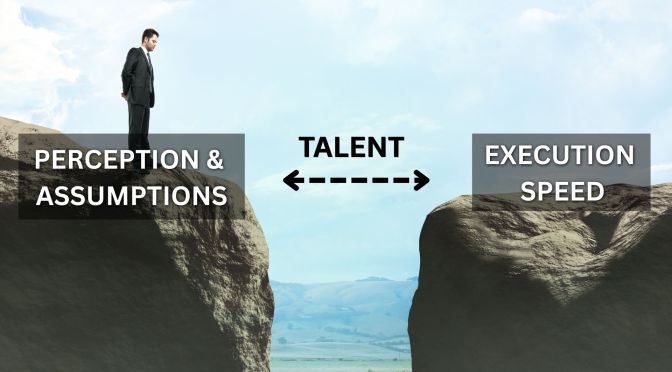
Why China Keeps Winning: Four Gaps Overseas Executives Miss

Overseas companies are simply not ready for competition from China. For years, China was regarded as the world’s factory, allowing overseas companies to offer high-quality, low-cost products in their home markets.

But Chinese companies have quietly continued to improve their capabilities, increasingly becoming able to compete with overseas companies in China and in overseas markets.

You might remember iRobot, the maker of the Roomba, the first autonomous vacuum cleaner. Not only did the company recently declare bankruptcy, but they were later bought by its own Chinese supplier. This segment is now dominated overseas by Chinese players, including Roborock, Ecovacs, Dreametech, Xiaomi, and others.

In China, overseas brands are also under assault. Starbucks has continued to lose market share to local rivals like Luckin and Cotti. Nike and Adidas are facing competition from local brands. And various overseas fast fashion brands closed their Tmall stores, unable to keep up with local rivals. They all assumed their global brand equity would protect them. It didn’t.

This challenge will only increase for overseas companies, especially for those companies that do not diligently work to close the gaps that leave the door open for hungry Chinese companies that see larger, slower overseas competitors as easy targets.

I’ve spent 15 years operating inside Chinese organizations. In that time, I’ve seen four strategic gaps that impact overseas companies when competing with China. These gaps impact how they plan (or don’t) for competition from Chinese companies in China, as well as their home market: Perception, speed, assumptions, and talent.

Overseas companies that do not actively work to close these gaps will not simply fail to grow in the China market. They will also present opportunities for growth for ambitious Chinese competitors in their home markets.

The Perception Gap

What overseas companies and executives think is happening in China, and what is actually happening, is often very different. This results from not having eyes on the ground and only paying attention to surface information without diving deeper.

Being on the ground in China can be helpful for companies aiming to close their own perception gaps, but it’s not enough. It’s not just about having eyes in the right places. It’s also about having the people who are willing to go where others will not, and report uncomfortable truths to HQ management.

I’ve looked at this directly in two sectors – drones and robotics. In both cases, the surface signals failed to convey actual usage cases, and where Chinese tech companies were choosing to concentrate their efforts.

With drones, it’s common for tourists and executives visiting China to gush over the high-tech coffee and food deliveries made possible by delivery kiosks all over cities like Shenzhen. But the reality few talk about is how this is not a viable business – Meituan is focused on last-mile delivery with drones – coffee deliveries are simply good PR and a way to further refine drone systems.

Robotics is another high-tech sector in China that markets and tests publicly using spectacle, but is selling something completely different. Robots serving tea at expos are, in fact, being trained for lab work. Robots being displayed using musical instruments are being trained to handle machine parts. The truth is clear and obvious, but only for those who take the time to look.

The lessons from this type of perception gap should already be clear. When overseas companies and markets do not pay attention to the developments being made by Chinese companies, often done in the open, companies are not prepared, and markets and analysts are shocked.

We’ve seen this happen time and again with breakthroughs, including Huawei’s advanced chips, BYD’s electric vehicles, and DeepSeek’s AI. Other industries will follow. The only question is whether overseas companies are watching.

The Assumption Gap

It’s one thing to not understand what’s happening in China, far away from your home markets. It’s quite another to not understand your own consumers, what they want, and how their tastes might evolve to prefer offerings from Chinese competitors.

This shift has been going on for years in the domestic China market, with Chinese competitors gaining an edge with domestic consumers over global brands. And it’s not that this represents some form of nationalism or anti-global bias. It’s simply that Chinese companies can now offer products at a quality level as good as overseas brands, at lower or comparable prices, while also adapting faster to what local Chinese consumers want.

We’ve seen this with brands like GUESS, which shuttered stores across China, which was selling an Americana chic style at a price point Chinese consumers weren’t interested in. We’ve also seen it with Starbucks, which was surpassed in terms of the number of stores in China by Luckin in 2023.

I recently sat with a group of overseas executives visiting China and watched a familiar tension play out. They were so focused on what they thought their brand should be that they couldn’t see what local consumers actually wanted or how they thought about brands in the local market.

This tension is common for all global brands operating and selling in China. Multinational HQs are used to thinking in terms of global brand playbooks and global brand equity, leading to sales in international markets. But this approach increasingly does not work in China, where consumers move fast and increasingly want products built for local tastes.

Not understanding how incorrect assumptions shape China market strategy can lead overseas executives and HQs to assume they are losing in China because the market is “hard” or because there are cultural elements beyond comprehension. But this simply hides the real problem.

For now, this phenomenon of Chinese companies outperforming overseas competitors in understanding consumers’ needs is largely confined to the domestic China market. But that doesn’t mean it will remain there.

The Speed Gap

Chinese companies move very fast, launching new products in less time than it takes overseas companies to bring on a new senior hire.

But it’s not just chaos. There are several layers that both help and force Chinese companies to move fast: Infrastructure and government support, market pressure, and operational and structural choices.

For infrastructure, China’s intentionally designed industry hubs concentrate talent and manufacturing expertise, while using economies of scale to produce and sell at lower costs. Informal information networks between manufacturers also allow different companies to jump on new trends far faster than overseas competitors.

Government policies subsidize industrial parks, provide preferential lending, and provide quicker regulatory approval for new categories compared to overseas markets.

Market pressure also plays an important role. The China market has long been saturated with local players, leading to hyper competitiveness, as well as involution (a continuous vicious cycle of price cutting), which the Chinese government has taken a more active role in combating it.

But additional factors push that speed further. Not only do Chinese consumer trends change faster than in many other markets, but China’s digital e-commerce and social shopping closed ecosystems mean that companies can now view, analyze, and act on consumer behavior and feedback in real time, forcing other companies to try to move even faster to keep up.

This speed in the domestic China market has led to Chinese companies making decisions on their operational models to move faster, not just to grow faster, but to simply survive. It may look chaotic on the outside, but they are entirely rational on the inside.

This overall rapid execution speed, not just in manufacturing, but also in sales, marketing, and overseas expansion, presents a real challenge to overseas companies. Multiple Chinese competitors are now leading in consumer electronics and other industries overseas. And more competitors are also viewing overseas markets as new growth areas to escape the competition back home.

Overseas companies face a clear dilemma. Their Chinese competitors not only produce similar or better products than they do, but also do so more quickly and at lower prices. The gaps where overseas companies can potentially compete are narrowing, and overseas companies can no longer remain on the sidelines. Overseas companies can no longer treat this as someone else’s problem.

The Talent Gap

Having the right talent to remain competitive with China is not simply about having smart people who understand China.

After all, many overseas companies have smart, well-educated China teams with deep local experience. But the China team may not be giving the HQ the information it needs, or not moving as fast as local competitors.

In these cases, overseas companies’ China teams are often not working inside the “Chinese system” – they are working inside the “overseas system” with Chinese characteristics.

Overseas HQs that need to approve everything slow down execution and rob local teams of decision-making authority. At the same time, there are many reasons why local China teams might not share the full picture with overseas HQs.

In China, it is common to manage upwards information flow, and this will be intensified when overseas HQs react badly upon learning uncomfortable truths about the China market.

When looking at overseas HQs, it is also common for executives and teams to be incentivized to act in accordance with overseas logic and tempo, instead of China-side speed and logic.

So on one hand, it’s certainly important to have smart, skilled people, both in the HQ and in China. But it’s also vital to ensure both have the incentives and support to act in ways that support the growth (or slow the decline) of the China business.

Sometimes this requires organizational change. Sometimes it requires bringing on outside partners who understand the needs of both sides, where execution, communication, and collaboration break down, and who can say things neither side feels free to.

What overseas HQs urgently need are China teams that can act with authority in accordance with the needs of the China market while communicating clearly with HQ. Repeating the playbook that worked before is simply asking for failure.

How Leadership Can Close These Gaps

These gaps don’t exist in isolation; they compound. A company that misreads what’s happening in China will make decisions based on wrong assumptions. Wrong assumptions then slow the organization’s ability to respond closer to China’s speed. And without the right people in place, people who can operate across both systems and say what neither side feels free to say, none of it will get fixed.

This is not about copying the Chinese approach. It is about understanding that Chinese companies across many industries have spent decades being forced to move fast, iterate constantly, and compete with no margin for error. Many now have the capabilities to compete directly with overseas companies, in China and in their home markets.

We’ve already seen the effect across sectors in China and overseas, where overseas companies were the traditional leaders. Automotives, luxury, consumer electronics. All are facing significant challenges from Chinese players, and the competitive gap has closed faster than most planned for.

Organizations that have not yet adapted are finding that the window to do so is closing fast. Surmounting these gaps requires honest answers to uncomfortable questions about what is actually happening on the ground, whether internal assumptions reflect market reality, and whether the right people are in place to bridge both sides. Those answers rarely come from inside the organization alone.


If you’re interested in thoughtful perspectives on China, cross-border work, and how culture, incentives, and organizations shape real outcomes, you’re welcome to subscribe to China Culture Corner and receive future posts by email.

I also share related ideas and longer-form video commentary on LinkedIn and YouTube, and post updates across the channels linked above.

If you or your organization is navigating China execution or cross-border alignment challenges, I work with teams on an embedded and remote basis. Reach out directly: Sean@SageSightConsulting.com