Category Archives: STORIES FROM CHINA

Insights into how technology develops and is adopted in China, and how it affects business, society, and everyday life. Coverage focuses on interpretation and impact, not just product features.

Revisiting Xi’an: Old Memories & New Experiences

I first visited the city of Xi’an during my first trip to China, early in 2001, when I was still in my final year at North Monterey Country High School in Castroville, California. The high school band, of which I was a member, had achieved a small degree of fame through enthusiastic performances across the United States, and was invited to visit China by one of the local government entities. Thus began my first trip to China, which included trips to Shanghai, Beijing, Xi’an, and Shijiazhuang, and would lay the foundation my two-decade-long (so far!) relationship with China and its people.

Returning to Xi’an was more memorable than previous trips to Shanghai and Beijing, perhaps because of its distance from China’s eastern coast where I have made my home for more than 10 years. It might also be due to the fact that while Xi’an has also modernized just like other Chinese cities, its progress does not appear as visually obvious as it does in other cities, allowing me to more easily connect, both mentally and emotionally, with my very first experiences in China.

Take a video tour of the #Chinese city of #Xian, including sumptuous street food and the ancient city wall!

And so, earlier this year, I was very excited to return to my roots, as it were, and experience both the Xi’an I had known so long ago, as well as the new city that Xi’an had become. My trip, from January 02 – 06, was somewhat of a whirlwind, trying to fit in a number of things every single day. But overall, there were four main experiences, which I shared in a previous vlog and would like to share with you here, today. I visited a local university to discuss education in Xi’an, I sampled a wide variety of street foods that the city has to offer, I visited the ancient city wall, and, last by not least, I found out what it’s like to vacation at a Chinese-style hot spring resort.

For those of you more visually-minded, you can take a look at the video, linked below. However, I will also provide additional commentary on the trip for those of you who are interested in learning more, not just about the trip, but about my reflections on China. In any event, Xi’an is a very exciting city and I highly recommend visiting if you have the opportunity.

Education in Xi’an

As it turns out, while I had many reasons for returning to Xi’an, what started the process was a conversation with a good friend. My friend Rui had previously accepted a position as Deputy Dean at a university in Xi’an and was working with the local faculty to improve the international-focus of the education provided to Chinese students. I originally prepared a short video lecture in Chinese to share with the students months ago, and after its success, Rui invited me to visit Xi’an and talk with the faculty at his school, in addition to taking a tour of the city.

For those of you who may not know, internationalized education is a big deal in China. On one hand, in the past, it’s been very common for parents with the money and the means to send their children to study overseas in reputable universities, as overseas degrees were long-viewed as the path to good jobs and success (things are changing now, but that’s a story for another time). On the other hand, Chinese universities aim to provide their students with knowledge on international businesses and practices, not simply because of the global companies doing business in China, but because of the increasing number of Chinese companies expanding overseas.

However, providing this knowledge effectively can be a challenge at times, due to differences in China’s educational practices, cultural differences, and other factors. Thus, it is not uncommon for Chinese universities to employ professors from overseas universities, or as in my case, bring in experts from various backgrounds to consult. Which is how I ended up in a small classroom on a cold Xi’an winter morning, talking about my own experience studying for a business degree as well as working in global marketing and PR roles.

There was a lot of enthusiasm in the room, as there often is in China, as well as an interest in and a willingness to listen to what I had to say. I talked a lot with the teachers about curriculum design and the type of courses generally offered to Western business students. In China, language and cultural barriers can prevent progress early on, but once the Chinese can see and learn from successful examples they often pick things up rather quickly. Needless to say, I enjoyed this opportunity to interact with the faculty, learn more about their own challenges, and see how to help them overcome them.

Xi’an Street Food

With the real work out of the way, I was able to head over to a famous food street (only slightly touristy) called Yong Xing Fang to sample a number of local Xi’an dishes. Street food was once extremely popular and prevalent in China, and it’s a fond part of my earlier memories in China, such as when I was studying abroad in Chengdu, from 2004 to 2005. In those days, while street food indeed felt more authentic, it was also a good deal less hygienic, with the street food scene more often than not characterized by quaint roadside carts and messy, oily grills.

Things have changed in recent years, with actual roadside carts an uncommon sight in many big cities, as authorities have attempted to modernize and pursue policies aimed and greater health and wellness. But the Chinese, ever-innovative, almost always have a solution. While late-night kabob stands have vanished, they have been replaced by a number of actual restaurants, in some cases high-end ones, that cater to the street food-loving crowd. And, all in all, it’s a change for the better, as unregulated and dirty food carts are indeed not the best for our health.

However, that’s not to say that those of us in China don’t get a tad nostalgic about the good old days of freewheeling street food, and that’s one reason I particularly enjoyed the street food I had in Xi’an. The winding streets of Yong Xing Fang featured both stalls and small restaurants, and it really took me back to my study abroad days, as I sampled a number of treats including, lamb kabobs, steamed noodles, a soup with what tasted like wet cornbread (it was tasty), and other items as well.

If you haven’t watched my Xi’an vlog yet, I would highly recommend at least watching the food street section, as I feel it really portrays how exciting food can be in China, with all of the different sights, sounds, and tastes the dining experience can offer.

Xi’an City Wall

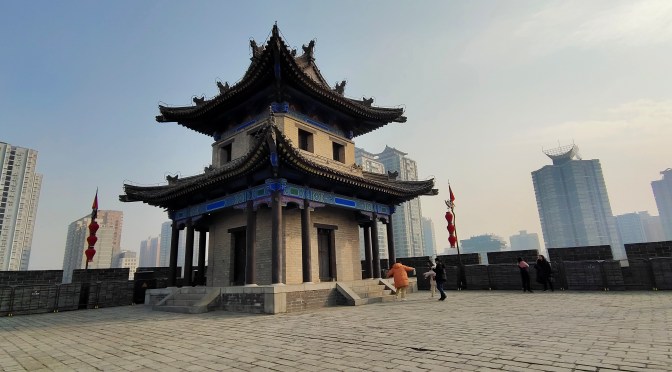
Next, I headed over to the city wall, which was a special place to me for several reasons. First, when I visited Xi’an in 2001, the city wall featured prominently. Not only were we able to walk along the city wall (it’s actually a tourist attraction), but my high-school band (a marching band, in fact) was able to perform on the wall in front of a live crowd, something I recall clearly to this day. Therefore, one of my first priorities was to walk the wall again, and experience the city – by walking the entire circumference of the wall I was able to view the city in all directions, and from a significant height, which really gives one an appreciation of the size of this amazing city. It also brought back fond memories from those early days – the excitement of experiencing China for the first time, when the country was still in the midst of its opening-up, and everything seemed both incredibly old and incredibly new, all at the same time.

Second, while China’s opening-up and modernization has brought many benefits, one of the downsides has been that much of China’s traditional architecture has been slowly vanishing. Older houses have slowly been torn down, including Beijing’s traditional Hutong alleys and courtyard homes. I, therefore, feel its a very unique experience to experience China’s traditional architecture firsthand, and have the opportunity to walk among (and on) the literal history of a country, and to experience the same sights that others have, hundreds, if not thousands of years before.

Lastly, it’s also a great spot for pictures.

Xi’an Hot Spring Resort

My final stop was at a five-star hot spring resort outside the city limits. I can’t say I’m an expert on what a hot spring resort is supposed to be like, as the only similar place I’ve been to was a garden-sized sauna in California, with only several hot and cold tubs, and for only a stretch of one-two hours. In contrast, a Chinese hot spring resort is the size of an entire park in an of itself. This is without counting all the other attached facilities, including the hotel, dining complex, and other recreational facilities, including a massage parlor (the PG variety, thank you very much).

Aside from the actual hot springs, the resort was very much in line with what I have experienced at resorts in China over the years – good rooms, so-so food (the good places are all off-site), etc. What was a nice surprise was the unexpected variety of hot springs – 20+ different pools scattered across a lush and vibrant landscape, each filled with a different herbal mixture, including milk and various types of Chinese traditional medicines.

The big surprise was how physically draining a trip to a Chinese hot spring resort could be. For this was a trip that lasted an entire day, and from what I gathered from other Chinese guests, the usual practice was to spend two-three hours soaking in both the morning and afternoon, interspersed with meals, rests, and massages. Needless to say, I was exhausted afterward, though in a mostly positive way. Afterward I finished the trip in the traditional Chinese fashion – with a good meal among friends.

So, that’s about it for my trip to Xi’an. I hope you enjoyed the video as well as my description of the trip. I also hope it inspired you to learn more about China, and hopefully visit Xi’an yourself one day. If you have any questions about Xi’an, feel free to let me know if the comments below.


If you’re interested in learning more about China, Chinese culture, and business in China, please feel free to subscribe to the China Culture Corner to have future posts sent directly to your inbox. You can also follow and interact with me on social media or send me a message on Twitter.


Join 788 other subscribers

Expat Discrimination Brought This Chinese Professional to Tears

Due to the sensitive nature of this story, names and place names have been changed to protect the identity of the interviewee. All other aspects of the story have not been changed.

Living in China can be very stressful, and Westerners and non-Chinese can take a long time to adapt to local culture, customs, and rules. During this transitional period, there is often a constant barrage of culture shock, which can make simple, everyday tasks feel like a burden.

However, that’s just one side of the coin. Many Westerners and non-Chinese, often while dealing with culture shock of our own, never stop to think about the difficulties they may cause for Chinese friends and colleagues. Words and body language employed, even unintentionally, can easily shape the experiences of Chinese people, even though a single interaction.

Unfortunately, due to language barriers and the general unwillingness of many Chinese to share personal feelings, most Westerners and non-Chinese never have the opportunity to hear directly from their Chinese contacts, and thus may be unaware of negative effects caused by their actions. Therefore, I’d like to present the personal story of a Chinese friend, and the situation she experienced when on a business trip with Western colleagues in China.

My Chinese Friend, Julie

The other day a close Chinese friend, let’s call her Julie, called me up literally in tears.  She felt depressed and humiliated, and it stemmed from the treatment she had received at the hands of Western colleagues during a business trip to Shenzhen. But before I talk more about the treatment Julie experienced, I’d like to briefly introduce Julie and her background.

Julie is from Mainland China. She was born in the Guangdong province, is fluent in 3 languages – Cantonese, Mandarin, and English. She currently works in Shanghai and has a large amount of experience both working in international organizations and traveling abroad. She currently works for a global corporation and her department focuses on a mix of training, human resources, and more importantly, diversity and inclusion-related work.
Why are these details important? While there is never any excuse for discrimination or mistreatment of others, I want to make it perfectly clear that Julie holds no naivety in regards to big-city or international life which might be used as an excuse to not take her seriously. She is also highly skilled linguistically and culturally and is well-adapted to conversing and interacting with Westerners.

In addition, there’s fact that Julie’s Western colleagues – experts in promoting diversity and inclusion – could so easily and often overlook the diversity and inclusion of a local Chinese worker. This should serve as a stark reminder that none of us are truly immune from cultural discrimination, no matter how well-prepared or well-intentioned.

Now, let’s take a closer look at the particulars of Julie’s business trip, and why the behavior of her Western colleagues had such a profound effect on her.

The Situation

Based on what Julie told me, were several types of events over the course of her business trip that contributed to her negative experience.

Food: Like many places around the world, food is an important element of Chinese identity. Many provinces and larger areas of China have their own, unique culinary tastes, and Julie is no different. As someone from Southern China, Julie grew up eating Cantonese dishes and delicacies that many Westerners and non-Chinese would hesitate to touch. But there is a big difference between choosing not to eat a particular dish, and ridiculing said dish in front of a native who holds it as part of her cultural identity.

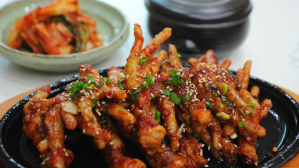
And that’s exactly what happened. During one lunch, several Westerners on Julie’s team made a point to loudly ridicule Chicken Feet, a popular Cantonese dish, and make it known how much they were disgusted by it. While Julie remained silent, she later related to me how much it felt like a slap in the face. “Why is it,” she asked me, “that Westerners come to my country as guests, but still end up telling me how disgusted they are with my country and culture?”

Language: With three languages under her belt, Julie was clearly among the most linguistically capable of the employees on the business trip. Most of the visiting Western colleagues could only speak English, and none had taken the time to learn much, if any, Chinese. Despite this disparity in her favor, during the business trip, she constantly felt an impatience from her Western colleagues with regards to both her speaking speed, as well as her occasional need to search for a specific word.

This type of behavior is sadly common in China, where in the past and currently Westerners can come to China for work without learning the local language and culture, while local employees are often made to feel they can never learn enough to satisfy the desires of their Western coworkers and superiors.

Group Dynamics: Last, despite her global focus and time spent adapting to Western culture, when it came time for lunches and after work activities, Julie commonly felt that she and other Chinese colleagues were not “allowed” to be part of the Western group. Western and Chinese groups, both at work and after work, naturally formed, and despite her desire to join the Western group, she never felt welcome.

It’s important to emphasize that Julie’s above experiences were the result of many small interactions and incautious words. These combined over multiple days before finally becoming too much to bear – the straw that broke the camel’s back. It’s therefore of great importance to understand the types of actions and behaviors that can eventually break the spirits of Chinese colleagues and friends. Without this basic understanding, it can be very difficult to have positive relationships with the Chinese lead a more enjoyable life in China.

Why Expat Discrimination Happens

Placing expats on a pedestal: The West has had a problem with “false superiority” since its early interactions with China, and this has sadly, though not surprisingly, carried into the era of the Western expatriate in China. Since Western expatriates coming to China are often highly experienced and almost always brought onboard local operations to fill a gap in the expertise of local talent, it is perhaps inevitable that many would assume a real superiority in professional experience also translated to superiority in other areas, like language and culture. I myself have seen far too many Western expatriates haughtily yelling at or dismissing the concerns of Chinese colleagues or subordinates.

Assuming only your culture has value: Culture shock is a big problem for non-Chinese visiting China, and understandably can lead to stress from feeling isolated, leading them to retreat to like-minded cultural and social groups to better deal with the difficulties of daily life. However, what is not often discussed is how these coping behaviors often lead expatriates to broadly look down on anything that is not Western, be it food, living standards, social etiquette, or common business practices.

Taking Steps to Stop Expat Discrimination

There isn’t, nor will there ever be, a permanent cure for discrimination from Western expatriates (or anyone else for that matter). However, if you are interested in showing greater understanding and respect toward Chinese colleagues to boost work efficiency and enhance team cohesion, there are a few simple actions you can take.

Think before you speak: The simplest and best-advised tactic is to think before you speak and consider how what you say might be negatively perceived by the Chinese. This can extend to both serious and casual remarks that might be seen as criticizing an element of China (e.g. culture business, or society) or an individual.

This is not to say that one should censor themselves in how they speak to Chinese friends and colleagues. Instead, visitors need to make more of an effort to reflect on what they are saying and how it might affect the Chinese. Things that might come naturally in conversation to Westerners might have a more serious aspect to them from the Chinese point of view. A reverse example is that the Chinese commonly call people “fat” when talking about their weight. It’s usually not serious at all in China, which contrasts with the fact that many Westerners are prone to take it as a serious insult. Learning Western versions of “calling someone fat” is a good way to develop better speaking habits when in China.

Spend more time with locals: The best way to better understand the Chinese, and what they consider to be discriminatory comments, starts with making a genuine effort to spend more time with them. It’s a sad fact of life in China that many Western expatriates live apart from the Chinese almost as a separate social class. It goes against instinct, especially for new arrivals, but spending a larger portion of your time among the Chinese (not including work hours) may be the best choice. The easiest ways to start including having informal chats over coffee or attending a group meal, both common and familiar social activities for modern Chinese.

Question pre-conceived beliefs: Many Western expatriates (myself included) led sheltered lives before traveling abroad, growing up in a single country, speaking a single language, and often living among a largely single ethnicity or social class. As such, it’s not uncommon for expats in China to either not have been exposed to or not accept many beliefs that conflict with their own, especially in the age of social media where our news feeds are customized to reflect our own personal beliefs.

In coming to China, one is bound to come up against ideas that will challenge your own views, whether it be social etiquette, business styles, or political philosophy. Being unwilling to at least consider new ideas (or pretend to do so out of basic politeness) is a surefire way to not make new friends and, in my view, waste an excellent opportunity to learn new things and observe issues from different angles.

In the end, it comes down to a simple matter of mutual respect. For those of us who work those from a different cultural background, aiming to respect our local counterparts should be one of the most basic goals. And despite the inevitable cultural and social disconnects that will occur at times, I deeply believe that a wish to respect and engage is something that can be easily communicated and observed across cultural and language barriers. And when Westerners do more to respect the Chinese, the Chinese will do more to respect Westerners. And when this happens, everyone wins.

Thanks for reading!

Do you have any additional questions about working and communicating with Chinese locals? Have you had a personal experience where you inadvertently discriminated against a Chinese friend or coworker? Please feel free to post your thoughts in the comments section. You can also send a message directly to the author on social media.

Follow the China Culture Corner to receive regular updates by email!


The Pull of the Cantonese Language

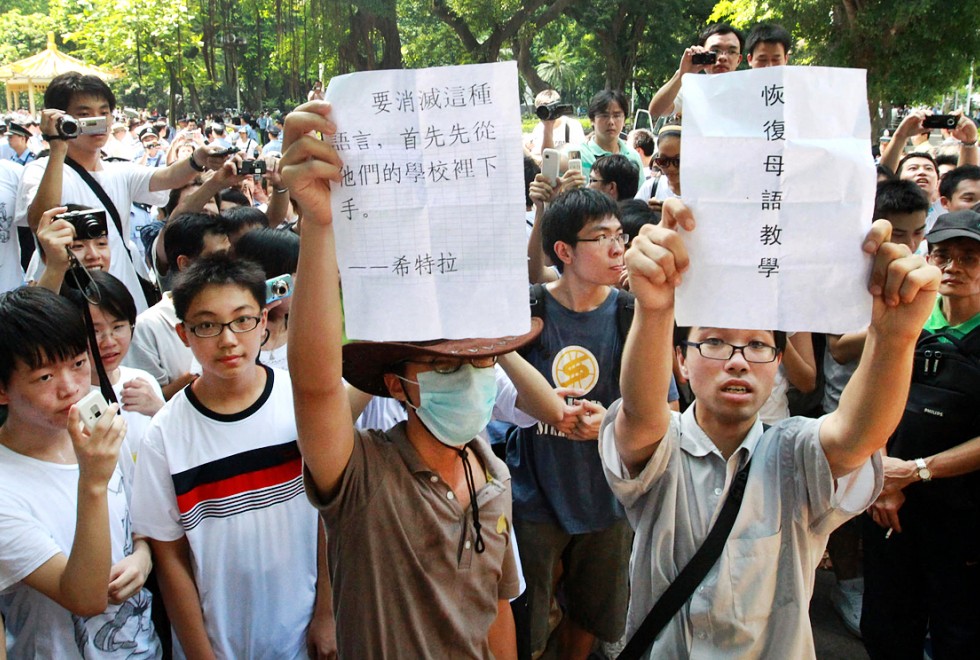
In previous articles on the Chinese language, I have focused exclusively on Mandarin (also called pǔ tōng huà, literally the “common tongue”). Today, Mandarin is the official language of life and business across China, from Shenzhen in the humid south, to Harbin in the frigid north, to Lhasa in the arid west. But other prominent dialects also exist, the most widely spoken of which is Cantonese. To learn more about this widely spoken dialect, which is an important part of southern Chinese culture, I recently sat down to talk with my friend and fellow sinophile, Jeremy Ryder.

Jeremy is a native of Perth Australia, and originally became interested in China after living in a multicultural Asian environment (Chinese, Cantonese, Malay, Hakka, etc.) while attending university. He has lived all over China, though more recently he has made his home in the Guangdong province, where Cantonese originated. As a Chinese-English translation professional, Jeremy has devoted a large amount of his time over the last six years to studying Cantonese and southern Chinese culture. 

China Culture Corner: What originally drew you to Cantonese?

Jeremy Ryder: The answer to this one goes back a long way. I had a life-changing period of about two years while attending Curtin University in Perth, where I found that all my flat mates spoke Chinese. Actually, only one of them was from China. The rest, along with their classmates and friends, were mainly ethnic Chinese from Malaysia, Singapore and Indonesia. During these two years, and in particular the last six months we spent together, I experienced something I had never known existed.

I became like a family member to these guys. After my classes, I would ride my bike home as fast as I could and I just couldn’t wait to arrive. As I rode closer to the flat, I could hear them all speaking in Mandarin and Cantonese, and when I heard it I just loved it so much. I couldn’t understand a word they were saying but I just loved being around them. They would only explain what they were saying to me occasionally in simple English, and would even sometimes laugh or gossip about me without me being any the wiser until they all started looking at me and laughing their heads off. They shared their culture, their food, their time and their stories with me, and we had the time of our lives. I also took them around Western Australia, showing them the pristine beaches and wineries that we have down there.

Go to KTV to sing songs in CantoneseGetting back to your question, the Cantonese seed was really planted in my heart early on. These guys took me to underground Hong Kong-style KTV places and Chinese clubs at two in the morning, places that no normal Australian would even know existed. I was exposed to the language when I couldn’t even differentiate between Cantonese and Mandarin. I had to keep asking them “are you guys speaking Cantonese or Mandarin?” After a while, I got used to who spoke what but one thing was for sure: I did not know then that I was going to study Chinese or Cantonese. I was 18 and I had no idea whatsoever what would happen next. I thought I’d simply get a job, get married and just have a simple life. But, I did say to myself, at least 20 times during my last six months with them, “Jeremy, your life will never ever be the same again.”

For some people, it’s hard to understand. Though my parents have been very supportive about the whole thing. I know when most Australians hear that I came to China to learn Chinese they think it’s strange and don’t understand why. In short, the experience I had during university was magical and special and I could honestly write an entire book about it, but that’s the best way I can explain the special passion that I have for the Cantonese language. So, it was natural that one day I had to start learning it.

China Culture Corner: You have just now referred to Cantonese as a “language”, while it’s much more common in English to refer to it as a “dialect.” What distinction do you make on this?

Jeremy Ryder: Many of my Cantonese textbooks refer to Cantonese as a language and Cantonese is the official language of Hong Kong and Macau. Interestingly, when you speak Cantonese, the local people in Guangdong, whose mother tongue is Cantonese, will tell you “wow, your Chinese is pretty good.” In other words, to them, Cantonese is the Chinese language. From my personal experience in Australia, when people refer to the Chinese language, a lot of people respond and ask “Do you mean Mandarin or Cantonese?”

When I was at IBM, and I did an interview to work on a project in Suzhou, one of the interview questions was “So you’ve got no problem communicating with the local staff in Suzhou, do you? Do they speak Mandarin or Cantonese?” That showed me that some foreigners are not sure about which languages are spoken in which parts of China. For me, I consider Cantonese as a language due to the large population of native speakers all over the world, and the widespread influence of Cantonese speakers throughout history.

China Culture Corner: How did you start studying Cantonese? What were your first steps?

Learning Cantonese is a big time commitment Jeremy Ryder: The first step was making a decision in my heart that “I am going to do this.” And not only that, but I had to reaffirm the decision and be sure about it. Having Cantonese idols, such as my favorite, Sammi Cheng, made it even easier to get motivated and follow my passion before starting this “marathon.” I also gave up Japanese, which I had been encouraged to learn previously at IBM Shanghai, to allow myself to commit to Cantonese fully. Next, I asked a school, where I went to previously for the HSK exam, to find me a VIP Cantonese teacher and give me 100 hours of lessons within two weeks.

I then took two weeks off work to start learning Cantonese. I had a wonderful teacher from Foshan who then went on to teach me every week after our first 100 hours for about a year. He was very patient and I looked after him by paying him well, focusing on my studies and taking him out for nice meals. Unfortunately, he later moved abroad to study Spanish so I then found two other teachers. I went to all the bookshops in Shanghai and Guangzhou and bought every book on Cantonese, but I could only find about 30 books. The best books were written in Chinese, not English, though later I found a great Cantonese-English dictionary which I studied – all 600 pages – in six months.

My teacher at the time told me “if you really want to study Cantonese, move to Guangzhou.” So I moved to Guangzhou, but I ended up living in the wrong part, the Tianhe district, where a lot of people spoke Mandarin. Later, I moved down to Foshan. In Foshan, I found that 99.9999% of the time the only thing I could hear around me was Cantonese, and I fell in love with the place. It’s not the kind of place, such as Beijing or Shanghai, where foreigners are popular or a novelty. It’s quite the opposite. If you walk along the street for an hour, nobody will look at you or acknowledge you at all. I found it to be a very traditional and conservative Chinese style. But Foshan, and in particular Shunde, has really maintained traditional Cantonese culture.

China Culture Corner: What were your key difficulties learning Cantonese? How is it different from Mandarin?

Get out and explore Guangzhou to practice CantoneseJeremy Ryder: Cantonese is a very rich language, with more tones, making it harder to remember the correct pronunciation for each word. Cantonese is very colloquial and is constantly evolving. There are so many idioms and metaphors and there is so much slang to keep track of. The other thing is that there is a major lack of resources for studying Cantonese. Unless you’re competent and can sustain a decent conversation for a while, the Foshan guys will just slip back into Mandarin to overcome any communication or language barriers. That’s the danger.

Unfortunately I haven’t gotten good enough to have a decent conversation without the other person being reasonably patient with me, so even if you are immersed in a place where everyone is speaking Cantonese, you really have to keep learning, going to classes or watching all the Cantonese TV series to try to keep up with it. Moving to Shenzhen has almost killed it for me although they still have the Cantonese TV channels and some people who speak the language.

China Culture Corner: How useful can Cantonese truly be, when Mandarin is the national language?

Jeremy Ryder: I wouldn’t say that Cantonese should necessarily be the national language, but to me Cantonese is ”international Chinese” because ever since Cantonese spread all over the world hundreds of years ago during the gold rush, the language has spread and maintained itself with about 100 million speakers worldwide. In Australia, there are a lot of jobs advertised which require Cantonese. And, no matter where you are in the world, you will always be able to hear Cantonese. It has maintained itself internationally and throughout China, simply because of the number of Cantonese speakers and the fact that native Cantonese speakers know that their language really does have that edge and that power to it.

China Culture Corner: Recently, it’s been reported that many Chinese young people no longer speak the dialects of their parents, including Cantonese. What are your thoughts?

Ghuangzhou locals didn't let their language disappear Jeremy Ryder: This is the saddest thing and the worst possible scenario. When I grew up in Australia, I was friends with the one or two Chinese kids in my classes and I realized very quickly that none of them could speak Chinese or Cantonese at all. Even with surging numbers of Chinese people around the world, the language gets lost through the generations. I think it’s terrible because they’re losing something so valuable. Sure they want to integrate into the societies of Western countries, but I wish they knew how rich and valuable, in cultural terms, their language is.

The same thing is happening in cities in Guangdong province and in Shanghai: the young kids are getting worse at speaking their native dialects. Their parents are encouraging them to answer their phones in Mandarin, and even speak Mandarin to their own kids. This is cultural degradation and must be stopped. Conversely, at one point when there was a plan to exclude Cantonese from the media, the people in Guangzhou made a big fuss and fought to save their language. It really is important to the people in Guangzhou. Guangzhou is where Cantonese originated and is now being maintained, especially in Yuexiu and Liwan and other parts of the city. Of course, it’s not only about the language, but also maintaining other elements of the culture.

China Culture Corner: Do you have any advice for non-Chinese people who are interested in experiencing the Cantonese language and culture?

步行街-1Jeremy Ryder: Keep practicing on a daily basis. Don’t be afraid to speak out and look for opportunities in your life to use it. For example, talk to taxi drivers in Cantonese when you can. Use Cantonese in shops. Get a teacher and pay for classes. But above all, find something within the Cantonese culture that you are passionate about and keep coming back to it for motivation. For me, it’s listening to Cantonese songs that I like, but for others it could be watching TV series, watching movies, finding a Kungfu master to teach you Kungfu in Foshan or Hong Kong. Perhaps you like using Cantonese when shopping in Hong Kong.

It’s a hard language to learn and you’ll probably feel like giving up sometimes, but when that happens, go back to the source of your passion to “refuel.” Get motivated again and then keep going. Let go of western ideas or behaviors and keep an open mind about different aspects of Cantonese culture when you’re talking to the local people. Try not to think of yourself as an outsider in areas where Cantonese is the native tongue. Find as many different ways to learn as possible. Get into the food culture especially by going to the Yumcha restaurants or Cantonese restaurants and ordering in Cantonese.

Thanks for reading!

Do you have any questions about the Cantonese language or culture? Can you share your own experiences learning Cantonese? Please feel free to post your thoughts in the comments section below.

Follow the China Culture Corner to receive regular updates by email!