Tag Archives: Face

Saying “No” in China

When doing business or living in China, it is inevitable that one will, from time to time, be forced to say no, to deny a request, or to offer criticism.

However, in Chinese society, which emphasizes respecting people’s Face and maintaining importantrelationships, saying no directly can lead to unintended problems.

As a rule, the Chinese are much more vague and indirect than Westerners. By understanding the different ways in which the Chinese indirectly refuse others, Western businesspeople in China will have several advantages.

First, when speaking with Chinese employees, superiors, friends, and family members, recognizing a vague refusal can lead to an earlier comprehension and reduce the potential danger caused by misinformation.

Second, understanding the Chinese indirect methods of refusal can allow Western businesspeople to apply them to their own conversations and negotiations with the Chinese. By saying no in the Chinese way, the feelings of the Chinese can be spared, allowing for a more effective working relationship.

Below, several common methods of saying “no” in China are presented for the education of interested Western businesspeople and travelers, so as to be more able to effectively communicate with the Chinese.

Express Embarrassment

One of the more common methods of saying no in China is to begin a refusal by expressing one’s own embarrassment at the situation. This is stated exaggeratedly, with the person saying no acting as if they are inconveniencing the person they are saying no to.

The goal here is to placate the person being spoken to and to give them an extra measure of respect to not cause them to lose face or feel unappreciated. This method might be used to avoid going to lunch with a coworker or declining to help a friend with a favor.

“Oh my gosh, I’m SO embarrassed! I completely forgot about having lunch with you today.  I’ll definitely make it up to you tomorrow, ok?”

Be Roundabout and Vague

Another way to say no in China, without unduly offending a Chinese person, is by being roundabout and vague. In other words, this means not giving a direct reply. The Chinese often use terms such as “I’m not sure,” “maybe,” and “perhaps.”

In addition, other words that in Western cultures express assent or understanding can in China be used to be noncommittal. These include words such as  “I understand,” “sure,” and “I know.” In practice, there are two ways vague language can be used in this regard.

First is when one does not want to damage the Face of a Chinese person. Second is when one wants to protect oneself from the negative consequences of overtly supporting or agreeing with another.

One example could be a manager who does not want to directly reject the idea of a subordinate and thus cause them to lose Face in front of coworkers. Using vague language can allow the manager to put the issue on hold until he or she is better prepared to handle it.

Make Excuses – You Need to Confer With Your Boss

A common method in the Chinese business community to say no (or aid in negotiations) is to pass the blame for making a decision to one’s boss or superior.

With this method of saying no, although a Chinese person might say no more directly than at other times, they, to a degree, are able to remove responsibility from themselves.

This method serves to protect the relationship between two people (e.g. salesman and a client) even when saying no directly is unavoidable.

In fact, it is common for small business owners to display a lower-level position (such as senior consultant or senior manager) on their business cards expressly for the purpose of using this tactic and allowing greater flexibility in negotiations.

Tell a “White Lie”

It’s important to remember that saving Face for the Chinese has little to do with the truth and everything to do with personal feelings and prestige.

The Chinese try to protect the Face of friends and coworkers by hiding the truth and replacing it with something less embarrassing or negative. For example, when an outing has been planned with friends or family, not attending because one “ doesn’t want to” would cause hurt feelings or anger.

It is much more acceptable to the Chinese way of thinking to claim that one has to work overtime to prevent hurting the feelings of a friend. Likewise, when unwilling to work overtime or attend a conference, a Chinese employee might tell their superior that their parents have fallen ill, and thus cannot attend.

“I’m sorry John, I just found out that my wife’s parents are coming to visit Shanghai this weekend. They expect me to show them around the city and I’m afraid I won’t be able to attend the conference with you. I really wanted to go with you but I’m afraid there’s nothing I can do.”

Put Things Off

One Chinese method of saying no, which causes misunderstandings for Western sales and business development professionals, is the Chinese tendency to put things on hold or to claim to be busy.

For example, when a Chinese company does not want to meet with a salesperson, it is common for the salesperson to be told to “call back in a few months.” In many cases, this simply means that the company is not interested in a meeting. In the above example, it is of course likely that the company doesn’t care about the Face of the salesperson; they would simply rather be indirect.

However, putting things on hold can also be used to try to preserve the feelings of a friend or coworker. If a good friend asks for a loan of a large amount of money, a Chinese person would likely rather try to put things on hold for a few months rather than embarrass their friend by saying no.

Offer a Positive before a Negative

When one has to say something less than positive to a subordinate, this method can be used to mitigate a potentially bad reaction. For example, if one needs to say no to an employee who asks for a promotion, it might be a good idea to first praise their hard work and their contributions to the team/company.

When it is necessary to criticize a certain area in an employee’s performance that needs to be improved, one can first highlight areas in which they excelled. In this manner, the employee’s Face and they will be less likely to feel humiliated in front of their coworkers.

Final Thoughts

Although Chinese people are not always politely indirect when speaking with one another, it is common enough behavior within the Chinese business and social environments to merit study by Westerners.

And while the actual practice of saying no appropriately does indeed take some practice, there are several key categories to saying no that the Western businessperson in China should try to remember.  These are 1) padding the truth, 2) telling white lies, and 3) being roundabout and vague.

Taking heed of these three methods will allow Westerners to be more able to communicate effectively with the Chinese as well as to understand them more quickly and with less difficulty.

Lastly, while it is true that many Westerners may recognize some of the above methods for saying no from their own experience in Western society, there is an important distinction that one should understand.

While most Westerners may at times be vague and indirect, this is not the norm and usually clashes with Western society’s concepts regarding honesty and the truth. Chinese society is the opposite. To the Chinese, being vague and indirect is a part of everyday life, and it not only colors the way they offer refusals but also how they communicate in general.


If you’re interested in thoughtful perspectives on China, cross-border work, and how culture, incentives, and organizations shape real outcomes, you’re welcome to subscribe to China Culture Corner and receive future posts by email.

I also share related ideas and longer-form video commentary on LinkedIn and YouTube, and post updates across the channels linked above.

If you or your organization is navigating China execution or cross-border alignment challenges, I work with teams on an embedded and remote basis. Reach out directly: Sean@SageSightConsulting.com

China Expat Survival Tips: 15 Ways to Apply “Face” in China

Watch and SuitMany Western business people working in or traveling to China for the first time have heard of the Chinese concept of Face. However, understanding the basic elements of Face and knowing how to apply it within an office environment are very different. Applying Face correctly can depend on a deep and comprehensive knowledge of the Chinese people, society, and culture, which many Westerners new to China may lack. However, it is also possible for Westerners is to learn about and adopt common methods used by the Chinese to give Face to each other and earn Face for themselves. In this way, Western business people can more easily show respect to the Chinese which can lead to a more harmonious and effective working environment and a better China experience in general.

An article published by efinancialcareers provides a useful list of 15 ways for Western expatriates working in Chinese companies to effectively apply the Chinese concept of Face. A number of the most useful tips, based upon the author’s own experiences in China, are explained below. 

Create Face for Yourself

  1. Buy and wear well-known brands
  2. Have a successful family
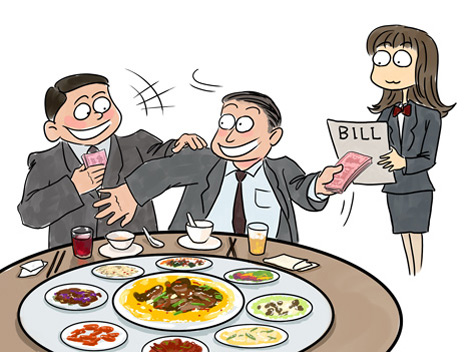
  3. Pay the bill when dining out
  4. Learn about Chinese culture

Creating Face for yourself is a good way to build your reputation and prestige within the office in China. For instance, wearing well known brands (as appropriate for your workplace) can show that you are well off and stylish without bragging. Similarly, as family is important to the Chinese,  demonstrating that you have a stable and successful family, through photos or attendance at company outings, can earn the respect and admiration of coworkers. When dining with colleagues in China, paying for the bill, or more specifically paying for the bill over the objections of others, is a way to gain Face for yourself and show respect and friendship to your coworkers.  The Chinese Paying the bill gives Faceidea of courtesy and reciprocity provides that everyone needs to take a turn at paying the bill sooner or later, but attempting to pay it more than your equal share of the time can show you to be generous and helps to build and maintain relationships with your coworkers. Even when a coworker is taking “their turn” at paying the bill, making half an attempt to pay the bill shows that you care.  This and other efforts to learn about and understand Chinese culture will show that you are committed to China and can significantly increase your own Face at the workplace.

Work Harmoniously With Your Coworkers

  1. Don’t openly flaunt money or possessions
  2. Don’t trip over vague or misleading phrases
  3. Support your boss
  4. Be over-generous to team members
  5. Avoid complex English

Respect Chinese employeesYour work life in China can be made a lot easier when you respect the Face of your Chinese coworkers as well as giving them Face directly. Although many Chinese respect the possession of money and expensive items, it is considered immodest and rude to opening flaunt or brag about them and can insult your coworkers.  Being on good terms with your boss is important, and giving Face when appropriate can accomplish a good deal in this regard. For instance, a manager or boss in China places a huge deal of importance on their own Face and prestige as a leader. Praising the leadership of your boss in front of clients, quickly and efficiently carrying out their orders and giving them useful ideas or suggestions which they can receive credit for can cement your position in a given role and open up avenues for promotion in the future. Likewise, it is important to not trip over or misunderstand directives from your boss which are worded in a vague or roundabout manner. For example, you may be asked if you would be able to attend a conference on the weekend, or how you feel about working overtime in a given week. In each of these scenarios your boss likely is telling you to do these things, and not making him or her tell you directly will give Face Give Face to build relatonshipsand preserve your relationship with them. In many cases if you refuse your boss, he or she may not actually order you to comply but feel a loss of Face and regard you as less of a team player. Relationships with coworkers are important too, and while many managers and white collar workers in China tend to copy the “get ahead quick” attitude of their Western colleagues, it is not considered polite to show it. Instead, show you are a team player by praising contributions of your colleagues, even if you have done most of the work. In this way you can preserve their Face and gain Face for yourself for acting as a generous team member. Lastly, try and avoid making your coworkers or business partners feel embarrassed or awkward. Despite a nationwide focus on learning English in China, not many Chinese speak it fluently.  This is especially true of successful local business tycoons located far from China’s huge eastern metropolises. Thus, insisting on using complex English can result in you being misunderstood, and can also cause a loss of Face through embarrassment for the Chinese. Instead focus on simpler language and building mutual understanding and respect.

Don’t Cause a Severe Loss of Face

  1. Don’t disagree openly with your boss
  2. Don’t be seen as a threat
  3. Take time before you criticize
  4. Resolve differences ahead of time

Hierarchy is important in ChinaA big mistake to make in China is causing your coworkers to lose Face, especially those that are above you in the office hierarchy or those that can negatively influence your career. The worst mistake with regards to causing a loss of Face applies to your boss or other high ranking Chinese executives. For instance, disagreeing with your boss in front of others is a sure way to make them lose Face. It doesn’t matter who is right or wrong, by disagreeing OPENLY, you are questioning their leadership. Instead speak with them in private if you find it necessary to question one of your boss’ decisions.  Also, most Chinese leaders feel like they need to be the smartest or most competent to maintain their prestige as a leader. If you act as though you are smarter or have more experience than your boss, you may immediately be labeled as the enemy and slowly forced out. Until you are promoted, focus on acting as an effective #2. In addition, it is a good idea to avoid criticizing coworkers and do your utmost to settle any differences in advance of public meetings or discussions. Even if you directly criticize one of your subordinates, it still has the potential to backfire. When an employee is criticizing can backfirecriticized directly, especially if it is in front of others, he or she could feel embarrassed and lose Face to the extent that it negatively affects the employee’s relationship with you, negatively affects the employee’s work, or causes them to leave the company in embarrassment or anger. And if you argue with others in meetings there is the potential leave a bad impression and have others label you as a troublemaker. Thus, it is always a good idea in China to settle any differences beforehand and by all means avoid criticizing others when possible.

To see the full list of 15 ways to apply Face along with perspectives from China business experts,  the article,  “The ancient Chinese cultural concept that could save your banking career,” can be viewed HERE on efinancialcareers’ website.

As can be seen from list items presented above, in China, Face is all about respect. And to use Face properly you must 1) create Face for yourself, 2) give Face to others, and 3) don’t make others lose Face. Creating Face for oneself is easier to a degree, while giving Face to the Chinese and preventing them from losing it can be much harder. And while gaining a comprehensive understanding of how to use Face in China can take many years of studying Chinese culture and working among the Chinese people, following the tips above is a good place to start.

Thanks for reading!

Do you have any additional questions on how to apply the concept of Face in China? Do you have any additional tips or ideas on how to apply Face based on your own experiences? Please feel free to post your thoughts in the comments section below.

Follow the China Culture Corner to receive regular updates by email!


China Expat Survival Tips: Joining a Chinese Company

group activeChinese companies in Mainland China are expanding and improving their operations to increase profits and compete globally. Part of this includes sourcing top-tier Western talent for a variety of functions including finance, operations, sales, and marketing. However, for the Western business professional contemplating a move to Mainland China, it is essential to first be aware of the many differences present in Chinese companies. The office culture of many companies in Mainland China, even those operated by Western companies, can cause stress and worry for the unprepared Western expatriate as a result of differences in culture, business practices and unspoken social rules. Research  suggests that at least 30% of  expatriates on assignment in foreign countries  may not complete their entire assignments. It is likely that some of these failures in China are a result of stress and other difficulties brought on by cultural differences. To increase an expatriate’s chances of success and reduce the time required for cultural acclimation, it is a good idea to first be aware of the basic elements at play within a Chinese office environment.

An article published by efinancialcareers lists a number important points to be aware of before joining a company in the Chinese finance industry. In fact, many of these lessons can be applied to Chinese companies in many sectors throughout China. Some of the more widespread issues are listed and expanded on below:

  1. You Need to Understand Guānxì. Guānxì is your relationships with coworkers and the favors owed between you and them. The Chinese make use of gifts, social dinners, and other methods to maintain their relationship networks and navigate the office environment. To get things done in a Chinese company, it is essential to form friendships and alliances with your coworkers and supervisors.
  2. Account for Yearly Bonuses. When accepting a contract at a Chinese company, be aware that your actual salary is based upon 13  months rather than 12. It is  customary in China for all employees to receive a yearly bonus before the Chinese new year equal to one month’s pay.
  3. Don’t Rush Meetings. Meetings can take time in China. On one hand, when meeting with new people the Chinese will want to get to know you first and will not want to get down to business immediately. At internal company meetings, social etiquette can prevent direct communication as no one wants to cause embarrassment. Don’t try to rush things or it is possible to alienate or annoy clients and coworkers.
  4. Learn the Company’s Hierarchy. In a Chinese company there is much more space (or power distance) in a company between the highest and lowest level employees. While in Western companies there can be much more freedom for low and mid level employees to talk and mingle with company executives, this is usually not the case in China. You probably won’t be able create relationships higher than your direct supervisor.
  5. Orders are not Debatable.The leadership model in many Chinese companies is markedly different than many successful Western firms. Chinese leaders are not accustomed to discussing courses of action and getting everyone’s opinion and buy-in. They give orders and expect them to be carried out.
  6. Don’t Cause a Loss of Face. Causing a loss of face can be dangerous in China as it strains relationships. It can also drive away coworkers or prevent a promotion. Also, be careful when criticizing others, or offering up an opinion lest you become a disliked member of the office.
  7. After Work Company Entertainment May Not be Optional. When invited to attend a company dinner or karaoke event after office hours, attendance  is likely expected. These occasions not only offer an opportunity to relax, but also act to reinforce the various relationships within the company. If you don’t attend, it can reflect badly on you and your supervisor may feel you are not demonstrating the proper amount of respect and loyalty for the company.
  8. Expect to Minimize Expenses. No matter what official company policy might be, the Chinese have different ideas than some Westerners on company expenses. For example employees in Chinese companies are expected to be proactive in saving the company money. This might include things such as sharing hotel rooms on business trips, using personal cell phones for company calls,  and providing personal receipts for the company to write off as business expenses. Not complying can cause one to be seen as greedy and not a team player.

For the full list from efinancialcareers’s website including perspectives from local experts in China, the article,  “Ten things to know before you join a Chinese bank,” can be viewed HERE.

All in all, Chinese companies are not so different from Western ones in that they have similar goals; they simply have different ways in which they go about achieving those goals. A solid foundational understanding of Chinese business culture and the Chinese office environment can go a long way towards preparing new Western expats for China and preventing costly mistakes. For more information on the fundamentals of Chinese culture, take a look at the China Culture Corner’s section on Culture Basics.

Thanks for reading!

Do you have any additional tips, advice, or questions about working in a Chinese company? Please feel free to post your thoughts in the comments section below.

Follow the China Culture Corner to to receive regular updates by email!