
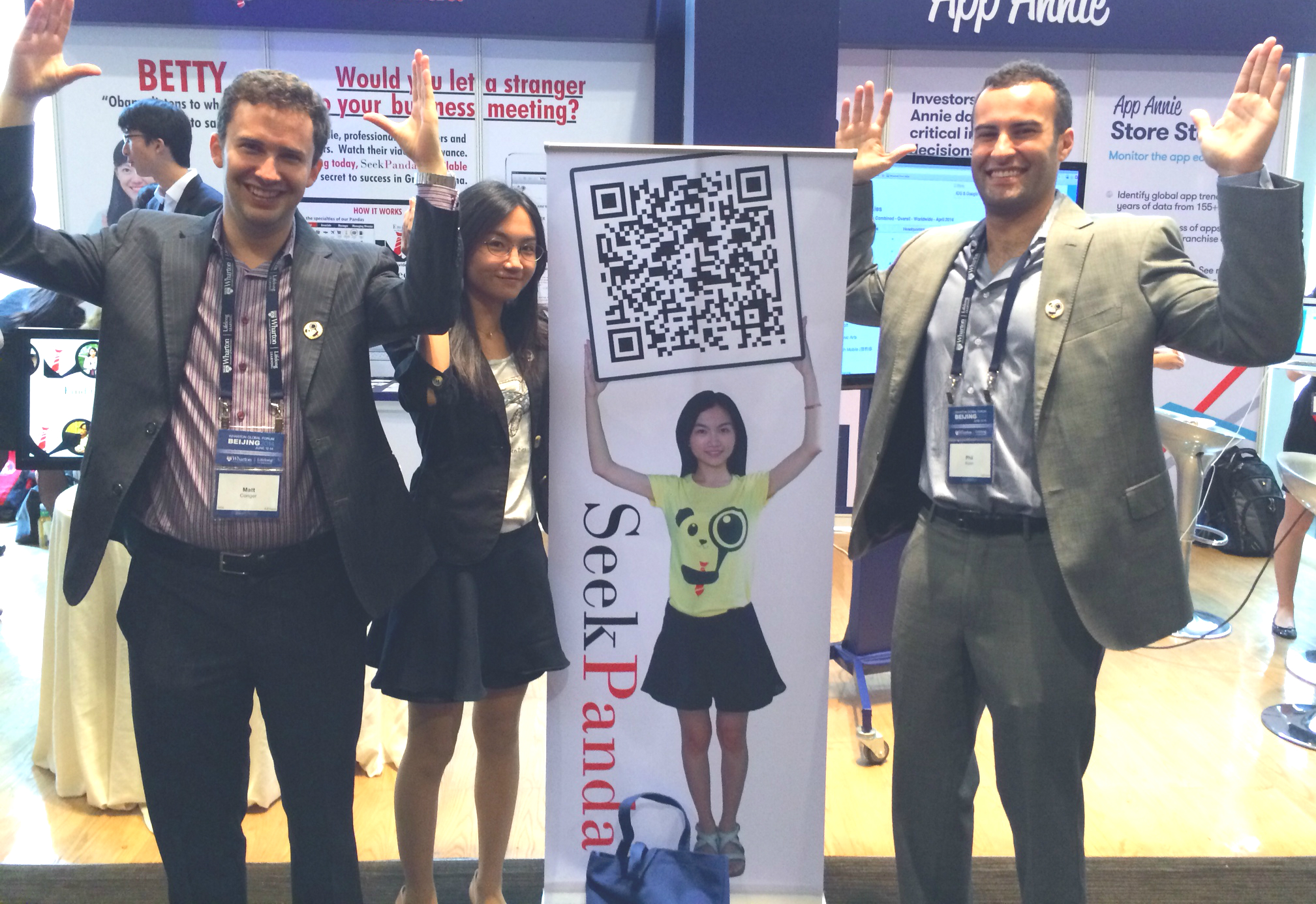
 In March 2015, I sat down with Matt Conger and Phil Kohn, two young China entrepreneurs from the United States who are pursuing their China dream in Beijing. Matt and Phil are the co-founders of SeekPanda, which aims to revolutionize China’s interpretation market by providing Western businesspeople with easy-to-find, top-quality interpreters who can truly help their clients bridge the China-West cultural divide. In this interview, I speak with Matt and Phil about the SeekPanda business model and their experiences in China thus far.
China Culture Corner: So, in a nutshell, what is SeekPanda?
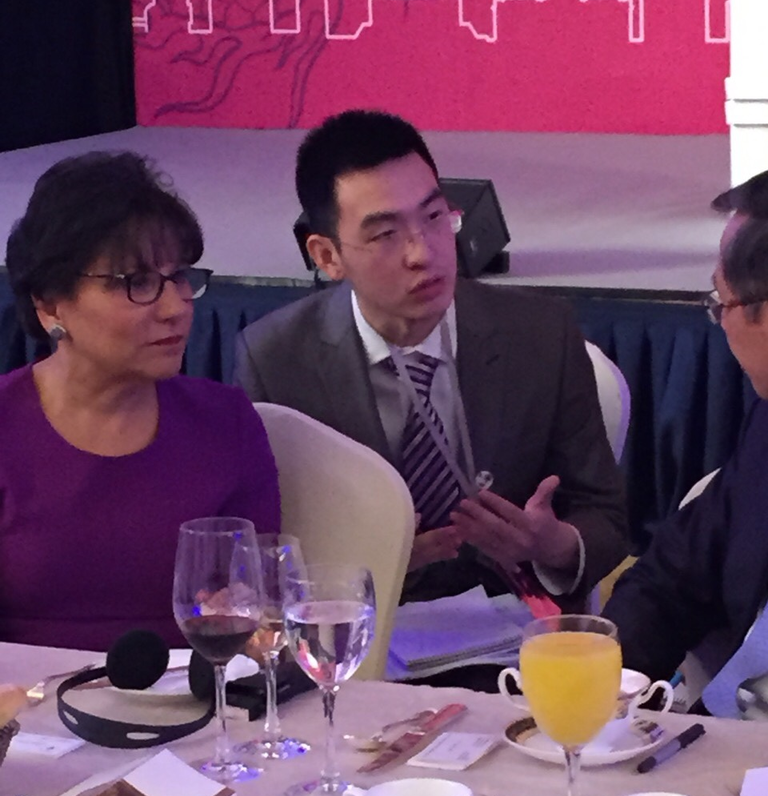
SeekPanda: SeekPanda is China’s top curated marketplace for on-demand, professional interpreters and translators. Founded in 2014, we have served 200+ customers, including government delegations such as U.S Secretary of Commerce Penny Pritzker, in over 1,000 meetings, including several of the world’s leading expert networks. Our management team is based in Beijing and Seattle, and has previous work experience at Credit Suisse, Bain & Company, and other major professional services firms.
China Culture Corner: When we first spoke, you mentioned the interpretation market in China was broken. Can you tell me more about the specifics? How and when did you first discover this?
SeekPanda: In general, unless you use an interpretation agency it is very hard for first-time business travelers to find trusted freelance interpreters. At the same time, it is hard for these interpreters to find good clients. In addition, the world of agencies is full of unfavorable circumstances, including:
- Agencies price discriminate and lack price transparency
- Agencies keep much of what the client pays, often well over 50%, and sometimes up to 70%
- Agencies “bait and switch,” meaning they show a client the CV of one interpreter but then assign a different interpreter to do the job.
As we were forming SeekPanda, we also discovered through LinkedIn that even if an interpreter looks reliable on paper, they might not have adequate IQ [traditional intelligence] and EQ [emotional intelligence] to succeed as a business interpreter.
China Culture Corner: What made you decide that revolutionizing the current interpretation business model was the way to go? Do you feel there is a lot of room for growth?
SeekPanda: At the end of the day, we are committed to helping people succeed in doing business in China, and very early on, we sensed the difficulty of this in the pre-SeekPanda world. This realization, coupled with the agency issue, made it clear that this market is ripe for innovation and needed to change. In terms of growth, we believe that once we master the Chinese market, we can apply this business model to other countries that have similar language and cultural barriers, such as Japan, Korea, Vietnam, and others.

China Culture Corner: Are you worried about other businesses copying your model? Could a local Chinese company come in and be a second SeekPanda at a lower cost?
SeekPanda: There will definitely be SeekPanda copycats and people can certainly copy the basics of our model. However, we hold three key competitive advantages:
- First, we’ve established strong relationships, not just with interpreters themselves, but also with the institutions they’ve graduated from – basically we have a strong control over the supply.
- Second, we are building a powerful matching algorithm and tech solutions.
- Third, our management team has a unique combination of business education, job experience, China work experience, and Chinese language skills.
China Culture Corner: Can you tell me more about SeekPanda’s interpreters? How are they different from those you would find through agencies, or are they?
SeekPanda: To begin with, they are exclusively either graduates from the world’s top masters in interpretation programs (e.g. MIIS, the University of Bath, Shanghai International Studies University, Beijing Foreign Studies University), or seasoned industry experts, such as someone who worked on a wind farm in the USA for seven years. Beyond that, we vet each interpreter for their “people skills” to make sure they have the proper EQ needed to be successful.
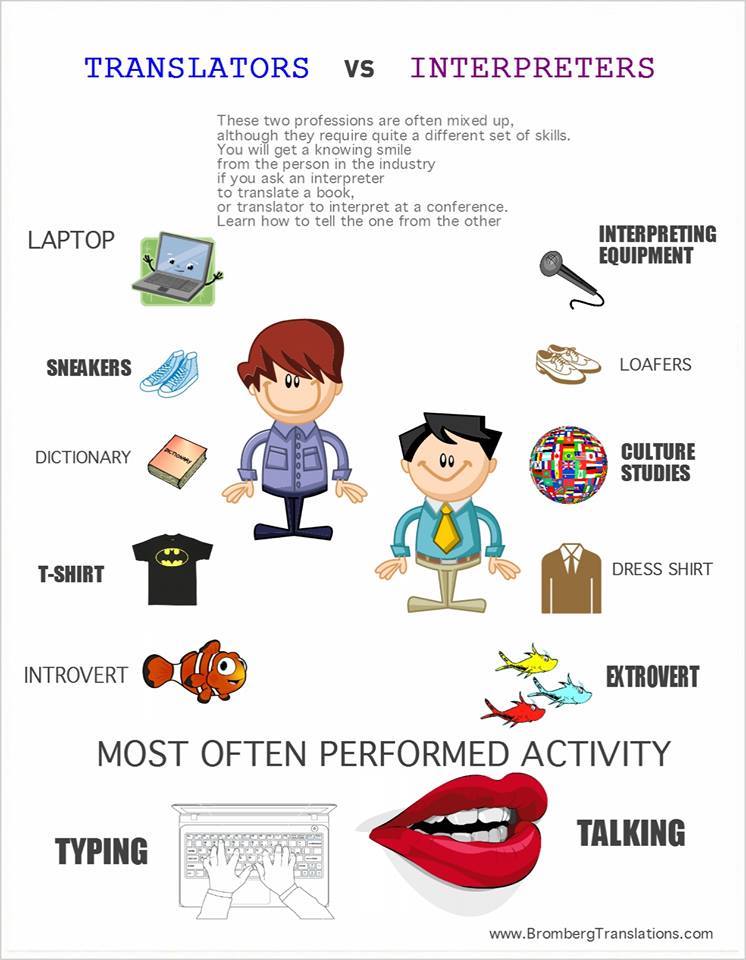
China Culture Corner: Based on your experience, what makes a good interpreter versus a bad interpreter? What about a good versus bad interpretation experience for a Western businessperson?
SeekPanda: A good interpreter is much more than just a walking dictionary. They have EQ, not just IQ. They can manage the mood of the meeting and help the client relate to what is really being said, not just a literal interpretation.
A great example that we like to refer to is as follows: consider a situation where a customer has flown all the way to China for a highly anticipated and important meeting with a government official that has been cancelled, rescheduled, cancelled, and then finally rescheduled again. The customer is in the middle of the meeting with this high level government official, when suddenly the government official gets a phone call and blurts out “不好意思我有急事” [literal translation: I’m sorry, I have an important matter] and immediately leaves the room.
Only an interpreter with high EQ will succeed in this situation. “I’m sorry I have an emergency” is the low-EQ answer. It may be factually accurate, but could alarm the client. “I’m sorry but something has come up” is also accurate, but implies disrespect to the visitor who has waited so long for the meeting. A good interpreter would pay attention to the mood throughout the meeting, such as whether the official was looking for an excuse to end the meeting, and then make a judgment call for how to convey the message to the client. Perhaps the message to the client would be “he had something to take care of quickly. It’s not clear what has happened but let’s just wait and see. Don’t worry.”
China Culture Corner: I understand SeekPanda’s interpreters receive a much larger cut of the interpretation fee than they would from an agency. Does that also mean that SeekPanda’s total fees are higher too?
SeekPanda: No, the total pie is still 100% – we just allow the interpreter to keep more of it. And, we can afford to do this because we have a much lower cost, highly efficient operation.
China Culture Corner: What advice would you give to a Westerner who is coming to China for the first time and is in need of an interpreter? What are the key things they need to know?
SeekPanda: Don’t assume that being bilingual in English and Chinese is synonymous with a good interpreter. Many companies choose to bring their bilingual analyst or associate from their law firm along to meetings to translate. These individuals lack the extensive training that interpreters go through during their two to three years of graduate school. Interpreters learn special methods of note-taking, etiquette, and concentration skills that even the most fluent bilingual speakers lack.
China Culture Corner: What originally drew you to China? Was it the culture? The language? Or mainly business opportunities?
SeekPanda: For Matt, it was a combination of language and business opportunities. For Phil, it was a combination of the language and culture. This is part of what makes us such a powerful team.
China Culture Corner: Do you have any interesting China stories you can share? What really surprised or shocked you after you arrived in China for the first time?
Phil: During one of my initial business visits to China I went to Hainan for a day of meetings. I arrived in the meeting room, sat down at my assigned seat, which had a name-card that read 孔菲尔 [kǒng fēi’ěr, a Chinese transliteration of Phil Kohn], which I figured was a really cool name at that time. There was also a plate of fruit, tea and a coconut. What a cool meeting setup in tropical southern China! That night I remember eating sand worms, which was a truly unique delicacy.
Matt: I was on an investor roadshow and we were pitching to three to four companies a day. The most prestigious company on the list, whose founder was one of China’s richest men at the time, had us pitch at 8pm on a Saturday evening. It was the first time I had encountered the famous Chinese work ethic so obviously, this time coming from a 金领 [jīn lǐng: a gold collar worker, a highly paid professional or executive] and not a 蓝领! [lán lǐng: a blue collar worker]
China Culture Corner: What words or expressions would you say best sum up your China experience thus far?
SeekPanda: Full of excitement, surprises, challenges, twists and turns, and new experiences.
Thanks for reading!
If you would like to learn more about SeekPanda, please feel free to visit their website at http://www.seekpanda.com. If you have any thoughts or questions on the interview, or on the interpretation market in China, please feel free to post your thoughts in the comments section below.
Follow the China Culture Corner to receive regular updates by email!