
Due to the sensitive nature of this story, names and place names have been changed to protect the identity of the interviewee. All other aspects of the story have not been changed.
Living in China can be very stressful, and Westerners and non-Chinese can take a long time to adapt to local culture, customs, and rules. During this transitional period, there is often a constant barrage of culture shock, which can make simple, everyday tasks feel like a burden.
However, that’s just one side of the coin. Many Westerners and non-Chinese, often while dealing with culture shock of our own, never stop to think about the difficulties they may cause for Chinese friends and colleagues. Words and body language employed, even unintentionally, can easily shape the experiences of Chinese people, even though a single interaction.
Unfortunately, due to language barriers and the general unwillingness of many Chinese to share personal feelings, most Westerners and non-Chinese never have the opportunity to hear directly from their Chinese contacts, and thus may be unaware of negative effects caused by their actions. Therefore, I’d like to present the personal story of a Chinese friend, and the situation she experienced when on a business trip with Western colleagues in China.
My Chinese Friend, Julie
The other day a close Chinese friend, let’s call her Julie, called me up literally in tears. She felt depressed and humiliated, and it stemmed from the treatment she had received at the hands of Western colleagues during a business trip to Shenzhen. But before I talk more about the treatment Julie experienced, I’d like to briefly introduce Julie and her background.
 Julie is from Mainland China. She was born in the Guangdong province, is fluent in 3 languages – Cantonese, Mandarin, and English. She currently works in Shanghai and has a large amount of experience both working in international organizations and traveling abroad. She currently works for a global corporation and her department focuses on a mix of training, human resources, and more importantly, diversity and inclusion-related work.
Why are these details important? While there is never any excuse for discrimination or mistreatment of others, I want to make it perfectly clear that Julie holds no naivety in regards to big-city or international life which might be used as an excuse to not take her seriously. She is also highly skilled linguistically and culturally and is well-adapted to conversing and interacting with Westerners.
In addition, there’s fact that Julie’s Western colleagues – experts in promoting diversity and inclusion – could so easily and often overlook the diversity and inclusion of a local Chinese worker. This should serve as a stark reminder that none of us are truly immune from cultural discrimination, no matter how well-prepared or well-intentioned.
Now, let’s take a closer look at the particulars of Julie’s business trip, and why the behavior of her Western colleagues had such a profound effect on her.
The Situation
Based on what Julie told me, were several types of events over the course of her business trip that contributed to her negative experience.
Food: Like many places around the world, food is an important element of Chinese identity. Many provinces and larger areas of China have their own, unique culinary tastes, and Julie is no different. As someone from Southern China, Julie grew up eating Cantonese dishes and delicacies that many Westerners and non-Chinese would hesitate to touch. But there is a big difference between choosing not to eat a particular dish, and ridiculing said dish in front of a native who holds it as part of her cultural identity.
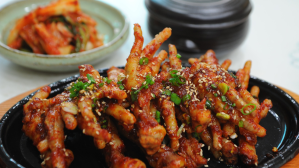
And that’s exactly what happened. During one lunch, several Westerners on Julie’s team made a point to loudly ridicule Chicken Feet, a popular Cantonese dish, and make it known how much they were disgusted by it. While Julie remained silent, she later related to me how much it felt like a slap in the face. “Why is it,” she asked me, “that Westerners come to my country as guests, but still end up telling me how disgusted they are with my country and culture?”
Language: With three languages under her belt, Julie was clearly among the most linguistically capable of the employees on the business trip. Most of the visiting Western colleagues could only speak English, and none had taken the time to learn much, if any, Chinese. Despite this disparity in her favor, during the business trip, she constantly felt an impatience from her Western colleagues with regards to both her speaking speed, as well as her occasional need to search for a specific word.
This type of behavior is sadly common in China, where in the past and currently Westerners can come to China for work without learning the local language and culture, while local employees are often made to feel they can never learn enough to satisfy the desires of their Western coworkers and superiors.
Group Dynamics: Last, despite her global focus and time spent adapting to Western culture, when it came time for lunches and after work activities, Julie commonly felt that she and other Chinese colleagues were not “allowed” to be part of the Western group. Western and Chinese groups, both at work and after work, naturally formed, and despite her desire to join the Western group, she never felt welcome.
It’s important to emphasize that Julie’s above experiences were the result of many small interactions and incautious words. These combined over multiple days before finally becoming too much to bear – the straw that broke the camel’s back. It’s therefore of great importance to understand the types of actions and behaviors that can eventually break the spirits of Chinese colleagues and friends. Without this basic understanding, it can be very difficult to have positive relationships with the Chinese lead a more enjoyable life in China.
Why Expat Discrimination Happens
Placing expats on a pedestal: The West has had a problem with “false superiority” since its early interactions with China, and this has sadly, though not surprisingly, carried into the era of the Western expatriate in China. Since Western expatriates coming to China are often highly experienced and almost always brought onboard local operations to fill a gap in the expertise of local talent, it is perhaps inevitable that many would assume a real superiority in professional experience also translated to superiority in other areas, like language and culture. I myself have seen far too many Western expatriates haughtily yelling at or dismissing the concerns of Chinese colleagues or subordinates.
Assuming only your culture has value: Culture shock is a big problem for non-Chinese visiting China, and understandably can lead to stress from feeling isolated, leading them to retreat to like-minded cultural and social groups to better deal with the difficulties of daily life. However, what is not often discussed is how these coping behaviors often lead expatriates to broadly look down on anything that is not Western, be it food, living standards, social etiquette, or common business practices.
Taking Steps to Stop Expat Discrimination
There isn’t, nor will there ever be, a permanent cure for discrimination from Western expatriates (or anyone else for that matter). However, if you are interested in showing greater understanding and respect toward Chinese colleagues to boost work efficiency and enhance team cohesion, there are a few simple actions you can take.

Think before you speak: The simplest and best-advised tactic is to think before you speak and consider how what you say might be negatively perceived by the Chinese. This can extend to both serious and casual remarks that might be seen as criticizing an element of China (e.g. culture business, or society) or an individual.
This is not to say that one should censor themselves in how they speak to Chinese friends and colleagues. Instead, visitors need to make more of an effort to reflect on what they are saying and how it might affect the Chinese. Things that might come naturally in conversation to Westerners might have a more serious aspect to them from the Chinese point of view. A reverse example is that the Chinese commonly call people “fat” when talking about their weight. It’s usually not serious at all in China, which contrasts with the fact that many Westerners are prone to take it as a serious insult. Learning Western versions of “calling someone fat” is a good way to develop better speaking habits when in China.
Spend more time with locals: The best way to better understand the Chinese, and what they consider to be discriminatory comments, starts with making a genuine effort to spend more time with them. It’s a sad fact of life in China that many Western expatriates live apart from the Chinese almost as a separate social class. It goes against instinct, especially for new arrivals, but spending a larger portion of your time among the Chinese (not including work hours) may be the best choice. The easiest ways to start including having informal chats over coffee or attending a group meal, both common and familiar social activities for modern Chinese.

Question pre-conceived beliefs: Many Western expatriates (myself included) led sheltered lives before traveling abroad, growing up in a single country, speaking a single language, and often living among a largely single ethnicity or social class. As such, it’s not uncommon for expats in China to either not have been exposed to or not accept many beliefs that conflict with their own, especially in the age of social media where our news feeds are customized to reflect our own personal beliefs.
In coming to China, one is bound to come up against ideas that will challenge your own views, whether it be social etiquette, business styles, or political philosophy. Being unwilling to at least consider new ideas (or pretend to do so out of basic politeness) is a surefire way to not make new friends and, in my view, waste an excellent opportunity to learn new things and observe issues from different angles.
In the end, it comes down to a simple matter of mutual respect. For those of us who work those from a different cultural background, aiming to respect our local counterparts should be one of the most basic goals. And despite the inevitable cultural and social disconnects that will occur at times, I deeply believe that a wish to respect and engage is something that can be easily communicated and observed across cultural and language barriers. And when Westerners do more to respect the Chinese, the Chinese will do more to respect Westerners. And when this happens, everyone wins.
Thanks for reading!
Do you have any additional questions about working and communicating with Chinese locals? Have you had a personal experience where you inadvertently discriminated against a Chinese friend or coworker? Please feel free to post your thoughts in the comments section. You can also send a message directly to the author on social media.
Send a message to the author on Twitter
Follow the China Culture Corner to receive regular updates by email!