The Chinese New Year, or Spring Festival, is the most important holiday in Mainland China and is also celebrated by millions of ethnic Chinese around the world. Despite modern commercialism, the Spring Festival remains primarily a family holiday, and an important time of reunion.
While many Westerners may never have the chance to observe first-hand how the Chinese celebrate the festival in their own homes, every year Chinese cities and towns are filled with a multitude of decorations, all of which contain strong symbolism with regard to the Chinese Spring Festival, and what the Chinese people value at the start of a new year..
I have put together a list of some of the key symbols and themes Westerners are likely to see around the time of the Chinese Spring Festival, along with short descriptions of their meanings and history. In learning about these symbols, Westerners will be able to understand how the Chinese celebrate this important festival.
So the next time a Chinese friend or business partner asks, “Do you know why we use XX during the Spring Festival?” you can give them a nice surprise!
In China, the importance of the color red is also linked to a beast called a “Nián (年)” which is said to have terrorized a village in ancient China on the first day of every New Year. The villagers eventually realized that the Nián was scared of the color red and began using it to decorate their houses as they prepared for the coming of the new year.
In addition to its usage during the Spring Festival, the color red is also commonly used in weddings and when a new business opens.
The Color Yellow
The color yellow was traditionally the symbol of the Chinese emperor, and even in modern society, it can be seen as denoting a higher status.
While yellow is often viewed as a symbol of cowardice in Western societies, this bias does not exist in China, as the color is a symbol of heroism. In China, the color yellow is also seen as symbolizing good luck.
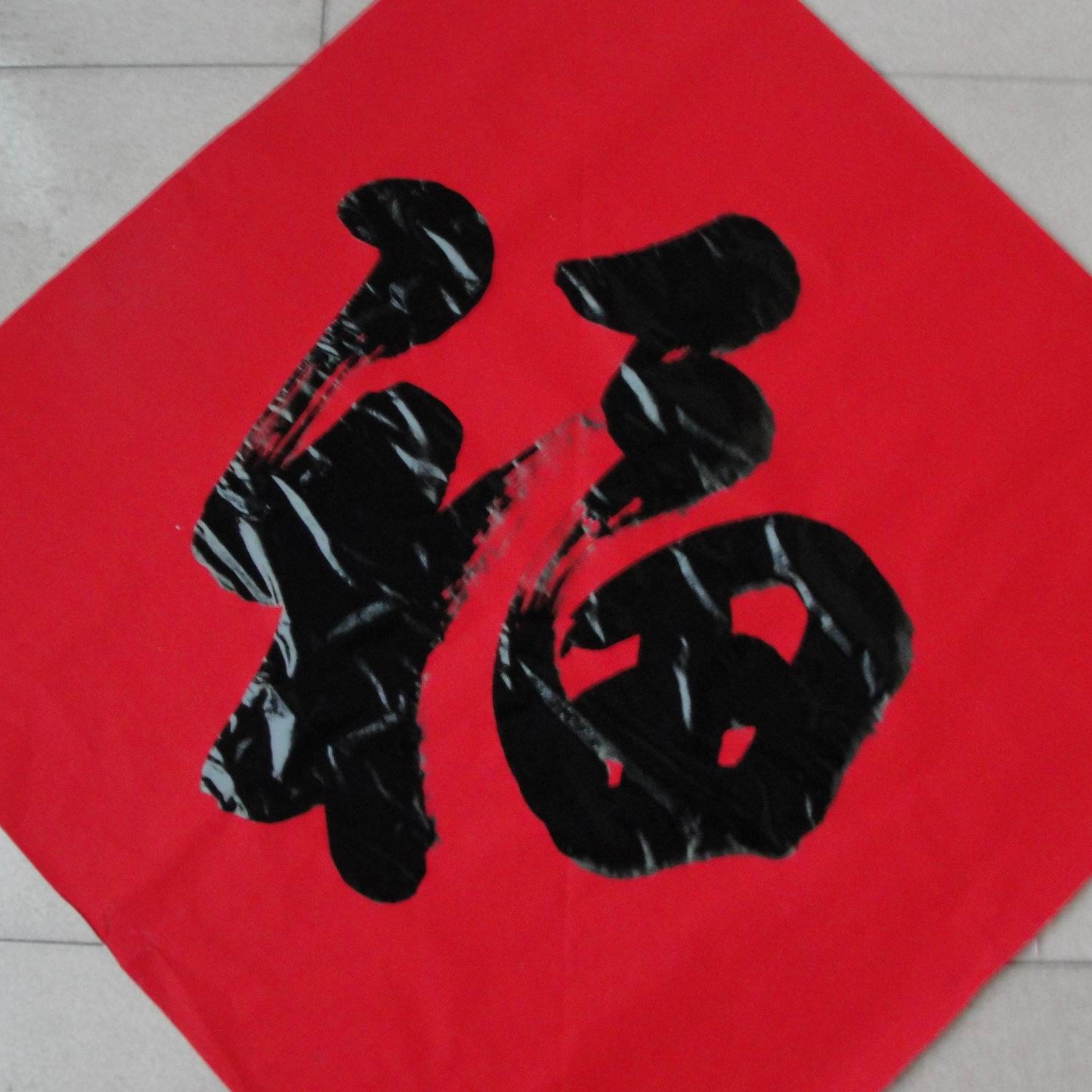
A very common decoration during the Chinese Spring Festival is the “Fú (福)” character, which means good fortune in Chinese. A square of red paper adorned with the Fú character is pasted to the outer side of the door to one’s home, and sometimes the character is also used to adorn interior doors.
While in the past the decoration usually consisted of a red square of paper with black-colored calligraphy, many modern versions are much more elaborate and use a golden color for the character, and are decorated with other characters from cartoons or the zodiac animal of the current year.
In addition, a tradition practiced in some, but not all, regions in China is to paste the Fú character upside down. In Chinese, the word for upside down,”dǎo (倒),” sounds similar to the word for arrive, “dào (到).” Thus, pasting the character upside down implies that good fortune has, or will arrive.
Couplets
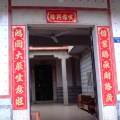
Couplets, or “duì lián (对联)” in Chinese, consist of two vertical strips usually comprising 7-11 characters, and sometimes a third horizontal strip comprising 4 characters.
Duì lián are intended as permanent fixtures adorning the outer gates of a home and can embody one’s hope with regard to several different themes, including prosperity, peace, and success, among others.
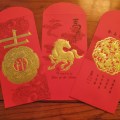
During the Chinese Spring Festival, it is a common practice for elders and married couples to gift small amounts of money to children and young adults.
This money, referred to as “yā suì qián (压岁钱),” is presented in small red envelopes, also called a “hóng bāo (红包).” The money is given both to make children happy and to give them good luck in the new year. Interestingly, the practice’s roots are related to fending off evil spirits and protecting the children, as opposed to merely blessing them with good luck.
Historically, large amounts of money were not given to children in these red envelopes. However, following China’s democratic reforms, cash amounts have increased, especially with a smaller number of children in each family.
Fish
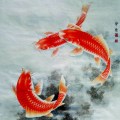
Fish are a very common theme in Chinese Spring Festival decorations, mainly due to a common blessing during the New Year, “nián nián yǒu yú (年年有鱼).”
This saying, “may you have fish every year,” is pronounced exactly the same as “may you have extra every year” in Chinese. Thus, when one wishes for someone to have fish every year in Chinese, one is also wishing for them to never have a deficit with regard to food, money, or other matters.
Fish are therefore a common decoration, not just during the Chinese Spring Festival, but for anyone hoping for a little “extra” in their lives.
Paper Cutting
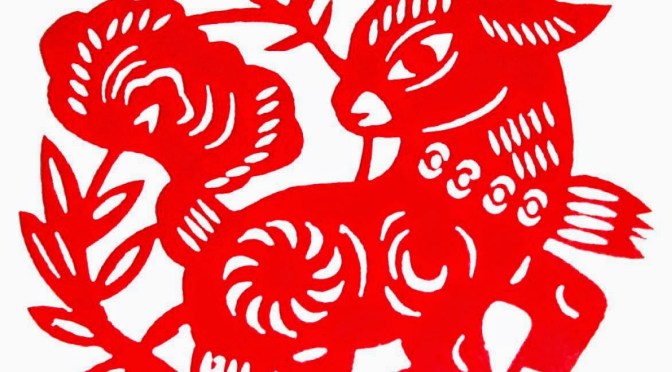
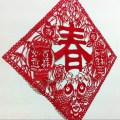
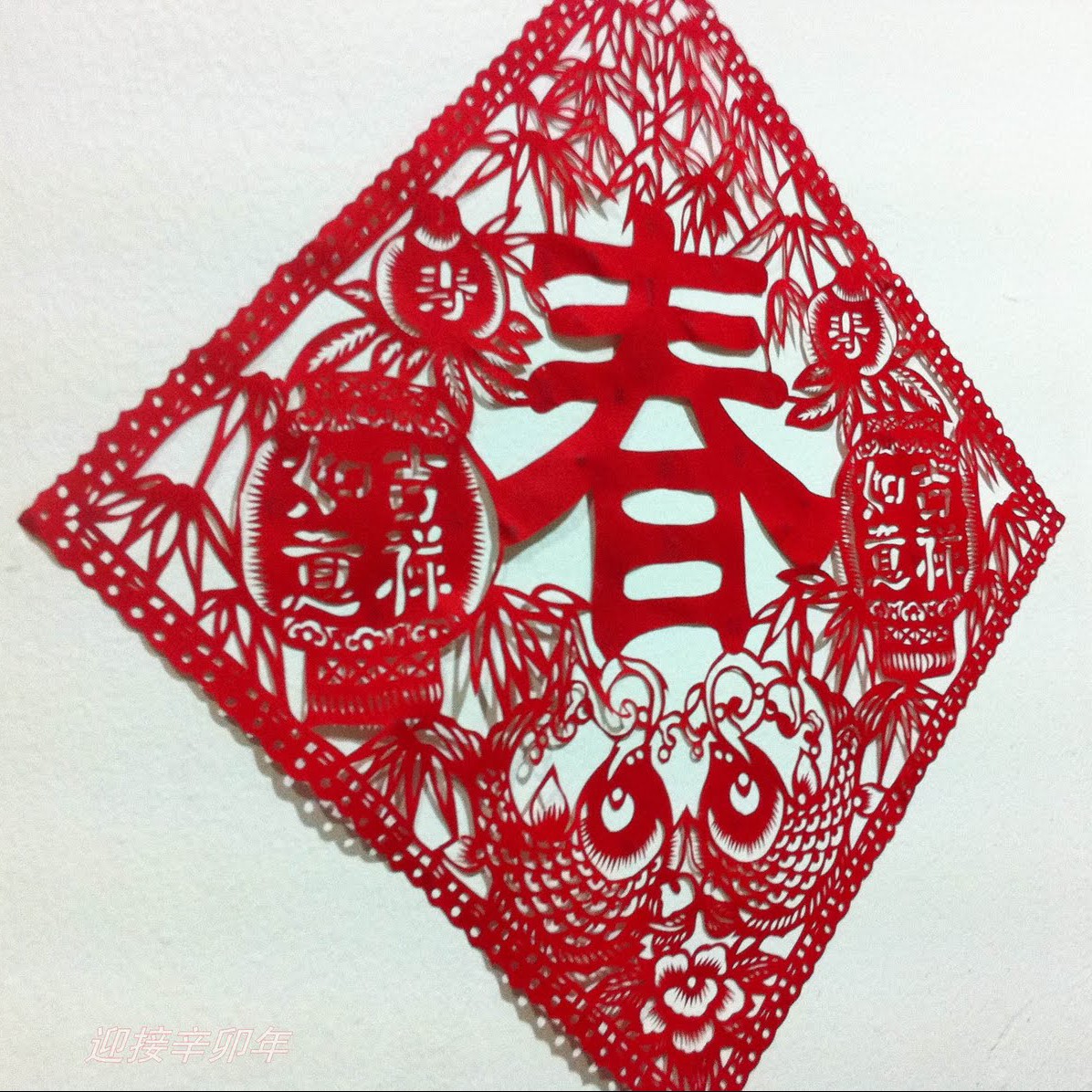
Paper cutting is another traditional Chinese craft commonly seen during the Spring Festival. The cutting of designs and patterns supposedly began thousands of years ago as a way to worship the gods, and the tradition is said to have begun prior even to the invention of paper.
During the Chinese Spring Festival, some of the most common designs are the Fú character, fish, and the zodiac animal of the current year. Paper cuttings are also commonly found at weddings and other types of Chinese celebrations. The material used in this craft is almost always the color red.
Lanterns
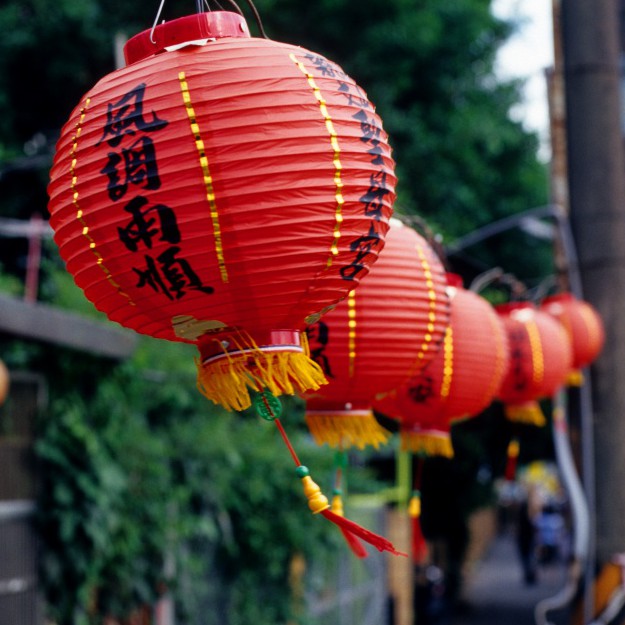
While there are many types of Chinese lanterns, the ones prevalent during the Chinese Spring Festival are always red in color and are almost always round or oval in shape.
They can be made out of either paper or cloth, and are usually decorated with black or gold calligraphy, and sometimes with other prosperous symbols. Common messages of goodwill on Chinese lanterns during the new year refer to happiness, peace, good fortune, and prosperity, among others.
Fireworks
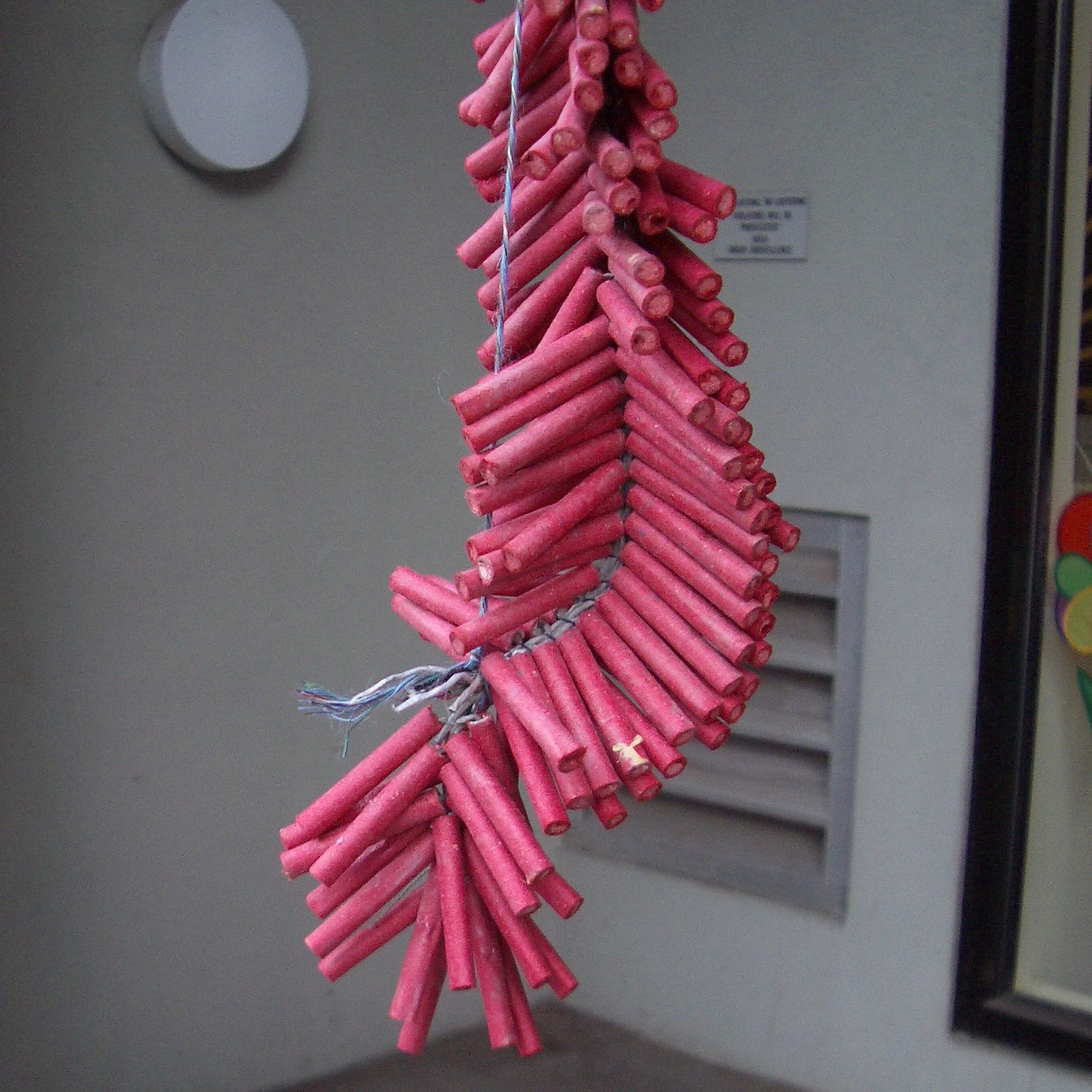
In China, fireworks and firecrackers were first made out of bamboo stems filled with gunpowder, and used to drive away evil spirits. Modern Chinese fireworks and firecrackers are painted red or wrapped in red paper.
While there are wide varieties, one of the most common is a long string of popping firecrackers (sometimes numbering in the hundreds). Setting off these firecrackers is deafening, and in addition to the Spring Festival, they are also very common at weddings and business openings.
The Kitchen God
Zào Jūn (灶君), or the kitchen god, is a traditional deity widely revered in ancient China. Traditionally, pictures of the kitchen god are hung above the fire in the kitchen, and he is thought to be a protector of the family.
At the end of the year, it is believed that the kitchen god will travel to heaven to report on the family’s doings to the Jade Emperor. Various practices are meant to ensure he does not say anything bad, including smearing the lips of his portrait with honey to sweeten his words, and presenting him with an offering of glutinous rice so that his mouth will be too full to speak.
At the end of the year, his portrait is burned so that he may return to heaven, and a portrait is put up on the first day of the Spring Festival. It is worth noting that while a new portrait is put up at the start of the new year, the actual activities relating to the kitchen god actually occur on a separate “mini festival” before the Chinese Spring Festival begins.
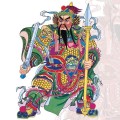
As the people of China took ghosts very seriously at the time, the emperor asked two of his top generals to stand guard at his door while he slept. On the following nights, the emperor instead hung portraits of the generals outside his door to protect himself.
The story spread throughout China, and to this da,y the Chinese people paste pictures of these gate gods outside their homes around the time of the Spring Festival in order to ward off evil spirits and bring on good luck.
In addition, gate gods are in fact part of a larger category of “nián huà (年画),” which are paintings or pictures pasted on the doors to one’s home during the new year. Other types of paintings include children and red carp.
The God of Money
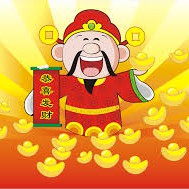
“Cái Shén (财神),” the Chinese god of money/wealth, is a deity believed to be able to bring wealth to those that revere him. Pictures of Cái Shén are traditionally hung in the family home, and family members often visit his temple during the Spring Festival to burn incense.
Cái Shén is one of the reasons for the common Chinese New Year’s greeting “gōng xǐ fā cái (恭喜发财),” which means “may you become wealthy.”
Final Thoughts
The above symbols and decorations are those that I personally have observed in China, and those which I know to be of significant importance to the Chinese people and Chinese culture. Of course, customs can differ from place to place, and it is not uncommon for specific Chinese regions, cities, and towns to have their own customs and even variations on those I listed above. So when in China, or in regions with large Chinese populations before, during, and after the Chinese Spring Festival, be on the lookout for these enduring symbols of the Chinese Spring Festival!
If you’re interested in thoughtful perspectives on China, cross-border work, and how culture, incentives, and organizations shape real outcomes, you’re welcome to subscribe to China Culture Corner and receive future posts by email.
I also share related ideas and longer-form video commentary on LinkedInand YouTube, and post updates across the channels linked above.
If you or your organization is navigating China execution or cross-border alignment challenges, I work with teams on an embedded and remote basis. Reach out directly: Sean@SageSightConsulting.com
Editor’s Note (2026): This article was originally written in 2014. While some examples reflect the context of that time, the core idea around perspective and cultural misunderstanding remains highly relevant.
The Chinese idiom titled “the frog at the bottom of the well” tells the story of a small frog that lived deep underground in an old well. The frog had been born in the well and lived its entire life there.
All the frog knew of the outside world was the faint light far above it, which it mistakenly took to be the sun. One day, a bird flew down into the well and came across the frog. The bird said to the frog, “Come up to the outside world where it is bright and warm.” Upon hearing this, the frog laughed at the bird, thinking that the well was in fact the entire world.
This Idiom in Chinese: 井底之蛙, Jǐng Dǐ Zhī Wā
The moral of this story warns against discounting things that lie outside one’s own experience. This is important to consider with regard to the misunderstandings that can arise between China and Western countries, many stemming from significant cultural and social differences.
Many Westerners, especially those who have never traveled to or lived in China, may hold a negative view of the country with regard to Chinese behavior, social attitudes, and business practices.
In the following article, the author will discuss several current points of contention between China and Western countries and present the argument that, while it may be simple to dismiss the Chinese point of view, it is not necessarily advisable to do so.
Differing Standards for Communication
One of the more noteworthy differences between China and the West is with regard to communication styles. Westerners who need to speak and interact with Chinese natives sometimes find their vague and indirect communication confusing, while others go so far as to deride the Chinese as dishonest or disingenuous.
While I agree that Chinese communication styles can be confusing, it is unfair to broadly label Chinese communication styles as purposefully deceitful.
The methods by which the Chinese communicate are deeply rooted in their history and culture. While it may not be easy for Westerners to accept these communication styles, it is important to remember that the Chinese, after all, understand each other perfectly.
I personally feel that the Chinese should not be called on to change the way they speak simply for the convenience of Westerners. Many Chinese have already made an effort to learn some English and Western communication styles. Perhaps Westerners have a responsibility in this increasingly globalized world to respond in kind.
Contrasting Social Attitudes and Behaviors
Chinese society is much more conservative than that of Western countries, and retains many traditional attitudes and behaviors. While these may be an important part of Chinese society and culture, Westerners may disagree with them or find them difficult to understand.
Chinese society possesses strong collective elements, a holdover from both the Imperial and Communist Eras. Oftentimes, the rights and freedoms of individuals are sacrificed for what may be deemed to be the greater good. Chinese society also places a lot of importance on hierarchy and proper etiquette.
For example, children are expected to respect and defer to the wishes of their elders with regard to education, careers, marriage, and family life. At work, employees may be forced to keep their opinions to themselves and carry out a daily ritual of currying favor with superiors.
In general, people may be forced to tiptoe around sensitive issues to avoid risking important professional relationships. From a Western point of view, these behavioral concepts sound strange and run contrary to views on independence and freedom of expression.
Many Westerners might consider such behavior wrong or immoral and could not dream of engaging in it. But that is really the point; it is not Westerners who engage in it but the Chinese, who do not find it strange at all.
More Chinese young people are indeed starting to embrace what might be described as Western ideals. However, the majority of Chinese still adhere to more traditional values. Instead of criticizing Chinese society, perhaps Westerners should try to understand it first. No country’s society is perfect, and we all have different ways of doing things. That’s simply the way the world works.
Many Chinese are Content With One-Party Rule
Concerning governance, Western pro-democracy advocates have long attacked China’s central government for “so-called” oppressive rule and the suppression of democracy. This viewpoint has been supported by several prominent Chinese pro-democracy advocates, one of the more famous and recent of whom is Ai Weiwei.
However, in my own experience in China, most Chinese people simply do not have strong feelings about democracy or about becoming involved in their country’s political process.
Chinese people simply want to live a happy and prosperous life and are content to let the Chinese government take care of things. Many of the protests seen on TV or on the Internet are simply local issues and have nothing to do with national governance.
These protesters simply want local or central government officials to fix a specific problem, after which most will happily return to their daily lives. Westerners have grown up with democracy their whole lives, and it is therefore difficult to understand how a lack of democratic rule could be the result of anything less than ill intent.
However, thousands of years of recorded Chinese history have been based on an authoritative one-party rule, an emperor who ruled through “the will of heaven.” Democracy may come to China at some point in the future, but not now, chiefly because the Chinese people overall do not seem to want it. For Westerners trying to bridge the gap between China and the West, democracy may not be the best place to start.
When the Western Media Gets it Wrong
Lastly, there is often a misrepresentation of China by Western media and journalists that prevents Westerners from understanding what China is really like. Sometimes this simply results from the Western media reporting only on negative stories such as pollution, protests, poverty, corruption, or product recalls.
Other times, the Western media simply gets a story so wrong it’s laughable. Any country will possess a plethora of negative news stories and can easily be made to look bad through a slanted focus on negative issues.
Although many of these negative issues are true in China’s case, and a result of its efforts to transform its economy and build its reputation on the world stage, they are not representative of the entire picture. Every day, there are other stories that are not reported to Western audiences, including stories about success through adversity, lifestyle improvements, happy families, and others.
An overt focus by Western media, as well as Western audiences, on negative issues may increase Westerners’ tendency to see China as not only an economic threat, but also an ideological one. In the end, a rivalry between China and Western governments seems inevitable for a host of economic and geopolitical reasons; however, mistrust between the Western and Chinese people is not.
If Westerners can accept two things, that the Chinese people do not have ill intent towards the world at large, and that there exist many positive stories which go unreported in the news, cross-cultural reconciliation and the development of mutual respect will be a positive outcome beneficial for all.
The World is Bigger than the West
Although all the issues, conflicts, and points of disagreement discussed above may make sense to many Westerners, the problem is that they represent a wholly one-sided viewpoint, or in other words, a Western judgment, often without understanding the root causes behind such behaviors and attitudes.
My own personal experiences suggest that many Westerners are lax in their attempts to understand other cultures, especially those of Asia and China. This may be especially true of Americans, as for much of their history, they have been geographically isolated from the rest of the world and have practiced isolationism.
In fact, for many years, it might have seemed to make sense to place a greater degree of importance on the West. Starting with the rise of England (17-18th century A.D.) and followed by America in the 20th century, the world has largely been dominated by a Western and English-speaking economic system and mentality.
Every country that wanted to succeed and be part of the global economic stage needed to learn the Western ways and the Western languages (primarily English). However, it is important to remember that the greater influence of Western countries was primarily supported by their economies and continuing status as economic superpowers. Today, this is less and less the case.
Despite the many criticisms of China, it is hard to argue that the country is set to become one of the key world powers during this century. Currently, China is easily ranked at number two, and many people throughout the world believe China to bemore powerful than the USA economically. China indeed has been keen on making its influence felt in areas such as politics, international waters, and space travel.
The question for readers is this: if other countries (e.g. China, India, Japan, the Middle East) were forced to learn English and Western ways to fit in and succeed when Western countries were in power, can Western countries afford to ignore China now that it may be set to take over the reins?
If Westerners refuse to learn Chinese or refuse to accept Chinese behavior or cultural norms, will the opportunities for Westerners in the coming years also decrease? This possibility seems increasingly likely and represents something all Westerners will need to ponder deeply, even if they never intend to leave their home countries.
Final Thoughts
In closing, I would like to point out that, while advocating for the study and acceptance of other cultural mindsets, especially those of China, I do not unilaterally endorse attitudes, behaviors, or business practices that stem from them.
While Westerners may not always agree with the Chinese and their approaches to business and life, it is important to understand that much of what they do is a result of their social and cultural backgrounds and can be viewed as completely rational from their own point of view.
To move forward in developing a bilateral relationship with China and the Chinese people, it will be important to accept that, as a country and a people, they have an unalienable right to their own beliefs and traditions.
For the West to have an effective relationship with the Chinese people in the future, I firmly believe it is necessary to accept that and move forward with the understanding and acceptance that there are other ways besides “our way,” or the “Western Way.”
If you’re interested in thoughtful perspectives on China, cross-border work, and how culture, incentives, and organizations shape real outcomes, you’re welcome to subscribe to China Culture Corner and receive future posts by email.
I also share related ideas and longer-form video commentary on LinkedInand YouTube, and post updates across the channels linked above.
If you or your organization is navigating China execution or cross-border alignment challenges, I work with teams on an embedded and remote basis. Reach out directly: Sean@SageSightConsulting.com