
Tag Archives: Cultural Differences

SeekPanda: Revolutionizing the Chinese Interpretation Market

SeekPanda can help you succeed in China!In March 2015, I sat down with Matt Conger and Phil Kohn, two young China entrepreneurs from the United States who are pursuing their China dream in Beijing. Matt and Phil are the co-founders of SeekPanda, which aims to revolutionize China’s interpretation market by providing Western businesspeople with easy-to-find, top-quality interpreters who can truly help their clients bridge the China-West cultural divide. In this interview, I speak with Matt and Phil about the SeekPanda business model and their experiences in China thus far.

China Culture Corner: So, in a nutshell, what is SeekPanda?

SeekPanda: SeekPanda is China’s top curated marketplace for on-demand, professional interpreters and translators. Founded in 2014, we have served 200+ customers, including government delegations such as U.S Secretary of Commerce Penny Pritzker, in over 1,000 meetings, including several of the world’s leading expert networks. Our management team is based in Beijing and Seattle, and has previous work experience at Credit Suisse, Bain & Company, and other major professional services firms.

China Culture Corner:  When we first spoke, you mentioned the interpretation market in China was broken. Can you tell me more about the specifics? How and when did you first discover this?
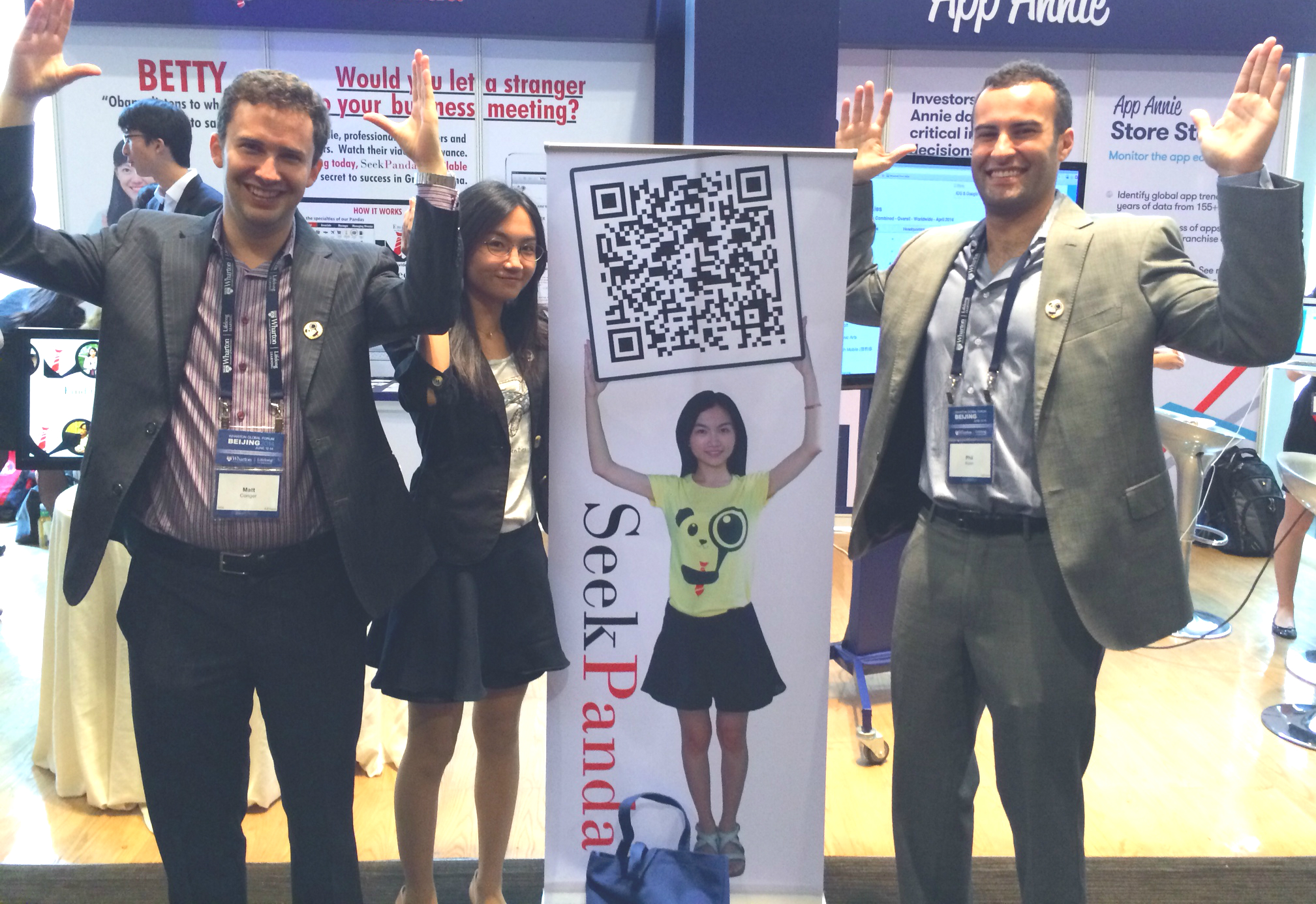
Seek Panda was founded to help Westerners do business in China
SeekPanda founders, Matt Conger and Phil Kohn

SeekPanda: In general, unless you use an interpretation agency it is very hard for first-time business travelers to find trusted freelance interpreters. At the same time, it is hard for these interpreters to find good clients. In addition, the world of agencies is full of unfavorable circumstances, including:

  • Agencies price discriminate and lack price transparency
  • Agencies keep much of what the client pays, often well over 50%, and sometimes up to 70%
  • Agencies “bait and switch,” meaning they show a client the CV of one interpreter but then assign a different interpreter to do the job.

As we were forming SeekPanda, we also discovered through LinkedIn that even if an interpreter looks reliable on paper, they might not have adequate IQ [traditional intelligence] and EQ [emotional intelligence] to succeed as a business interpreter.

China Culture Corner: What made you decide that revolutionizing the current interpretation business model was the way to go? Do you feel there is a lot of room for growth?

SeekPanda: At the end of the day, we are committed to helping people succeed in doing business in China, and very early on, we sensed the difficulty of this in the pre-SeekPanda world. This realization, coupled with the agency issue, made it clear that this market is ripe for innovation and needed to change. In terms of growth, we believe that once we master the Chinese market, we can apply this business model to other countries that have similar language and cultural barriers, such as Japan, Korea, Vietnam, and others.
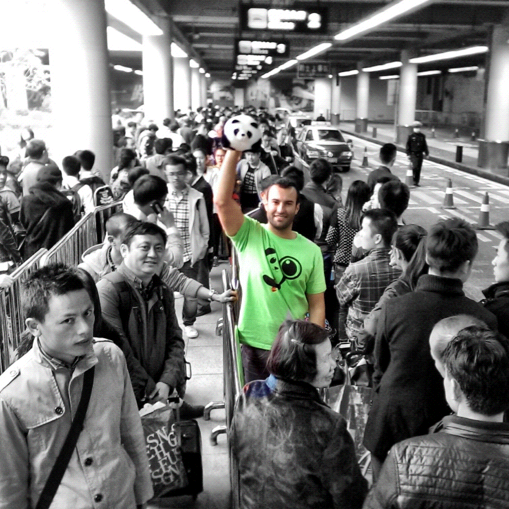
A skilled Chinese interpreter equals effective meetings in China
A good interpreter makes a “noticeable” difference

China Culture Corner: Are you worried about other businesses copying your model? Could a local Chinese company come in and be a second SeekPanda at a lower cost?

SeekPanda: There will definitely be SeekPanda copycats and people can certainly copy the basics of our model. However, we hold three key competitive advantages:

  • First, we’ve established strong relationships, not just with interpreters themselves, but also with the institutions they’ve graduated from – basically we have a strong control over the supply.
  • Second, we are building a powerful matching algorithm and tech solutions.
  • Third, our management team has a unique combination of business education, job experience, China work experience, and Chinese language skills.

China Culture Corner: Can you tell me more about SeekPanda’s interpreters? How are they different from those you would find through agencies, or are they?

SeekPanda: To begin with, they are exclusively either graduates from the world’s top masters in interpretation programs (e.g. MIIS, the University of Bath, Shanghai International Studies University, Beijing Foreign Studies University), or seasoned industry experts, such as someone who worked on a wind farm in the USA for seven years. Beyond that, we vet each interpreter for their “people skills” to make sure they have the proper EQ needed to be successful.
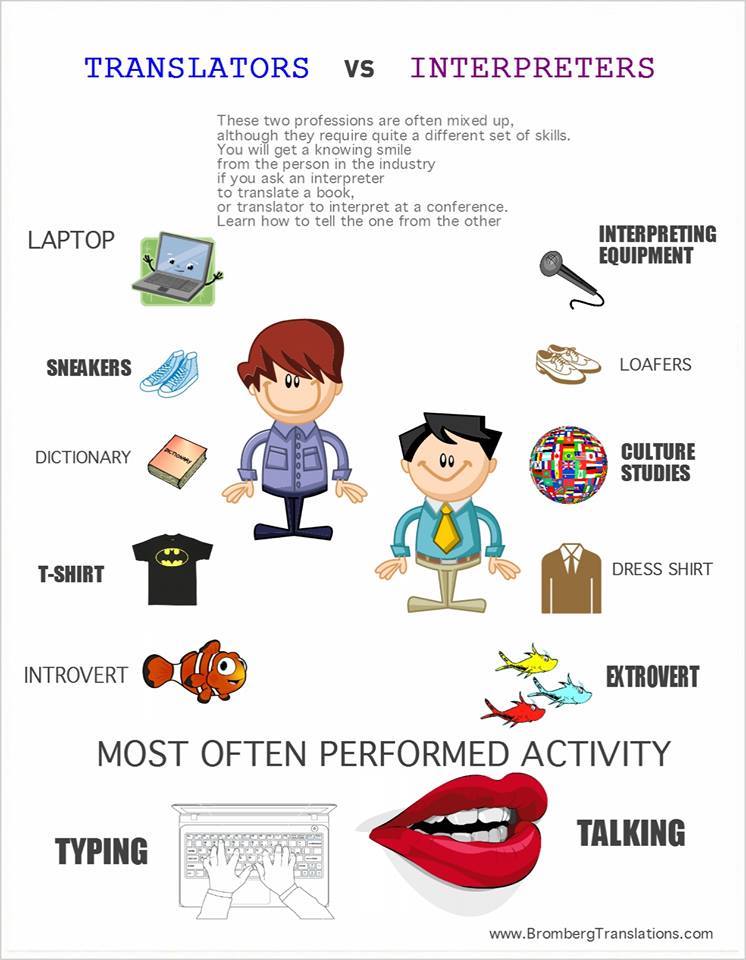
How are interpreters and translators different?
The difference between interpreters and translators

China Culture Corner: Based on your experience, what makes a good interpreter versus a bad interpreter? What about a good versus bad interpretation experience for a Western businessperson?

SeekPanda: A good interpreter is much more than just a walking dictionary. They have EQ, not just IQ. They can manage the mood of the meeting and help the client relate to what is really being said, not just a literal interpretation.

A great example that we like to refer to is as follows: consider a situation where a customer has flown all the way to China for a highly anticipated and important meeting with a government official that has been cancelled, rescheduled, cancelled, and then finally rescheduled again. The customer is in the middle of the meeting with this high level government official, when suddenly the government official gets a phone call and blurts out “不好意思我有急事” [literal translation: I’m sorry, I have an important matter] and immediately leaves the room.

Only an interpreter with high EQ will succeed in this situation. “I’m sorry I have an emergency” is the low-EQ answer. It may be factually accurate, but could alarm the client. “I’m sorry but something has come up” is also accurate, but implies disrespect to the visitor who has waited so long for the meeting. A good interpreter would pay attention to the mood throughout the meeting, such as whether the official was looking for an excuse to end the meeting, and then make a judgment call for how to convey the message to the client. Perhaps the message to the client would be “he had something to take care of quickly. It’s not clear what has happened but let’s just wait and see. Don’t worry.”
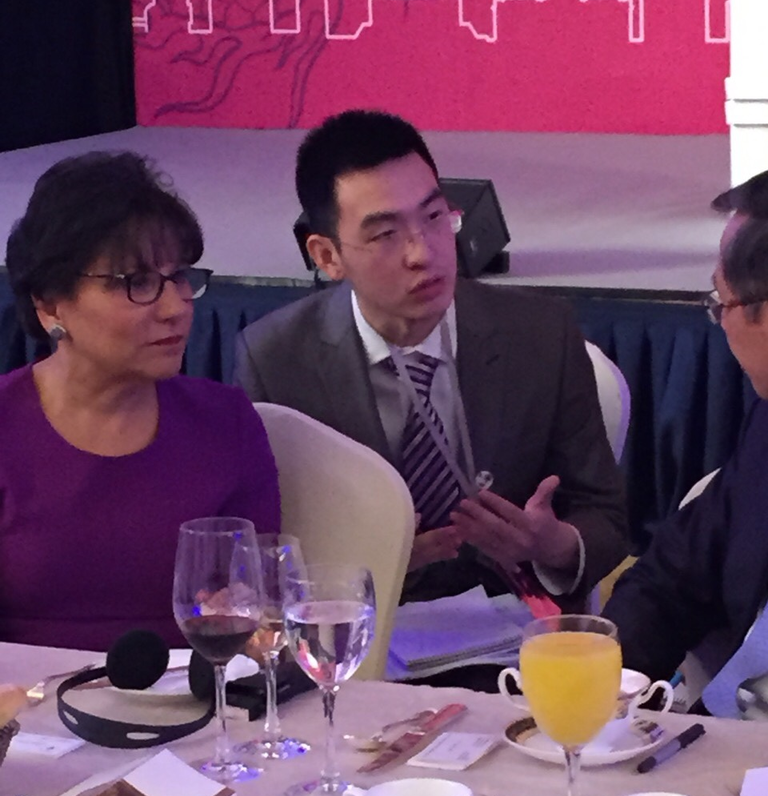
A good interpreter can help bridge the China-West divide
A SeekPanda interpreter with U.S Secretary of Commerce Penny Pritzker

China Culture Corner: I understand SeekPanda’s interpreters receive a much larger cut of the interpretation fee than they would from an agency. Does that also mean that SeekPanda’s total fees are higher too?

SeekPanda: No, the total pie is still 100% – we just allow the interpreter to keep more of it. And, we can afford to do this because we have a much lower cost, highly efficient operation.

China Culture Corner: What advice would you give to a Westerner who is coming to China for the first time and is in need of an interpreter? What are the key things they need to know?

SeekPanda: Don’t assume that being bilingual in English and Chinese is synonymous with a good interpreter. Many companies choose to bring their bilingual analyst or associate from their law firm along to meetings to translate. These individuals lack the extensive training that interpreters go through during their two to three years of graduate school. Interpreters learn special methods of note-taking, etiquette, and concentration skills that even the most fluent bilingual speakers lack.

China Culture Corner: What originally drew you to China? Was it the culture? The language? Or mainly business opportunities?

SeekPanda: For Matt, it was a combination of language and business opportunities. For Phil, it was a combination of the language and culture. This is part of what makes us such a powerful team.

China Culture Corner: Do you have any interesting China stories you can share? What really surprised or shocked you after you arrived in China for the first time?
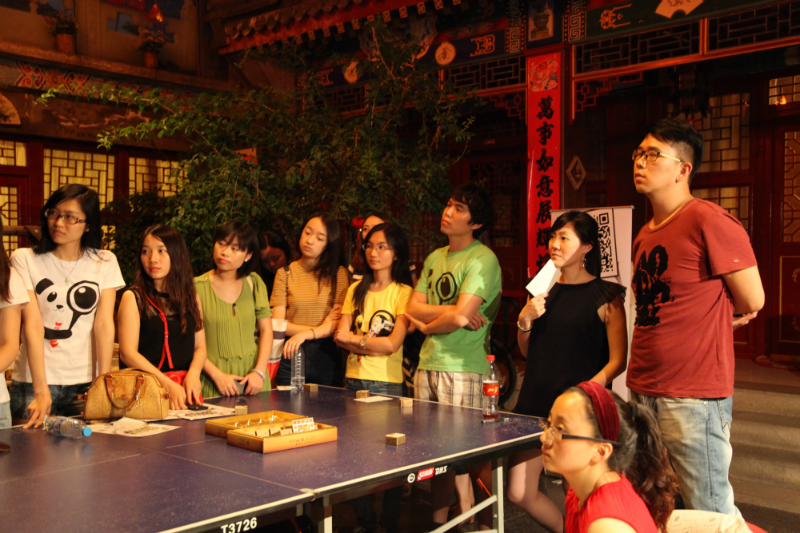
SeekPanda was launched in 2014 in Beijing, China
The SeekPanda launch party at a traditional Beijing Courtyard

Phil: During one of my initial business visits to China I went to Hainan for a day of meetings. I arrived in the meeting room, sat down at my assigned seat, which had a name-card that read 孔菲尔 [kǒng fēi’ěr, a Chinese transliteration of Phil Kohn], which I figured was a really cool name at that time. There was also a plate of fruit, tea and a coconut. What a cool meeting setup in tropical southern China! That night I remember eating sand worms, which was a truly unique delicacy.

Matt: I was on an investor roadshow and we were pitching to three to four companies a day. The most prestigious company on the list, whose founder was one of China’s richest men at the time, had us pitch at 8pm on a Saturday evening. It was the first time I had encountered the famous Chinese work ethic so obviously, this time coming from a 金领 [jīn lǐng: a gold collar worker, a highly paid professional or executive] and not a 蓝领! [lán lǐng: a blue collar worker]

China Culture Corner: What words or expressions would you say best sum up your China experience thus far?

SeekPanda: Full of excitement, surprises, challenges, twists and turns, and new experiences.

Thanks for reading!

If you would like to learn more about SeekPanda, please feel free to visit their website at http://www.seekpanda.com. If you have any thoughts or questions on the interview, or on the interpretation market in China, please feel free to post your thoughts in the comments section below.

Follow the China Culture Corner to receive regular updates by email!

 

What Does “Leader” Mean in China?

Chinese leaders and power.There are many cultural differences between China and Western countries, which impact how business is conducted on a daily basis. However, one issue which may hold a disproportionate influence over company culture is differences in leadership styles. There are many ways in which Chinese leaders are different from their Western counterparts, some of which have been touched upon in previous articles. These include issues such as more roundabout communication styles, a greater focus on Face and relationships, and unique social and behavioral etiquette. And while this may be a lot to take in for the uninitiated, there is a simpler way. In order to understand how to interact with Chinese leaders, an easy first step is to learn about how they view themselves, and the titles they choose to assume.

An Introduction to the Concept of Lingdao (领导)

A universal term in Chinese for an executive, a boss, or anyone’s direct superior is “Lingdao (领导),” which can be roughly translated as “leader.” However, in actual practice the term Lingdao cannot simply be used interchangeably with its English equivalent. First of all, the general usage of the term varies greatly with how Westerners use the term “leader.” Most Westerners only use the term “leader” on occasion, (e.g. a conference of western leaders), and rarely, if ever, use the term to refer to or directly address a superior. In contrast, the term Lingdao is much more common in Chinese daily and professional language, and is often used to directly address managers and executives. Several common uses of the term Lingdao have been translated and provided below as examples:

  1. Through the support of the Lingdao, I will do my best to make contributions to the company
  2. I value the Lingdao’s concern for me.
  3. We’ve just received the Lingdao’s instructions. Let’s begin work immediately.

A Chinese boss is an emperorIn addition to the differences in common usage, the term Lingdao also carries a very different inherent meaning in China, than leader does in Western countries. In many ways, it harkens back to the traditional system of imperial rule in ancient China, with an all powerful emperor supported by an elite cadre of government officials. Rulers and other powerful men and women in China over the centuries have never really had to deal with limits on their power or the sort of checks and balances found in many Western democracies. In Western countries, the terms “leader” and “leadership” often imply bettering oneself and managing in a fair, just, and responsible manner. In China, Lingdao has much more to do with personal power.

It is also worth noting that while the boss of a company is universally “the Lingdao,” the term it is never directly associated with a specific role. Based on this author’s own experiences networking and cooperating with Chinese managers and executives, it would be more accurate to describe the term “Lingdao” as a status or honor that one attains through a position, or role. And this status does not necessarily only apply to the “top dog” within a company.  A director or manager might also be called a Lingdao by subordinates providing no one of a higher rank is present. Thus the specific person doing the “leading” gets the title, and the power and respect that go along with it.

Lingdao (领导) in Modern China

Of course, China is no longer an empire, although some companies are certainly run like one. Within many Chinese companies, especially small privately owned ones, a Lingdao can be is akin to an emperor within the sphere of his or her own authority. Orders and directives are expected to be carried out promptly without question. Those who might be granted the title of Lingdao also take a different approach to management – they don’t. Instead, a Lingdao often prefers to make decisions relating to strategy and general courses of action,while leaving implementation and employee management to their subordinates. And although it would be wrong to assume that all Chinese managers and executives are tyrants, there is most certainly a tendency to abuse the power that the status of Lingdao confers. As being a Lingdao represents a certain type of status or honor, Chinese managers and executives sometimes do whatever they can maintain that prestige, both by encouraging their superior status (and gain more Face) and exercising their authority, which can include issuing arbitrary commands, making employees work overtime, and offering verbal abuse.

The status of a Lingdao can have very strong pull for young Chinese white collar workers, many of whom dream of starting their own companies with this in mind. On one hand, abusive working environments, especially those in small companies, can make them eager (or desperate) to move on and try something new. On the other, Face is very important to many young Chinese employees, especially young men. In small companies only the boss or the manager can aspire to attain the Face and respect of a Lingdao. Thus, these two factors taken together, present a very strong case for Chinese workers to quit their current jobs and start their own companies. This author has, on many occasions, overheard many Chinese white collar workers remark on their plans to start a company, not to be an entrepreneur, but to be a Lingdao.

What Does This Mean for Western Business People & Employees?

For the Western business executive working in or traveling to China, the concept of Lingdao will likely not preset a huge problem. However, being aware of the concept can certainly provide greater insights into the actions and mindset of Chinese managers and executives. Chinese politicians are also leadersThe main times one must be careful are when meeting with an executive of an obviously higher status than oneself. In many cases, a Chinese executive might ignore any unintended gaffs or breaches of etiquette, though there are always times when a particular executive may be overly sensitive and decide to hold such a breach against the Westerner in question. If a Chinese executive’s Face is damaged, there may not be a way to recover the business relationship.

In fact, it is younger Western employees in China that are much more likely to have trouble with the concept of Lingdao. While almost all Westerners in China are treated with a certain degree of courtesy and respect, including low-level Western employees, this type of status only goes so far. Western employees who find opportunities to work with smaller domestic Chinese companies will likely have far less freedom to speak their mind, make suggestions, or help shape the course of the company. And dissatisfied Western employees who decide to press the point in pursuit of what they feel is rightfully theirs, may not only find any credibility they have built up disappearing, but their positions as well.

Final Thoughts

All in all, there is nothing perverse or wrong about the Chinese concept of Lingdao. Yes, it represents a model of leadership and behavior that many Westerners will find themselves at odds with, but for the most part it is not a system that is arbitrarily forced upon the Chinese rank and file. Many Chinese employees are much more passive than their Western counterparts, and for the most part do not chafe under a stronger hand at the wheel. Those that do in many cases leave for better opportunities, or aspire to become a Lingdao in their own company. What this author hopes to accomplish for Western readers through this article, is a deeper appreciation (if not necessarily agreement) of the core issues that drive Chinese managers and executives. By understanding the Chinese concept of Lingdao, managing cross-cultural business ventures will go smoother for Westerners, and younger Westerners will find it simpler to take up new opportunities in Mainland China.

Thanks for reading!

Do you have any additional questions about leadership and management styles in China? Can you share any of your own experiences from working and doing business in China? Please feel free to post your thoughts in the comments section below.

Follow the China Culture Corner to receive regular updates by email!

 

The Chinese Families of Flight MH370

One story that has been dominating Western news networks for more than a month is the mystery of the missing Malaysian Airlines flight MH370.

As of this article’s publishing, the search to find the missing plane and passengers in the South Indian Ocean is still ongoing, with no definite news on the location of the plane or the fate of the passengers.

From the very beginning, the story has had a specific Chinese angle, as 153 of the 239 passengers aboard flight MH were from Mainland China. Many of the family members of these Chinese passengers have been forced to wait for weeks, some in Malaysia and some in China, hoping for some word on their loved ones.

And while Western viewers have been privy to the mourning and public outbursts of these Chinese families, there has been little coverage in the West on the specific reasons behind them.

While it is certainly true that any family in this situation would be wracked with grief, some specific differences in the grief displayed by these Chinese families reflect cultural and social disparities between China and Western countries. In the following article, some of these differences will be explored to enlighten Westerners on the true plight of these Chinese families.

Families in China Don’t Get a Second Chance

The family has always been very important in China, though the smaller size of the modern Chinese family has in some ways increased its importance, and perhaps its fragility.

While the Chinese family (including the extended family) has traditionally been very large, its size has been drastically reduced due to the one-child policy. And while there may be no technical barriers to rebuilding a family after a tragedy, it still may be a practical impossibility. On one hand, the Chinese possess strong prejudices against divorce and remarriage, with a stable family viewed as more important than individual happiness.

While a Chinese man or woman who has lost their spouse may desire to find another partner, there may be internal resistance from friends and family. Many Chinese are strongly against marrying at a later age. And while Chinese men find it possible to marry a younger woman (if they have enough money), Chinese women above the age 30 or 35 will likely find it near impossible.

On the other hand, even though the birth of a second child is allowed under the Chinese one-child policy after the death of the first child, Chinese couples are rarely willing to have children at a later date. This is partly due to the increasing risk of birth defects as a woman ages (even though plenty of later births occur in other countries), as well as the continuing belief that a woman’s role is to marry and have children early.

For the above reasons, Chinese families who have lost one or more members of their families in the MH370 tragedy may be faced with the inescapable fact that they will have no chance to rebuild or recover.

The Public Outpouring of Grief

One issue that struck a chord with this author was the grief displayed very publicly by some Chinese family members. While any family faced with such a horrific tragedy would surely be filled with grief, the ways the Chinese (and many Asians in general) deal with their grief and negative emotions differ significantly from those in the West.

Many Westerners hold the view that the Chinese are more reserved in their displays of emotion, and to a degree, they are correct.  Chinese society’s early focus on hierarchy and collectivism meant that everyone had a proper place and way to act. One of the ways this translates into modern Chinese society is a reticence to discuss or openly display emotion among strangers and sometimes even one’s own family.

However, there are several reasons why Chinese people might break with this norm where grief and mourning are concerned.

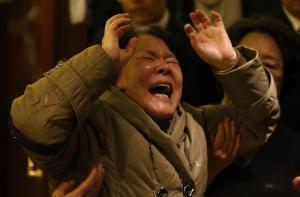
Chinese Outpouring of Grief - MH370

The Chinese concept of Ren (忍) can be involved in sudden and violent displays of emotion. In Chinese, Ren means to endure or to tolerate.

Because specific members of Chinese society have specific roles and accepted behavior within those roles, they are rarely completely free to act or speak their mind.

As such, it is very common for negative feelings and stress to gradually increase within a Chinese person due to emotional pressure. At particularly tumultuous times, these negative emotions can become too much to bear, and like a broken dam, spill forth in a torrent.

Also, under certain circumstances, especially where the death of loved ones and close friends is involved, Chinese people are expected to display exaggerated emotions.

This practice comes from the Chinese custom of worshiping their ancestors and revering their elders, an incredibly important part of traditional Chinese life. The eldest member of the family (usually the eldest male) was always accorded the most respect, and upon dying, an elaborate ceremony would be held to pay respects and allow the family to mourn.

This mourning would many times be public in front of the neighborhood. Chinese family members who were not seen to mourn and grieve publicly and exaggeratedly were thought to be heartless and not filial (not fulfilling their duty to their elders).

In modern China, where family sizes are much smaller, this type of behavior may be extended to other family members besides the oldest, such as a child or sibling.

Offense Is the Best Defense in Modern Chinese Society

Many family members of the Chinese passengers of flight MH370, in addition to their grief, have been notably aggressive and confrontational in both their language and actions toward representatives of Malaysian Airlines and the Malaysian government.

While this might be understandable for anyone with a missing loved one, it is more so for the Chinese. The rapid pace of China’s economic development, along with the weak social and legal infrastructure present in many areas in China, has resulted in China’s citizens becoming accustomed to being taken advantage of with little to no legal recourse.

As such, the Chinese often take an aggressive stance when faced with a situation in which they feel they are being taken advantage of. This author has personally observed this aspect of modern Chinese society on multiple occasions and offers the following examples to further illustrate this point.

Supermarket Lines: A common sight at China’s large Hypermarts (e.g., Carrefour, Walmart) is one or several customers haranguing and hectoring cashiers over pricing or other issues of discontent. More often than not, excuses are not accepted, and the customer will keep at it until their concern is adequately addressed.

Delays at the Airport: In one instance, when flying from Shanghai to the USA, this author’s flight was canceled, and all passengers were shuttled off to another airport to catch a different flight. Little information was provided to any of the passengers as to whether it was feasible to make the arranged flight.

Due to what was viewed as a lack of information and poor customer service, several Chinese passengers came close to assaulting the accompanying airport representative when their questions were not answered satisfactorily. In the end, these passengers detained this representative aboard the shuttle bus for 5-10 minutes before he was finally allowed to leave.

The important point to be aware of from the preceding examples is not that the Chinese are mean or violent; indeed, far from it. In modern China, the pace of economic growth, along with weak social and legal infrastructure have created a social environment in which many Chinese are very wary about trusting companies or their fellow citizens.

One result of this is that the Chinese can be understandably aggressive in defending their own interests, especially because, in many cases, the law may not be able to.

Returning to the tragedy of missing flight MH370, it seems to be the opinion of many, if not all, of these Chinese families that Malaysian Airlines and the government have, at the very least, bungled the investigation and search efforts, and may very well have withheld information from the public in their own self-interest.

My own interpretation of the protests, aggressive rhetoric, and demands put forth by these families is that they have become convinced that the Malaysian government and Malaysian Airlines have no intention of going out of their way for the families and that the only option available is to fight back and become loud enough to force compliance with their demands and concerns.

What Does This Mean For Western Audiences?

To a certain extent, the Chinese are just like people all over the world. They all have families and react similarly as anyone else when they lose someone they love.

However, one key point that should be remembered is that although the Chinese may appear similar to Westerners on the surface in some ways, they are actually very different. The Chinese mindset is distinct and is shaped not only by their cultural history, but by the conditions of modern Chinese society.

Understanding Chinese culture and society will not only provide Westerners with a greater appreciation of the Chinese people but will also make it easier to empathize with them when tragedies similar to the missing flight MH370 occur in the future.


If you’re interested in thoughtful perspectives on China, cross-border work, and how culture, incentives, and organizations shape real outcomes, you’re welcome to subscribe to China Culture Corner and receive future posts by email.

I also share related ideas and longer-form video commentary on LinkedIn and YouTube, and post updates across the channels linked above.

If you or your organization is navigating China execution or cross-border alignment challenges, I work with teams on an embedded and remote basis. Reach out directly: Sean@SageSightConsulting.com