Tag Archives: Giving Gifts

Grab Those Red Envelopes – On WeChat!

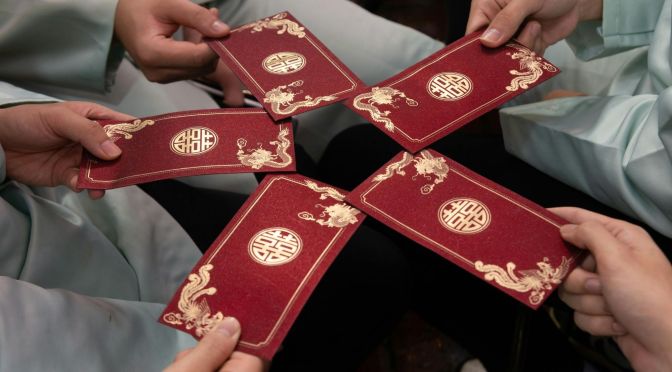
As I have touched on before, Red Envelopes (红包; hóng bāo) are an important part of Chinese holiday traditions.

Usually filled with a small amount of money, these envelopes are traditionally presented to young people during China’s Lunar New Year (also called the Spring Festival), and on other special occasions. In early 2016, I experienced gifting Red Envelopes in an entirely new way – through China’s booming social media app, WeChat.

In the following article, I’m excited to share this digital way to celebrate holidays and special occasions in China. Now, even more Chinese bank cards can be linked to WeChat’s online payment function without a Chinese ID card (previously a big problem for foreigners, including myself).

It’s now very easy for foreigners based in and visiting China to take part in this relatively new Chinese digital tradition.

The Basics of Red Envelopes on WeChat

How it works: There are different ways to gift a Red Envelope on WeChat. First, you have the choice of sending an individual envelope or a group envelope.

When sending an individual envelope, all you need to do is select a person and an amount of money. When sending a group envelope (to send to a group chat), you can select the number of recipients, the total amount of money, and how you want the money divided up between recipients (randomly or set amounts).

When the number of recipients is less than the number of members in a group, members will have to tap, or qiǎng, quickly if they want to receive a cash prize.
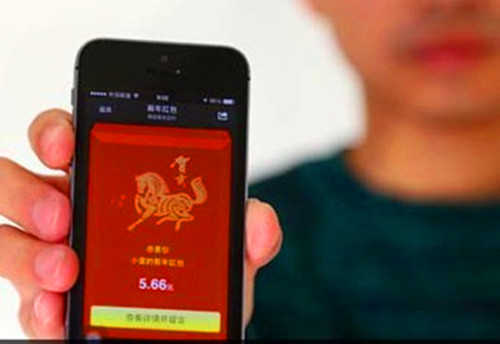
Use WeChat to send Red Envelopes
The Chinese concept of qiǎng (抢; to fight over, to grab, to rob): Qiǎng is an interesting concept in China. The character originally only meant to grab, rob or fight over something.

But in the commercial landscape of modern China, it has taken on a new meaning. When stores want to sell a limited number of products quickly (e.g., a promotion), everyone must move fast (both online and off) if they want to make a purchase. 

This is very similar to consumer shopping behavior during Black Friday in the USA (I can still remember sprinting through Walmart at the age of 13, a brand-new Nintendo 64 clutched to my chest). Qiǎng-ing, however, is much more common and quite popular in China. I’ve found almost universally that Chinese friends and colleagues prefer a limited number of envelopes in group chats.

After all, they will feel better if they win one of a limited number of prizes, and if they don’t grab one in time, they can always beg you (in China, it’s often considered cute among friends) to send out some more.

Sending and receiving Red Envelopes on WeChat can be a very exciting and rewarding experience, as I can attest from my own time with the app. On one hand, it’s like a fun game where you get to compete with friends to win small prizes.

On the other hand, it’s a very nice tool for gifting in China, especially for maintaining relationships with current friends and coworkers. For myself, especially as someone who has always felt more comfortable giving rather than receiving, I always feel compelled to send just one more envelope, simply because I enjoy it.

Advice on Getting Started

Start off small: First of all, unless you are familiar with the gifting habits of your friends or coworkers, it’s better to start small, especially as larger amounts could be embarrassing (for them) or misunderstood.

Anything from 10-50 RMB (equivalent to 1.5-7.8 USD) is likely fine for a casual friend or coworker. When gifting to a group, don’t give less than one RMB per person. It’s always easier to start small and work your way up based on what you see other people gifting.

You can maintain relationships in China via WeChat
Consider hierarchy: Despite the often relaxed atmosphere of gifting Red Envelopes on WeChat, I think it’s always important to remember hierarchy, which is more often important in China than in other countries.

For example, I have noticed that many people of a higher rank within a company are more willing to send bigger gifts, especially during special events (e.g., a New Year Banquet).

On the other hand, rank-and-file employees are usually content to play around with smaller amounts. To use myself as an example, while I consider myself to be among the rank and file, I am still more senior than many Chinese members of my department.

Therefore, I try to make a habit of gifting at least 50% more than my Chinese coworkers on a given occasion. I am also very wary of giving anything other than a small Red Envelope to a Chinese coworker clearly senior to me, especially if they are in a management position.

Remember the lucky number 8: Numbers also play an important part of giving gifts in China. As the number “8” is considered auspicious in Chinese culture, it would be a good idea to gift amounts that contain the digit.

These amounts could include 0.88, 8.88, 18,88, 28.88, and so on. Likewise, as the number “4” is unlucky in China (with a similar pronunciation to “death”), I would suggest avoiding the number when gifting on WeChat.

While it is true that Chinese people do not always proactively choose lucky numbers when gifting money, I believe that doing so it not only appreciated, but actively conveys a knowledge and appreciation of Chinese culture, which the Chinese are always happy to see.

Don’t be that one person who doesn’t gift: While no one should be pressured into participating in any practice they don’t agree with or feel comfortable with, it’s important to remember that courtesy demands reciprocity.

If you accept a Red Envelope (you can choose not to, and the gifter’s money will be refunded), it is only proper that you repay the courtesy. If a friend or coworker sends you an individual Red Envelope, you should probably send one back that day (if it is a specific holiday), or be sure to reciprocate on another occasion (if one is sent on your birthday, make sure to send the gifter a Red Envelope on their birthday).

If you choose to take part in Chinese cultural traditions (and you DO have a choice), make sure to give as much as you get.

Don’t forget to have fun: Last but not least, while I think it’s important to keep the above concepts and advice in the back of your mind when gifting Red Envelopes on WeChat, don’t be too serious!

As I have discovered, it is generally a fun experience so long as you give it a chance and view it as a new way to experience Chinese culture and interact with your Chinese friends and coworkers.

Happy Gifting!

I hope you all have enjoyed this introduction to gifting Red Envelopes on WeChat. While the above article applies to most scenarios involving Red Envelopes on WeChat, I would be happy to hear from others about their own experiences.

Also, as this is my first article dealing specifically with the tech sector in China, I would be happy to hear what readers think about possible future articles on tech in China.

Therefore, if you are interested in seeing more China tech articles, or if you have a specific tech subject that you would like me to introduce or comment on, please feel free to leave a comment below.


If you’re interested in thoughtful perspectives on China, cross-border work, and how culture, incentives, and organizations shape real outcomes, you’re welcome to subscribe to China Culture Corner and receive future posts by email.

I also share related ideas and longer-form video commentary on LinkedIn and YouTube, and post updates across the channels linked above.

If you or your organization is navigating China execution or cross-border alignment challenges, I work with teams on an embedded and remote basis. Reach out directly: Sean@SageSightConsulting.com


The Art of Giving Gifts in China

Many Western businesspeople who come to China for the first time will likely observe the Chinese custom of giving gifts to friends, colleagues, and business partners.

However, it is also likely that these same business people will have trouble fully understanding why the Chinese give gifts and the rules of etiquette behind the practice of gift giving. When should a gift be given in China? What types of gifts are acceptable? And how is giving a gift different from giving a bribe?

In this article, the core concepts relating to giving gifts in China are explored to provide Western businesspeople with the relevant information they will need to successfully give gifts in China.

Related Article: Learn How to Give Gifts on China’s WeChat App

The Culture of Gift Giving

China possesses an ancient culture steeped in Confucianism— based largely on respect, relationships, and rituals—the purpose of which is maintaining harmony within one’s family, network of friends, colleagues, and society at large.

Gifts play a key role in this, as they allow the Chinese people to not only demonstrate their respect for elders and superiors but also allow them to show their commitment and enthusiasm toward maintaining close relationships with family and friends.

 “Giving a gift is necessary to maintain relationships with clients and to maintain influence with government officials, otherwise it is very hard to sustain those relationships.” – Michael Qin, Manager

Gifts also play an important role when building new relationship networks with other business people. At work, gifts can be given at formal meetings with government officials, as well as when meeting with clients and prospective business partners. Outside of work, gifts are given on a wide variety of different occasions, including holidays, birthdays, and special events.

A more complex understanding of the concept of gift-giving does not just include gifts, but favors and other types of assistance or favors as well. While it’s true that a gift is just a gift, what is more important to the Chinese is the meaning behind the gift (e.g., your respect, commitment, devotion, etc.). Thus, in the Chinese business world, physical gifts are often intermixed with meals, karaoke, and compliments.

Acceptable Gifts

Many different types of gifts can be given to Chinese friends and business partners. First of all, a gift from your home country or region will almost always go over well; most Chinese do not have the opportunity to travel abroad, and therefore gifts from other countries, especially those that cannot be easily purchased in China, are highly valued. 

Regional specialties are also good choices, both from within China and outside. Many local businessmen (not businesswomen) greatly enjoy smoking and drinking. Therefore, making a gift of alcohol or tobacco products from your home country will also be welcomed warmly.

Wine, cigarettes, or cigars from China are also acceptable, though it would be wise to choose a well-known brand with a more expensive price tag.

Other recommended gifts include fruits, food, and health supplements. Packs of nuts and seeds are common gifts in China, especially from outlying areas, and peaches are thought to increase longevity. Teas, especially rarer and older blends, are touted for their health benefits, and Chinese traditional health supplements are also welcome.

However, certain gifts can be (though not always in modern China) viewed as taboo and thus can potentially sour a budding friendship or business relationship.

Clocks (though not watches) should be avoided, as the word for clock in Chinese can be associated with death. Pears should be avoided, as the word for pear in Chinese sounds like the Chinese word for leaving or parting. Umbrellas also possess a phrasing that can be associated with the breaking up of a friendship or partnership, and are best not given as a formal gift.

Specifically for men, green hats are not a good choice as a gift – these have been historically given to husbands by unfaithful wives. When in doubt on gift ideas, you can also check with a Chinese friend or associate.

Courtesy and Reciprocity

The Chinese have a saying, “courtesy demands reciprocity” or Lǐ Shàng Wǎng Lái (礼尚往来),  and it plays an important role within the context of giving gifts.

The relationship between two Chinese people is made stronger by acts such as friendly gestures, giving gifts, offering favors, and enjoying meals together. However, unlike some Western countries where the act of gift giving is more free spirited or casual, in China, to maintain an equal and harmonious relationship, a tally must be kept.

You need to be careful when using “Li Shang Wang Lai” in the workplace to ensure that it does not become bribery. If someone gives me a gift, but I feel that the value is too high, then I will refuse it. In my personal life, I always try to give more than is given, only thus being able to maintain consistent and harmonious relationships. – Samuel Hu, Deputy General Manager

For example, when a Chinese person is treated to dinner by a friend, it is expected that the kindness will be returned at a future date. When a Chinese couple receives a gift for their child from a friend, not only will they feel compelled to buy a gift for their friend’s child, but they will also take care to give a gift of at least an equal value to the one received.

If this balance is not kept among ordinary Chinese (e.g., one person constantly repays gifts with less expensive ones), then there is the potential for relations to sour. A person receiving lesser gifts from a friend may think the friend is stingy, while a poorer person unable to match the expensive gifts of a friend may feel a loss of Face.

Understanding this additional concept is invaluable in maintaining healthy long-term relationships with the Chinese, as well as allowing one to understand what gift values are appropriate at a certain time.

How Bribery is Different

At this point, it is important to observe a key difference between this type of gift-giving and the traditional bribe. The goal of a regular gift is to demonstrate your respect for an individual and your commitment to creating or maintaining a relationship. Giving the gift will not “seal the deal,” but not presenting a gift may make you appear impolite, uncultured, and lacking proper character.

In contrast, a bribe in China is often a specific sum of hard currency within a red envelope, known throughout China as a “Hongbao.” Hongbaos, while traditional gifts of spending money during the Chinese Lunar New Year, are also synonymous with a bribe in China’s business and political arenas.

Other common forms of bribery within China take the form of company stock, cuts of profits, and expensive gifts, such as cars and high-end electronics. Therefore, giving high-value gifts, even from the list of acceptable items above, can cause worry or embarrassment among the Chinese.

On one hand, an expensive gift can give the impression that a bribe is actually being offered. On the other hand, it may cause the intended recipient to worry that coworkers and superiors may view it as a bribe, which can be more damaging to the recipient in the long run. In contrast, with an actual bribe, an individual may demand (or expect) that “the gift” will lead to or ensure a specific desired outcome.

However, the exact difference between a “gift” and a “bribe” can remain unclear within the somewhat murky Chinese business environment, and it has not been uncommon in recent years for companies and government offices to set limits on the value of gifts that can be given or received.

 Advice for Westerners

For the Westerner doing business in China, while it is not necessary to observe these practices as strictly as local Chinese may feel the need to, it is recommended to pay more attention to close Chinese friends, important business contacts, and anyone within the government bureaucracy who has the power to make your life or business difficult.

Before you leave on a business trip to China, make sure to stock up on local mementos from your hometown or home country. And before attending an important meeting in China, you may want to pick up a little something to show your respect.  

Remember, giving a gift is not always a bribe in China, and most of the time, it is a method for building and maintaining a strong and mutually beneficial relationship. Thus, when in doubt, give a gift and smile while you do it.


If you’re interested in thoughtful perspectives on China, cross-border work, and how culture, incentives, and organizations shape real outcomes, you’re welcome to subscribe to China Culture Corner and receive future posts by email.

I also share related ideas and longer-form video commentary on LinkedIn and YouTube, and post updates across the channels linked above.

If you or your organization is navigating China execution or cross-border alignment challenges, I work with teams on an embedded and remote basis. Reach out directly: Sean@SageSightConsulting.com