Tag Archives: Relationships in China

Grab Those Red Envelopes – On WeChat!

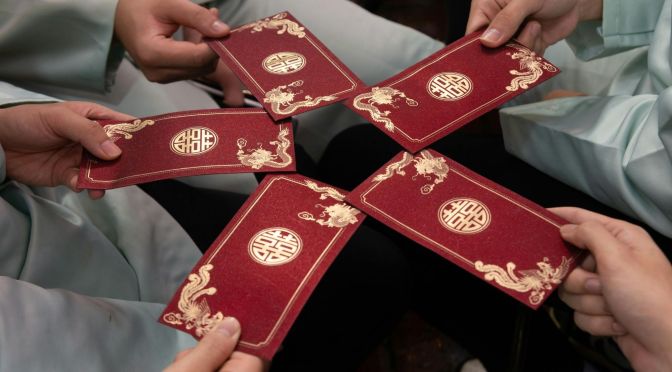
As I have touched on before, Red Envelopes (红包; hóng bāo) are an important part of Chinese holiday traditions.

Usually filled with a small amount of money, these envelopes are traditionally presented to young people during China’s Lunar New Year (also called the Spring Festival), and on other special occasions. In early 2016, I experienced gifting Red Envelopes in an entirely new way – through China’s booming social media app, WeChat.

In the following article, I’m excited to share this digital way to celebrate holidays and special occasions in China. Now, even more Chinese bank cards can be linked to WeChat’s online payment function without a Chinese ID card (previously a big problem for foreigners, including myself).

It’s now very easy for foreigners based in and visiting China to take part in this relatively new Chinese digital tradition.

The Basics of Red Envelopes on WeChat

How it works: There are different ways to gift a Red Envelope on WeChat. First, you have the choice of sending an individual envelope or a group envelope.

When sending an individual envelope, all you need to do is select a person and an amount of money. When sending a group envelope (to send to a group chat), you can select the number of recipients, the total amount of money, and how you want the money divided up between recipients (randomly or set amounts).

When the number of recipients is less than the number of members in a group, members will have to tap, or qiǎng, quickly if they want to receive a cash prize.
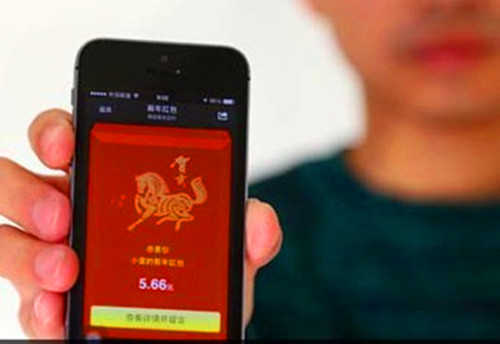
Use WeChat to send Red Envelopes
The Chinese concept of qiǎng (抢; to fight over, to grab, to rob): Qiǎng is an interesting concept in China. The character originally only meant to grab, rob or fight over something.

But in the commercial landscape of modern China, it has taken on a new meaning. When stores want to sell a limited number of products quickly (e.g., a promotion), everyone must move fast (both online and off) if they want to make a purchase. 

This is very similar to consumer shopping behavior during Black Friday in the USA (I can still remember sprinting through Walmart at the age of 13, a brand-new Nintendo 64 clutched to my chest). Qiǎng-ing, however, is much more common and quite popular in China. I’ve found almost universally that Chinese friends and colleagues prefer a limited number of envelopes in group chats.

After all, they will feel better if they win one of a limited number of prizes, and if they don’t grab one in time, they can always beg you (in China, it’s often considered cute among friends) to send out some more.

Sending and receiving Red Envelopes on WeChat can be a very exciting and rewarding experience, as I can attest from my own time with the app. On one hand, it’s like a fun game where you get to compete with friends to win small prizes.

On the other hand, it’s a very nice tool for gifting in China, especially for maintaining relationships with current friends and coworkers. For myself, especially as someone who has always felt more comfortable giving rather than receiving, I always feel compelled to send just one more envelope, simply because I enjoy it.

Advice on Getting Started

Start off small: First of all, unless you are familiar with the gifting habits of your friends or coworkers, it’s better to start small, especially as larger amounts could be embarrassing (for them) or misunderstood.

Anything from 10-50 RMB (equivalent to 1.5-7.8 USD) is likely fine for a casual friend or coworker. When gifting to a group, don’t give less than one RMB per person. It’s always easier to start small and work your way up based on what you see other people gifting.

You can maintain relationships in China via WeChat
Consider hierarchy: Despite the often relaxed atmosphere of gifting Red Envelopes on WeChat, I think it’s always important to remember hierarchy, which is more often important in China than in other countries.

For example, I have noticed that many people of a higher rank within a company are more willing to send bigger gifts, especially during special events (e.g., a New Year Banquet).

On the other hand, rank-and-file employees are usually content to play around with smaller amounts. To use myself as an example, while I consider myself to be among the rank and file, I am still more senior than many Chinese members of my department.

Therefore, I try to make a habit of gifting at least 50% more than my Chinese coworkers on a given occasion. I am also very wary of giving anything other than a small Red Envelope to a Chinese coworker clearly senior to me, especially if they are in a management position.

Remember the lucky number 8: Numbers also play an important part of giving gifts in China. As the number “8” is considered auspicious in Chinese culture, it would be a good idea to gift amounts that contain the digit.

These amounts could include 0.88, 8.88, 18,88, 28.88, and so on. Likewise, as the number “4” is unlucky in China (with a similar pronunciation to “death”), I would suggest avoiding the number when gifting on WeChat.

While it is true that Chinese people do not always proactively choose lucky numbers when gifting money, I believe that doing so it not only appreciated, but actively conveys a knowledge and appreciation of Chinese culture, which the Chinese are always happy to see.

Don’t be that one person who doesn’t gift: While no one should be pressured into participating in any practice they don’t agree with or feel comfortable with, it’s important to remember that courtesy demands reciprocity.

If you accept a Red Envelope (you can choose not to, and the gifter’s money will be refunded), it is only proper that you repay the courtesy. If a friend or coworker sends you an individual Red Envelope, you should probably send one back that day (if it is a specific holiday), or be sure to reciprocate on another occasion (if one is sent on your birthday, make sure to send the gifter a Red Envelope on their birthday).

If you choose to take part in Chinese cultural traditions (and you DO have a choice), make sure to give as much as you get.

Don’t forget to have fun: Last but not least, while I think it’s important to keep the above concepts and advice in the back of your mind when gifting Red Envelopes on WeChat, don’t be too serious!

As I have discovered, it is generally a fun experience so long as you give it a chance and view it as a new way to experience Chinese culture and interact with your Chinese friends and coworkers.

Happy Gifting!

I hope you all have enjoyed this introduction to gifting Red Envelopes on WeChat. While the above article applies to most scenarios involving Red Envelopes on WeChat, I would be happy to hear from others about their own experiences.

Also, as this is my first article dealing specifically with the tech sector in China, I would be happy to hear what readers think about possible future articles on tech in China.

Therefore, if you are interested in seeing more China tech articles, or if you have a specific tech subject that you would like me to introduce or comment on, please feel free to leave a comment below.


If you’re interested in thoughtful perspectives on China, cross-border work, and how culture, incentives, and organizations shape real outcomes, you’re welcome to subscribe to China Culture Corner and receive future posts by email.

I also share related ideas and longer-form video commentary on LinkedIn and YouTube, and post updates across the channels linked above.

If you or your organization is navigating China execution or cross-border alignment challenges, I work with teams on an embedded and remote basis. Reach out directly: Sean@SageSightConsulting.com




“Little Sisters” and “Older Brothers” in China

In a previous article, I discussed China’s traditional family hierarchy and how it continues to influence Chinese society in modern times. Here, I’d like to introduce how common familial terms (e.g., mom, dad, auntie, uncle, etc.) have evolved in modern times.

Specifically, I’ll share some of my own observations and experiences on how China’s younger generations use the terms “little sister” and “older brother” to show respect, as well as build and maintain relationships.

These terms offer an interesting look at modern Chinese society and can be very valuable for Westerners who want to try doing things the “Chinese way” in order to get a taste of local life and culture.

Little Sisters and Older Brothers

In my experience, the terms Mèi Mei [妹妹, younger sister] and Gē Ge [哥哥, older brother], have become very common over the last several decades.

While Mèi Mei used to only refer to one’s actual younger sister, it is now also commonly used as a colloquial form of address for younger women. Gē Ge, meaning older brother, is now also a more general term for boys or men.

These terms are used in many parts of China, though different regions can often have their own versions or pronunciations. They are commonly used among friends, at the workplace, online, and even on the dating scene.

And while knowing the terms is easy enough, if you use them improperly, it is possible to embarrass yourself or confuse your Chinese friends and colleagues.

Related Article: Learn How to Pronounce “Mèi Mei” and “Gē Ge”

Creating a Warm and Respectful Environment

These two terms are largely used to create a warm and familial environment, often between friends and coworkers. They can also be used to engender trust and create a collaborative working environment and stronger relationships.

Interestingly, the terms are also used to express interest in and to flirt with a member of the opposite sex. But no matter the intended usage, I’ve found the use of both terms to create an emotional reaction in the Chinese, which relates strongly to the terms’ perceived and implied meaning.

The terms Mèi Mei and “Ge Ge” have changed somewhat over the past 20 years. In the 1980’s, they chiefly functioned as a form of address that distinguished between different ages, even when there were no family ties. Today, they focus less on age, and are commonly written shorthand as MM and GG. Using these terms can close the distance between two people, no matter whether they have previously met, or how well they know each other. – Fiona Ma, White Collar Worker

Addressing a girl or woman as a little sister in Chinese implies that she is young, attractive, and desirable. Addressing a boy or man as an older brother implies that he is mature and handsome, and in some cases that he possesses power and authority.

In my experience, the platonic use of these terms among the Chinese can be likened to casual flirting. This type of flirting can often create a strong and positive emotional response in most people (not just the Chinese), and emotions are one of the important elements necessary to build and maintain relationships in China.

And as relationships and status are so important in Chinese society, these terms often act to help maintain relationships and make things flow more smoothly.

Differences Between Forms of Address

It’s worth noting that there are small yet distinct differences between using the term little sister or older brother with terms you might use to address a stranger.

To give a few examples, when you are ready to order at a restaurant (mainly those in Southern China), you can call a waiter over with the terms Měi Nǚ [美女, beautiful girl] or Shuài Gē [帅哥, handsome guy]. When addressing a man or woman older than you in public that you do

not know, you can use the terms Dà Gē [大哥, older brother] and Jiě Jie [姐姐, older sister], respectively. And while Dà Gē and Gē Ge can both be translated as “older brother,” the former conveys more respect while the latter is more familial.

How Can Westerners Use These Terms Effectively?

For the Westerner interested in trying out Mei Mei or Ge Ge in conversation, I have prepared the following pointers, based on my experience:

  1. Only use Mèi Mei or Gē Ge with people you know, such as friends or colleagues.
  2. Before trying out one of the terms, first pay attention to how your friends and colleagues address one another, to see if these terms are commonly used in your own social circles (not everyone uses them).
  3. Pay attention to how a friend or coworker reacts to either term, so you can decide whether it is welcome or causes awkwardness.
  4. Don’t use either term constantly. Instead ,save them for specific occasions, such as making requests or offering praise or congratulations.
  5. Men should generally not use the term Gē Ge to address another man, and instead stick to Dà Gē or other polite forms of address. However, it is perfectly acceptable for women to refer to other women and girls as Mèi Mei.
  6. I would strongly caution those new to China against using the terms Mèi Mei and Gē Ge with romantic intent. While they are also commonly used in China

In this context, it can be easy for Westerners to mix up the slight nuances that exist between the platonic and romantic usages of Mèi Mei and Gē Ge.

Final Thoughts

At the end of the day, these terms are an important part of how modern Chinese communicate and interact. While they are not absolutely necessary for the Westerner living, working or traveling in China, they can certainly add some local flavor to everyday life.

In addition, for the Westerner interested in building relationships the Chinese way, these terms can be a useful addition to one’s linguistic and cultural toolkit. Enjoy!


If you’re interested in thoughtful perspectives on China, cross-border work, and how culture, incentives, and organizations shape real outcomes, you’re welcome to subscribe to China Culture Corner and receive future posts by email.

I also share related ideas and longer-form video commentary on LinkedIn and YouTube, and post updates across the channels linked above.

If you or your organization is navigating China execution or cross-border alignment challenges, I work with teams on an embedded and remote basis. Reach out directly: Sean@SageSightConsulting.com


The Difficulties in Connecting With Influential Chinese

In China it is common to encounter Western business people looking for introductions to Chinese executives or government officials. This is usually accompanied by the idea that these kinds of powerful connections, or guanxi, can be the lynchpin in establishing a successful business or venture in the Chinese market. And while possessing strong guanxi in China can indeed help one’s business to grow and flourish, actually obtaining it is not as easy as some may think.

The Chinese think about introductions and networking in a very different manner than most Westerners. While many Western business people thrive on an open and all inclusive model for meeting new people, influential Chinese business people are more low-key, and prefer to remain within their own social circles. Despite this, it is indeed possible to network with and obtain introductions to the influential in China, though, to succeed, it is essential for Westerners to study and understand the Chinese mindset. Below, the author lists several common points of concern he has observed in Chinese executives and officials.   

“Who Are You and Why Should I Care?”

Power and money are the true capital in modern China, and the Chinese business and political “influencers” do not exit on the same level as the rest of Chinese society. In order to be able to directly connect and converse with these influential Chinese power players, it is vital to possess something to which they can respect and relate. For example, CEOs and top executives from well known Western MNCs will have a better chance at obtaining introductions or meetings with their Chinese counterparts. This is not merely due to a relative equality in position and power, but also because high-level Western business people (and politicians) are likely to have high-level connections within their own countries. However, for entrepreneurs and executives of smaller companies, a lack of prestige and connections may prove to be a barrier to obtaining introductions. Status is very important in China, and unfortunately some people just do not “make the cut.”

“Why Should I Share My Network With You?”

Although the Chinese in general are very polite and enthusiastic when talking to Westerners, they are also usually more reserved and cautious with their personal network of contacts. To a greater extent than many countries in the West, the Chinese rely deeply on their networks for both social and business functions, which are essential to life and business in modern China.  In fact, many successful and influential business people in China have succeeded specifically due to their own networks. As such, the Chinese are usually very cautious about opening up such an important part of their life to someone they don’t know, no matter how powerful. Therefore, networking in China seldom occurs as it might in Western countries. Generous amounts of time is required for both parties to get to know one another other, both before and after an introduction takes place. After all, to paraphrase an English expression, the Chinese don’t let just anyone see the goose that laid the golden egg.

“What’s In It For Me?”

Even if an influential Chinese person is impressed with a Westerner’s position and with what he or she can offer, there may be an additional factor causing an influential Chinese business person to hesitate. After all, if a Westerner is offering a potential Chinese contact, introduced through a Chinese intermediary, a chance to increase their own money, influence or power, why should the intermediary not get anything in return? In fact, many introductions that take place in China are not necessarily one close friend introducing another. If a Chinese person claims to have guanxi in a certain sector, they may simply mean that they “know a guy” who then knows “another guy.” Therefore, if the person that they are introducing may not actually be a close friend at all, there may be no guarantee of a payout for the Chinese contact. In these cases the Chinese which a Westerner hopes will provide an introduction may feel more comfortable waiting until they get something which they want. It is also common practice in China, especially in sales, for facilitators of business deals to receive unofficial commissions or other perks. Within the sometimes-murky realm of high-level personal relationships in China, nothing is free.

“Will This Damage My Relationship With My Contact?”

Lastly, the Chinese people are universally concerned about staying on good terms with their business and personal contacts. Thus, before providing introductions into their network, one issue an influential Chinese person will consider is not only the potential benefit (for their contact as well as themselves), but also any potential risks as well. For example, if a Chinese person discovers any risks to a valuable relationship, he/she will likely choose to pass on providing a specific introduction.

How Can “Regular” Western Business People Get Introductions in China?

Unfortunately, there just isn’t any quick and easy way to gain instant access to the rich and powerful in China, especially if one lacks power and prestige of one’s own. However, this does not mean that it is impossible to gain access to influential Chinese business people.  This author, through his own experience in China, points out a few tips below that could help:

1) Spend time on-the-ground in China: When it is impossible to reach out and connect with powerful Chinese directly, it may be necessary to first spend some time in China, learning about the business environment and working within the local business community. Many Chinese cities, especially the large metropolises, possess numerous business and trade organizations at which it is very easy to meet and greet a variety of Chinese business people. Through this type of networking, it may be possible over time to slowly get in touch with influential Chinese.

2) Create a Successful Company: Creating your own company or venture, which either has a strong advantage in the Chinese market or presents advantages for Chinese companies doing business abroad, can create new corridors for connecting with influential business people in China. On one hand, a successful company or brand may entice offers for partnership or purchase. On the other, certain Western regions (e.g. Silicon Valley in the USA) have large entrepreneur communities focusing on the Chinese market. Networking in your home country in this context may present the opportunity to meet powerful Chinese VC executives, who in turn would have their own powerful circles of contacts.

3) Expand your network in your home country: Building a strong network of connections in one’s own country is also a method which can build a foundation for later contact with China’s business “influencers.” This is especially relevant in light of the fact that an increasing number of Chinese companies are starting to set up operations in foreign countries. While its true that many Chinese returnees or overseas workers join these companies, there is no substitute for a lifetime of experience in one’s home country. If a Westerner has something the Chinese want (e.g. connections and knowledge), they may have the chance to get to know some of the powerful executives in charge of these firms.

Thanks for reading!

Do you have any additional questions about connecting with the influential business elite in China? Do you have any helpful examples from your own experiences from working with the Chinese that you would like to share? Please feel free to post your thoughts in the comments section below.

Follow the China Culture Corner to to receive regular updates by email!