Category Archives: COMMUNICATION TIPS

Tips For Communicating With The Chinese, Part 2

In an earlier post, I offered a general overview of several common elements in Chinese society (and the business environment) which will often influence how the Chinese communicate. These include concepts such as social harmony, giving or losing Face, maintaining relationships, and observing business and social hierarchies. However, knowing about these elements within Chinese culture is only half the battle. Understanding  how to effectively communicate with the Chinese in spite of these potential difficulties and obstacles is also very important. In the following article, specific tips and advice are offered to the Western business person through extensive on-the-ground experience garnered by the author in Mainland China.

“Face-to-Face” Is Better in China

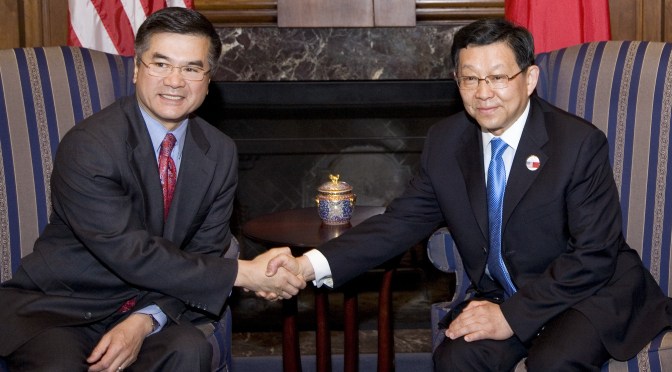
Despite the advances in telecommunications which allows calls and video chats from half the world away, the Chinese continue to prefer face-to-face conversations. This is very important in social circles and when conducting business, at which time Chinese relationship networks can hold a significant amount of influence. Holding a meeting or having a conversation face-to-face allows for more familiar conversation. Chinese business people when meeting in person enjoy a more amiable atmosphere which allow for the gift giving and compliments that facilitate the building and maintenance of personal relationships. For a Western business person,  avoiding face-to-face meetings in the interest of saving time can result in some negative outcomes  At best a Chinese worker or business person will be unable to develop a closer working relationship with a Westerner and as a result remain more at a distance from their needs and concerns. At worst, a Chinese person may feel insulted or annoyed which can damage the potential for future cooperation.

There is also another very real reason why Westerners would be advised to meet with Chinese business people face-to-face as often as they can. Many time when meeting in a Chinese business environment, meetings will take place in Mandarin Chinese or a local dialect, which most Westerners do not understand. When working with a translator, despite not understanding any Chinese, there are many signals that can be picked up through gestures and facial expressions with enough practice. But when holding a meeting through teleconferencing, the ability of the Western business person to spot these signals is lost. Thus,  face-to-face meetings, when used correctly, can allow the Western business person to be more effective in managing partner relationships and negotiating  deals.

Refusals are Best Given in Private

As mentioned in Part 1 of this series, Chinese place a lot of emphasis on respecting an individual’s Face and avoiding public embarrassment. And no matter whether you are a Western CEO, director, manager, or regular employee, this is a concept that cannot be ignored. To succeed in China it is vital to retain your key managers and employees, as well as to maintain good relations with partners and clients. This is made difficult by the fact that Chinese can be extremely sensitive to how they are perceived and treated by others. Unlike in Western countries a badly timed refusal or reprimand can burn bridges or cause employees to quit their job. Thus No Chinese employee wants to have an idea rejected in front of friends of colleagues by their supervisor as it can be interpreted as a slight (and lead to embarrassment or humiliation). By the same token, when dealing with a Chinese colleague who is your direct superior or higher in the corporate hierarchy, a Westerner should be careful to not to offer a direct refusal or criticism in front of other employees. Chinese leaders feel a they are due a great deal more respect and prestige than other employees, and some are used to never being wrong where their subordinates are concerned. The best strategy for when a refusal must be given is to attempt to offer as much cushioning to the person’s Face as possible. One way of accomplishing this is to talk in a private setting with no one else around your Chinese colleague might be more willing to listen. You can also try to be indirect in your refusal or make sure your refusal doesn’t state your boss as part of the reason (even if he or she is). It is all too easy to burn bridges colleagues, supervisors, clients and partners through losses of faces, even when it is unintentional. And while it can be a chore to dance around a Chinese business person’s Face in order not to insult them, in the long run it is a much safer bet to ensure a successful and worry-free (as much as can be expected) working environment.

Hierarchy & Harmony Can Create Complications

The emphasis on hierarchy and harmony in the Chinese business environment creates more distance between different levels in an organization as well as reducing the ability of Western managers and leaders to easily receive feedback from employees, and effectively communicate throughout all levels of an organization. When a Western business person wants to find out what managers and subordinates think, especially regarding an uncomfortable issue, it’s best not to do it in a formal setting with other employees present. One option is to pull them aside for an individual meeting, or assign that task to their direct supervisor. And while this isn’t a catch-all solution, it reduces the pressure the employee will feel and increase the chances of getting more honest feedback. And while training can indeed allow some Chinese employees to be more at home in a Western style work environment, it’s not a given. Many Chinese employees do, and will continue to prefer to be in an environment that contains traditional Chinese values. In light of this, Western managers can benefit from developing a strong team of managers and support staff, some of which should be familiar with both Chinese and Western methods, and thus able to act as a go-between.

When in Doubt, Follow Up with Specific Questions

It can be very frustrating for Westerners in China to be constantly met with vague answers and inconclusive feedback.  In some cases an individual will simply not know the answer and will have been covering up that fact. In others, they will be trying to protect you (and they) from an answer you will likely not want to hear. First and foremost it is important to understand that in most cases this is not “lying” as Westerners know it; this is something that the Chinese have been taught to do (directly and by example) since a young age. Understanding and accepting this will allow you to withhold blame from your employees (a good first step) and focus on making them comfortable enough to give you the information you need. In the event that vague answers are received from employees, colleagues, or service providers, answers can sometimes be obtained by gently asking follow-up questions, or asking related questions to try to uncover the information that you need; getting straight answers is seldom easy but is less difficult if a Chinese person doesn’t feel embarrassed. When receiving vague answers about potential partnerships and meetings it is harder to judge, even to the Chinese, what is really going on. The easiest way to deal with this situation is to check back on a regular basis. If you keep getting the run around for more than a few months then the answer is most likely a no. Getting a direct response out of the Chinese is also something of an art form (which the author cannot claim to have completely mastered), but as with any art form the more practice, the better you will become.

Don’t Expect A Discussion In Formal Meetings

Business in China revolves around protocol and etiquette, especially on formal occasions. And while different organizations might indeed possess different cultures and personalities, larger Chinese organizations by and large focus on formality, and observing the proper etiquette and protocol. When a Chinese company or organization meets with another (e.g. a Western company), the key issues likely on the table are discussing pre-agreed upon topics, building or managing the relationship between the two organizations, or taking direction (e.g. from client to consultant). In this context, Chinese organizations and managers do not like to discuss controversial topics which hold the potential to cause loses of face or create an uncomfortable atmosphere. To have a conversations about details and specifics, wait until the after the meeting to discuss things in a more informal setting. Another option is to hold individual talks with your equal in a Chinese organization (e.g. manager to manager).

Don’t Forget That The Chinese Want Something Too

One thing that can be easy to forget amid the flowery and vague language used by the Chinese, is that there is very often a specific goal in mind during meetings and discussions. Yes, its true that the language used by the Chinese sounds undecided or noncommittal  but don’t fool yourself, and certainly don’t let them fool you.  The politician that says he needs a few more weeks to decide on a matter may have already decided against you; he is simply choosing not to refuse you directly either to save you face or to act in a manner he or she considers dignified. The Chinese businessman that is waffling over the details of a contract might actually have a specific change in mind, but is simply biding him time or is embarrassed to bring it up. Chinese leaders especially will often already have a firm opinion or course of action in mind; due to the specifics of Chinese organizational hierarchy many if not all of the key decisions come from the CEOs or equivalents with little or no actual discussions from subordinates. So make sure and pay attention; if you can discover what is is a Chinese businessman or politician actually wants, your job will be that much easier.

Thanks for reading!

Do you know any other ways in which one effectively communicate with the Chinese aside from those mentioned above? Do you have any additional problems or questions that the above points don’t address? Please feel free to post your thoughts to the comments section below.

Follow the China Culture Corner to to receive regular updates by email!

 

Tips For Communicating With The Chinese, Part 1

Aside from competency in the Chinese language, one of the more difficult (and important) aspects of communications with the Chinese stems from their tendency to speak in a vague and roundabout manner.

This can be a significant problem for Westerners, many of whom are accustomed to speaking in a direct manner with few, if any, hidden pretenses. This is an issue that cannot be lightly ignored by Westerners in China, especially those with the goal of founding or managing a business.

On one hand, in China, where tradition, respect, and social prestige all play an important role in business and society, it is not only necessary to clearly communicate your intent but also do so in a way that your counterpart finds acceptable.

On the other hand, if you are unable to comprehend what your employees, colleagues, and business partners’ true meanings and intents are, then you may find it very difficult to successfully manage a business in China.

In this article, several factors will be introduced that play a part in influencing the ways in which the Chinese speak and communicate. In a future article, various methods will be introduced on how to effectively communicate with the Chinese in spite of the potential obstacles discussed below.

Maintaining a Harmonious Environment

As a rule, both in business and on social occasions, most Chinese prefer to maintain a polite and harmonious environment to avoid offending both hosts and guests.

At formal business meetings, this desire to preserve harmony will often prevent dissension among meeting attendees, especially with regard to more junior employees (e.g., age or rank ).

Senior managers or executives lead these meetings with junior employees, normally toeing the line laid down by their superiors. In addition to the concept of harmony, these practices also relate to the Chinese interpretation of proper leadership methods.

Many Chinese leaders use a “do as I say” model of leadership and, in contrast to many Western corporations, rely much less on colleagues and subordinates for ideas and support. Thus, in many cases, meetings are used by managers and leaders to discuss agendas, hear reports and presentations, and issue instructions.

When meeting with other companies, organizations, and government agencies,  the Chinese prefer to set specific agendas and prefer not to deviate in order to avoid surprises and potential embarrassment. Maintaining harmony is usually more important when there are more people present, or when there are people present of many different ranks or statuses.

Respecting Hierarchy 

Hierarchy also factors into how the Chinese communicate. To the Chinese (as well as Asians in general), a person’s place in a given business or social hierarchy not only determines how others will and can speak to that person, but also the ways in which a person is allowed to speak to others.

For example, workers in China must generally phrase their words carefully when speaking to superiors, especially to those who are more traditionally minded. Speaking out of turn to a superior in China can lead to both poor treatment (e.g., being discriminated against or humiliated ) as well as reprisals (e.g,. being fired or passed over for a promotion).

Leaders and managers in Chinese companies by contrast, are much freer to speak their minds to subordinates.  And while the concept hierarchy may seem similar to and have similar implications as the idea of a “harmonious environment” as explained above, there is a subtle difference.  

Harmony comes into play when a group is gathered together or members of a company are meeting with representatives of another company. Hierarchy, in turn, determines what can and can’t be said, and to whom.

For example, in many cases, an employee simply cannot refuse the demand of a superior (tactfully in any case), or disagree with an idea, no matter the actual truth of the matter. If an employee’s manager “suggests” the employee attend a weekend trade fair or seminar, there is, in reality, very little wiggle room.

Another effect of hierarchy in China is that communication is usually smoother between individuals of the same level or rank. This is due to the fact that those of the same status have more in common and that there are no differences in rank to restrict communication.

For example, when arranging a meeting between two companies of relatively equal size, if the president of one company is attending, it is likewise expected that the other company’s president will attend.

From the Chinese point of view, the two presidents, as equals, will be able to communicate much more easily and clearly.

Avoiding Refusals & Paying Compliments

The concept of Face also plays a strong role in how the Chinese communicate. The Chinese prefer to avoid the negative and emphasize the positive.

When faced with a situation in which they have bad news, disagree with someone, or there is a need to refuse a request, the Chinese often will worry about causing a loss of Face. Most Chinese will go to great lengths to avoid this, especially when it pertains to someone the Chinese person in question cares about personally, professionally or someone who may have influence over their future.

The Chinese avoid potential losses of Face simply because it is judged to be the way a civilized person behaves. Depending on the specific situation, there are different ways that this can influence a conversation or dialogue.

First, the truth may be withheld completely, with the goal of either fixing the problem first or waiting until a later date to reveal the news (why get in trouble today, when you can put it off until tomorrow).  Second, the truth may be marginalized by inferring that the situation is not as dire as it actually is. Third, with the intent to tell the truth, a Chinese person may often lead into an embarrassing topic with compliments, with the intent of easing the blow to a person’s Face, or allowing the other person to perceive that everything possible was done to prevent a loss of face.

The Chinese also do their utmost to give Face to people important to them in the form of giving compliments (and sometimes giving gifts). When dining together, Chinese businessmen routinely praise one another with compliments and toasts. Friends and family dining and interacting together also regularly use the occasion to pay respects and speak with one another in a friendly and lighthearted manner.  

Gifts are given on many social and business occasions in China and are accompanied by words of goodwill meant to give Face to others. And just as bad news and refusals are avoided in order to avoid the loss of face, the kind words that the bad news or refusal is couched in are done so to give face.

Building & Maintaining Relationships

Building and maintaining relationships also influences how the Chinese communicate. Relationships are the web that holds Chinese society and social circles together, and in order to function properly, the Chinese must maintain relationships within companies, the family, and between friends.

Within a company, not only are employees bound by the rules of hierarchy, but they also must build relationships (especially in larger companies) to support their efforts to succeed on projects or receive promotions.

For example, a manager in a Chinese company must simultaneously manage relationships with subordinates, fellow managers, and superiors. This necessary management of these types of intra-company relationships requires the use of differing language and communication styles in order to be effective. 

In companies with a focus on selling products or services, there is an even bigger focus on building and maintaining relationships with current and potential clients. Whenever they want to build a strong relationship, the Chinese need to demonstrate their desire for the relationship, which in many cases will entail gifts, compliments, and favors, and the effort to demonstrate a common cause or concern.

In some cases, when a sales manager fails to put in enough effort to “build the relationship,” which could mean treating the client to enough meals and drinks, the client in question might feel insulted or decide on another vendor or company.

The Non-Specific Nature of the Chinese Language

Aside from the cultural aspects of communication in China, there are also linguistic elements that must be considered. In the experience of the author, many words and phrases that are structured in Chinese, traditional and modern, are not as specific as their counterparts in Western languages (e.g., English).

Many words in Chinese have multiple definitions, and the same character can mean separate things in different contexts, as well as be pronounced in different ways. It is common in speeches, announcements and communications in China for more generalized speech to be used.

Westerners in China may observe language that appears uncertain and incorrectly assume that the lack of detail is deliberate. However, in China, it is important to have a clear understanding of context and allow for the tendency of language to be vague.

This concludes part one of “Tips for Communicating With The Chinese.” Stay tuned forpart two, where helpful tips are provided to assist Westerners, businessmen, and travelers alike, in their communications with the Chinese.


If you’re interested in thoughtful perspectives on China, cross-border work, and how culture, incentives, and organizations shape real outcomes, you’re welcome to subscribe to China Culture Corner and receive future posts by email.

I also share related ideas and longer-form video commentary on LinkedIn and YouTube, and post updates across the channels linked above.

If you or your organization is navigating China execution or cross-border alignment challenges, I work with teams on an embedded and remote basis. Reach out directly: Sean@SageSightConsulting.com


A Guide to Hanyu Pinyin and Correct Chinese Pronunciation

With the rise of the Chinese economy, not only have many Westerners taken it upon themselves to visit the Middle Kingdom, but Western countries are also playing host to greater and greater numbers of Chinese tourists, students, and businessmen.

However, big differences in language and communication styles can create an array of difficulties for a Western tourist in remote areas, let alone a Western businessperson attempting to negotiate a multi-million dollar deal.

This has prompted a shift in the traditional Western English-centric model of doing business, with an increasing number of Westerners actively studying the Chinese language. And this is not merely limited to travelers and professionals; Chinese is being taught on an increasing basis in Western schools, and children are starting to learn at an increasingly young age.

While it is true that many Westerners might never actually visit China, the odds are increasing that they may encounter Chinese citizens in their home countries. As such, it is a good idea for Westerners to be able to at least pronounce most Chinese names (e.g,. a guest’s name) and be reasonably competent in several common phrases.

How Pinyin Helps 

The simplest way to start this process is learning the fundamentals of how the Chinese people speak and write. However, this is made more difficult due to the fact that the Chinese writing system is composed of ideographs (called characters in vernacular), and unlike English or other European languages, the written Chinese language has no clear link with spoken Chinese.

Thus, pronunciations must be memorized on a word-by-word basis. Luckily, there is a convenient go-between for Westerners. Pinyin (literally meaning “joining sounds together”) is written with the Roman alphabet and acts as a first step in helping Westerners learn how to pronounce the Chinese language and speak in complete sentences even before any characters are learned.

The following article aims to introduce the fundamentals of using, reading, and pronouncing Pinyin, both for Westerners who simply want to be able to pronounce Chinese words, as well as those who plan to study the language full-time.

Introduction to the Hanyu Pinyin System

The Pinyin system in use today in Mainland China (also called “Hanyu Pinyin”) was created through a project sanctioned by the Chinese government in the 1950’s, building upon and perfecting the work of several preexisting Chinese romanization systems.

The Hanyu Pinyin system has now become the most commonly used system in the world for the romanization of the Chinese language. Some regions, such as Taiwan, are still known to use older systems, such as the one known as Wade-Giles, which is also still common in older Chinese history books and dictionaries.

Indeed, Hanyu Pinyin is not only used by foreigners who are learning Chinese. Hanyu Pinyin also serves many purposes for Mainland Chinese themselves, including entering Chinese characters into computers as well as in aiding in language education for both children and adults.

Hanyu Pinyin: Basic Pronunciation 

how to pronounce pinyin

When first learning Hanyu Pinyin, it is important to be aware that this writing system contains some very specific pronunciation rules, which all must be learned beforehand in order to ensure proper pronunciation.

Mandarin Chinese, the dialect upon which Hanyu Pinyin is based, possesses many sounds that do not exist in English. To solve this problem, the creators of the Hanyu Pinyin system took letters or combinations of letters from the Roman alphabet and assigned them new and unique pronunciation rules.

The chart at the right lists several examples of words and sounds that are in practice, some of the most difficult for new students of the Chinese language. Mastering these new sounds is an important first step on the journey to speaking the Chinese language. For additional convenience, a link is provided at the end of this article, complete with many different Chinese words in Hanyu Pinyin and audio aids.

Chinese Tones

How to Pronounce Chinese Tones

An additional difficulty presented by the Chinese language is its tonal nature. The Mandarin Chinese dialect (the national language of China) is composed of four distinct tones: flat, rising, falling, and rising (or “v” shaped), and falling. In addition, different characters/words can possess the exact same pronunciation and tone but still hold different meanings. 

For example, while the Hanyu Pinyin word Mă means horse in the example to the left, the same word and pronunciation also mean “ant” and “code.” While this sounds complex and unwieldy, within daily conversation, this potential obstacle is usually avoided in two ways.

First, context goes a long way towards allowing a speaker of Chinese to understand what the word “Mă” might mean at a given time. Second, despite the fact that many words or concepts can be explained or defined by a single character, in practice, most Chinese words and expressions take the form of two, three, four, or more characters.

A single word with a specific tone may be meaningful by itself, but add a few more characters to represent a single word or meaning, and the potential meanings decrease significantly. In the case of the word “ant,” the common combination of words/characters would be “mǎ yǐ.”

There are, of course, additional rules with regard to Hanyu Pinyin and its pronunciation, but they are not as important as mastering the basic elements described above.

 Practice Your Pronunciation

Now that you’ve studied the basics of pronouncing Hanyu Pinyin, the next step is practice. And the best way to practice effectively is to first listen to a specific word spoken aloud by a native (or near native) speaker, and then practice speaking aloud again, and again, and again.

In truth, the more you actually practice, the better you will become. An excellent and comprehensive Hanyu Pinyin chart, along with audio aid,s is provided on the website Chinese.Yabla.com, which can be viewed by clicking on the button.

Once the chart has loaded, simply move your mouse cursor over the top row or the far left column to view notes on the mechanics of Pinyin pronunciation. All complete words (in Pinyin) within the chart can be clicked to provide a clear audio example of the correct pronunciation for said word, and in all four tones as well. Best of luck to everyone!

Pinyin Practice Button

If you’re interested in thoughtful perspectives on China, cross-border work, and how culture, incentives, and organizations shape real outcomes, you’re welcome to subscribe to China Culture Corner and receive future posts by email.

I also share related ideas and longer-form video commentary on LinkedIn and YouTube, and post updates across the channels linked above.

If you or your organization is navigating China execution or cross-border alignment challenges, I work with teams on an embedded and remote basis. Reach out directly: Sean@SageSightConsulting.com