

Category Archives: CULTURE BASICS

Foundational concepts in Chinese culture that influence behavior, relationships, and decision-making. These articles are designed for readers who want deeper context beyond surface-level etiquette.

What Does “Leader” Mean in China?

Chinese leaders and power.There are many cultural differences between China and Western countries, which impact how business is conducted on a daily basis. However, one issue which may hold a disproportionate influence over company culture is differences in leadership styles. There are many ways in which Chinese leaders are different from their Western counterparts, some of which have been touched upon in previous articles. These include issues such as more roundabout communication styles, a greater focus on Face and relationships, and unique social and behavioral etiquette. And while this may be a lot to take in for the uninitiated, there is a simpler way. In order to understand how to interact with Chinese leaders, an easy first step is to learn about how they view themselves, and the titles they choose to assume.

An Introduction to the Concept of Lingdao (领导)

A universal term in Chinese for an executive, a boss, or anyone’s direct superior is “Lingdao (领导),” which can be roughly translated as “leader.” However, in actual practice the term Lingdao cannot simply be used interchangeably with its English equivalent. First of all, the general usage of the term varies greatly with how Westerners use the term “leader.” Most Westerners only use the term “leader” on occasion, (e.g. a conference of western leaders), and rarely, if ever, use the term to refer to or directly address a superior. In contrast, the term Lingdao is much more common in Chinese daily and professional language, and is often used to directly address managers and executives. Several common uses of the term Lingdao have been translated and provided below as examples:

  1. Through the support of the Lingdao, I will do my best to make contributions to the company
  2. I value the Lingdao’s concern for me.
  3. We’ve just received the Lingdao’s instructions. Let’s begin work immediately.

A Chinese boss is an emperorIn addition to the differences in common usage, the term Lingdao also carries a very different inherent meaning in China, than leader does in Western countries. In many ways, it harkens back to the traditional system of imperial rule in ancient China, with an all powerful emperor supported by an elite cadre of government officials. Rulers and other powerful men and women in China over the centuries have never really had to deal with limits on their power or the sort of checks and balances found in many Western democracies. In Western countries, the terms “leader” and “leadership” often imply bettering oneself and managing in a fair, just, and responsible manner. In China, Lingdao has much more to do with personal power.

It is also worth noting that while the boss of a company is universally “the Lingdao,” the term it is never directly associated with a specific role. Based on this author’s own experiences networking and cooperating with Chinese managers and executives, it would be more accurate to describe the term “Lingdao” as a status or honor that one attains through a position, or role. And this status does not necessarily only apply to the “top dog” within a company.  A director or manager might also be called a Lingdao by subordinates providing no one of a higher rank is present. Thus the specific person doing the “leading” gets the title, and the power and respect that go along with it.

Lingdao (领导) in Modern China

Of course, China is no longer an empire, although some companies are certainly run like one. Within many Chinese companies, especially small privately owned ones, a Lingdao can be is akin to an emperor within the sphere of his or her own authority. Orders and directives are expected to be carried out promptly without question. Those who might be granted the title of Lingdao also take a different approach to management – they don’t. Instead, a Lingdao often prefers to make decisions relating to strategy and general courses of action,while leaving implementation and employee management to their subordinates. And although it would be wrong to assume that all Chinese managers and executives are tyrants, there is most certainly a tendency to abuse the power that the status of Lingdao confers. As being a Lingdao represents a certain type of status or honor, Chinese managers and executives sometimes do whatever they can maintain that prestige, both by encouraging their superior status (and gain more Face) and exercising their authority, which can include issuing arbitrary commands, making employees work overtime, and offering verbal abuse.

The status of a Lingdao can have very strong pull for young Chinese white collar workers, many of whom dream of starting their own companies with this in mind. On one hand, abusive working environments, especially those in small companies, can make them eager (or desperate) to move on and try something new. On the other, Face is very important to many young Chinese employees, especially young men. In small companies only the boss or the manager can aspire to attain the Face and respect of a Lingdao. Thus, these two factors taken together, present a very strong case for Chinese workers to quit their current jobs and start their own companies. This author has, on many occasions, overheard many Chinese white collar workers remark on their plans to start a company, not to be an entrepreneur, but to be a Lingdao.

What Does This Mean for Western Business People & Employees?

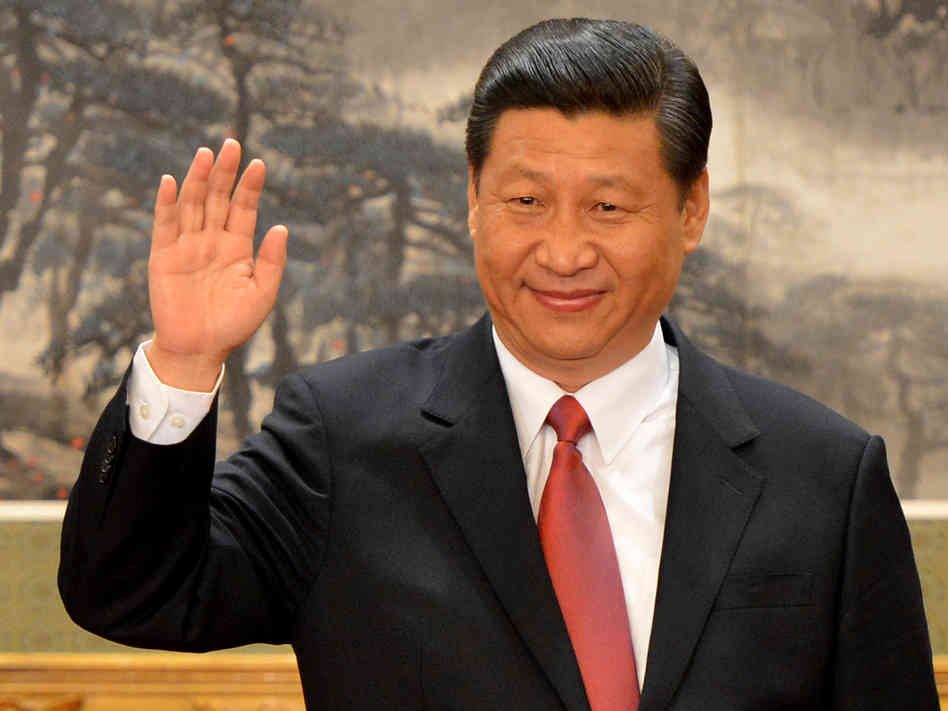
For the Western business executive working in or traveling to China, the concept of Lingdao will likely not preset a huge problem. However, being aware of the concept can certainly provide greater insights into the actions and mindset of Chinese managers and executives. Chinese politicians are also leadersThe main times one must be careful are when meeting with an executive of an obviously higher status than oneself. In many cases, a Chinese executive might ignore any unintended gaffs or breaches of etiquette, though there are always times when a particular executive may be overly sensitive and decide to hold such a breach against the Westerner in question. If a Chinese executive’s Face is damaged, there may not be a way to recover the business relationship.
In fact, it is younger Western employees in China that are much more likely to have trouble with the concept of Lingdao. While almost all Westerners in China are treated with a certain degree of courtesy and respect, including low-level Western employees, this type of status only goes so far. Western employees who find opportunities to work with smaller domestic Chinese companies will likely have far less freedom to speak their mind, make suggestions, or help shape the course of the company. And dissatisfied Western employees who decide to press the point in pursuit of what they feel is rightfully theirs, may not only find any credibility they have built up disappearing, but their positions as well.

Final Thoughts

All in all, there is nothing perverse or wrong about the Chinese concept of Lingdao. Yes, it represents a model of leadership and behavior that many Westerners will find themselves at odds with, but for the most part it is not a system that is arbitrarily forced upon the Chinese rank and file. Many Chinese employees are much more passive than their Western counterparts, and for the most part do not chafe under a stronger hand at the wheel. Those that do in many cases leave for better opportunities, or aspire to become a Lingdao in their own company. What this author hopes to accomplish for Western readers through this article, is a deeper appreciation (if not necessarily agreement) of the core issues that drive Chinese managers and executives. By understanding the Chinese concept of Lingdao, managing cross-cultural business ventures will go smoother for Westerners, and younger Westerners will find it simpler to take up new opportunities in Mainland China.

Thanks for reading!

Do you have any additional questions about leadership and management styles in China? Can you share any of your own experiences from working and doing business in China? Please feel free to post your thoughts in the comments section below.

Follow the China Culture Corner to receive regular updates by email!


Are Relationships Predestined? They are in China!

Yuánfèn  (缘分) is a common term often heard among the local Chinese and is strongly tied to the idea of relationships in China, both personal and business. As discussed in a previous article on relationships, in China, there is a strong emphasis placed on building and maintaining networks of personal and business relationships.

Beyond the fundamental importance of relationship networks in China, the idea of Yuánfèn can represent an even deeper meaning for many Chinese.

Through this somewhat ambiguous yet important term, many Chinese people come to believe that some relationships contain a touch of destiny, and as a result, this can lead to even greater commitment with regard to certain relationships.

However, due to the many cultural and language gaps between China and Western countries, Yuánfèn is not a term that many Western businesspeople are familiar with.

Even if Westerners have heard the term, they often do not fully understand its significance. The following article details some of the specific points relating to Yuánfèn in China, as well as how Western expatriates can best apply them to their lives and businesses.

 Defining Yuánfèn (缘分

Although the term Yuánfèn is ambiguous and has many different interpretations, there are several meanings that hold more weight than others.    Yuán (缘) by itself means karma or fate; the second character Fèn(分) can mean the division between two halves. When combined, the term Yuánfèn (缘分) can be defined in the following ways:

  1. A relationship that has been predestined
  2. Fate or chance that brings (two or more) people together
  3. A predestined affinity (with a person, place, etc.)

While much of the information available about Yuánfèn through popular sources, including the internet, pertains chiefly to its application in the areas of love and romance, it is important to be aware that Yuánfèn can be applied to any type of relationship.

These additional areas can include relationships of the personal, business, and political persuasions.  Additionally, in colloquial language, it is not unheard of for the Chinese to use the term Yuánfèn to describe their relationship (or lack thereof) with a country, custom, or habit.

For example, Westerners with a great love of China might choose to remark that they “have Yuánfèn with China.” In contrast, a Chinese person who has had to give up smoking may comment that he or she “has no Yuánfèn with cigarettes.”

 The Origins of Yuánfèn 

The origin of the Chinese concept of Yuánfèn comes from an ancient Chinese and Asian idea that two people can be drawn inexorably together through an innate connection in the universe. And although this concept can, especially when translated incorrectly, be construed as akin to the English concept of “destiny,” there are several important distinctions.

First, the inevitability of this link does not, in fact, derive from any god-like figure as Westerners might understand it. Second, it focuses more specifically on two people sharing a strong bond that draws them together, and does not necessarily relate to what they may or may not be fated to accomplish together.

A large part of the significance of Yuánfèn draws upon ideas inherent in the Buddhist faith, which has long been prevalent in Chinese culture. Practitioners of Buddhism believe that all living things are reincarnated at the end of their lives to lead new lives on Earth. By itself, the probability of two people coming together in a world of over seven billion (or in a country of over 1.3 billion Chinese) is significantly low.

When one considers the possibility that two individuals might go through countless incarnations on earth before finally chancing a meeting would make such a meeting (and relationship) even more special and profound.

 Yuánfèn in China Today: Business, Friendships, and Romance

For friends in China, Yuánfèn can be that special element that determines a lifelong friendship. As there is not really a reliable method to determine whether or not there is truly an innate connection between two people, the Chinese chiefly rely on common backgrounds, interests, and their emotional impressions to let them know whether or not they feel they have Yuánfèn with a specific person.

For example, if two individuals working in the big city meet, and upon conversing discover that they are from the same small town, they might feel as if they have Yuánfèn. This would be especially true if they met by chance on multiple occasions.

One common, if non-business-related, area in Chinese society in which Yuanfen is often encountered is in romantic relationships. Two people who meet by chance or through a certain set of circumstances, and thereafter find that they possess strong feelings for each other, often believe that their meeting was the will of the universe.

However, being fated to be drawn together and being fated to end up together do not necessarily go hand in hand. The Chinese have a saying in this regard, yǒu yuán wú fèn (有缘无分).

It means that although two people might have been fated to meet, in the end, they were not destined to remain together. It is a saying commonly used in China when one person wishes to break up with another.

Perhaps more important to the Western businessperson is Yuánfèn’s potential to influence and affect the formation of important personal and business relationships.

Despite an overt focus by younger Chinese people on Yuánfèn’s romantic implications, there are many Chinese within the business community who think of the idea of Yuánfèn when meeting new contacts. Through upbringing and societal structure, many Chinese, especially older ones, will hold key contacts close to their chests, a silo separate and protected from the outside world.

If they say they have Yuánfèn with you, they may be tentatively offering you the opportunity to have a stronger personal relationship with you. This, in turn, can lead to more business opportunities down the road.

What Does This Mean for Westerners?

While the idea of Yuánfèn does not directly affect the way the Chinese go about forming and maintaining relationships, it can certainly offer fresh insights into the thought process that a Chinese person is subject to when meeting new people.

From the concept of Yuánfèn, not only do the Chinese believe that two people can bebrought together by fate, but also that they will be. Thus, many Chinese will, over the course of their lives, be on the lookout for those special or gifted individuals with whom they can or are fated to develop close connections.

In contrast to Westerners, who are used to getting to know people over a long time, especially in the workplace, Chinese people may be prone to making much quicker decisions. If a Chinese business person meets someone with whom he or she shares common business interests,  hobbies, or an emotional connection, they may make a very quick decision to extend their friendship to that person.

Likewise, if a Chinese businessperson gets a bad impression from someone, they may be much quicker to cut all contact or decide against that person in a specific matter. Understand, of course, that the Chinese people in general are still very friendly and hospitable to Westerners.

The concept of Yuánfèn does not usually affect the normal course of forming friends or business relationships. It will, however, affect who the Chinese choose to form especially close and trusting relationships with.

Additionally, as the Chinese economy and society continue to develop, the concept of Yuánfèn may remain more relevant to smaller portions of the overall population. And as Yuánfèn is strongly connected to the concept of relationships in China, Yuánfèn will then continue to matter the most where relationships play a greater role in Chinese business and society.

This means inland areas far away from the modern metropolises (e.g., Beijing and Shanghai), and in local industries dominated mostly or solely by Chinese players (e.g., government and Baijiu/sorghum liquor manufacturers) who rely on strong regional and national relationship networks.

Age can also be a factor; in the author’s experience, it was much more common for Chinese business people born in the 1980’s or earlier to refer to or believe in the concept of Yuánfèn as it might relate to their life or business. Younger Chinese workers, especially those with experience in the West, may not put much, if any, stock in Yuánfèn in the workplace.

To summarize, while Western business people will not be able to count on Yuánfèn in all their dealings with the Chinese, it is by no means something that can be discounted entirely. And because many Chinese use their emotions in part to decide on Yuánfèn, it’s important for Westerners to always try to put on their best face.

One can never know when too casual an attitude or too direct an approach can cause discomfort to the Chinese and spoil a potentially rewarding and beneficial relationship. 


If you’re interested in thoughtful perspectives on China, cross-border work, and how culture, incentives, and organizations shape real outcomes, you’re welcome to subscribe to China Culture Corner and receive future posts by email.

I also share related ideas and longer-form video commentary on LinkedIn and YouTube, and post updates across the channels linked above.

If you or your organization is navigating China execution or cross-border alignment challenges, I work with teams on an embedded and remote basis. Reach out directly: Sean@SageSightConsulting.com

The Art of Giving Gifts in China

Many Western businesspeople who come to China for the first time will likely observe the Chinese custom of giving gifts to friends, colleagues, and business partners.

However, it is also likely that these same business people will have trouble fully understanding why the Chinese give gifts and the rules of etiquette behind the practice of gift giving. When should a gift be given in China? What types of gifts are acceptable? And how is giving a gift different from giving a bribe?

In this article, the core concepts relating to giving gifts in China are explored to provide Western businesspeople with the relevant information they will need to successfully give gifts in China.

Related Article: Learn How to Give Gifts on China’s WeChat App

The Culture of Gift Giving

China possesses an ancient culture steeped in Confucianism— based largely on respect, relationships, and rituals—the purpose of which is maintaining harmony within one’s family, network of friends, colleagues, and society at large.

Gifts play a key role in this, as they allow the Chinese people to not only demonstrate their respect for elders and superiors but also allow them to show their commitment and enthusiasm toward maintaining close relationships with family and friends.

 “Giving a gift is necessary to maintain relationships with clients and to maintain influence with government officials, otherwise it is very hard to sustain those relationships.” – Michael Qin, Manager

Gifts also play an important role when building new relationship networks with other business people. At work, gifts can be given at formal meetings with government officials, as well as when meeting with clients and prospective business partners. Outside of work, gifts are given on a wide variety of different occasions, including holidays, birthdays, and special events.

A more complex understanding of the concept of gift-giving does not just include gifts, but favors and other types of assistance or favors as well. While it’s true that a gift is just a gift, what is more important to the Chinese is the meaning behind the gift (e.g., your respect, commitment, devotion, etc.). Thus, in the Chinese business world, physical gifts are often intermixed with meals, karaoke, and compliments.

Acceptable Gifts

Many different types of gifts can be given to Chinese friends and business partners. First of all, a gift from your home country or region will almost always go over well; most Chinese do not have the opportunity to travel abroad, and therefore gifts from other countries, especially those that cannot be easily purchased in China, are highly valued. 

Regional specialties are also good choices, both from within China and outside. Many local businessmen (not businesswomen) greatly enjoy smoking and drinking. Therefore, making a gift of alcohol or tobacco products from your home country will also be welcomed warmly.

Wine, cigarettes, or cigars from China are also acceptable, though it would be wise to choose a well-known brand with a more expensive price tag.

Other recommended gifts include fruits, food, and health supplements. Packs of nuts and seeds are common gifts in China, especially from outlying areas, and peaches are thought to increase longevity. Teas, especially rarer and older blends, are touted for their health benefits, and Chinese traditional health supplements are also welcome.

However, certain gifts can be (though not always in modern China) viewed as taboo and thus can potentially sour a budding friendship or business relationship.

Clocks (though not watches) should be avoided, as the word for clock in Chinese can be associated with death. Pears should be avoided, as the word for pear in Chinese sounds like the Chinese word for leaving or parting. Umbrellas also possess a phrasing that can be associated with the breaking up of a friendship or partnership, and are best not given as a formal gift.

Specifically for men, green hats are not a good choice as a gift – these have been historically given to husbands by unfaithful wives. When in doubt on gift ideas, you can also check with a Chinese friend or associate.

Courtesy and Reciprocity

The Chinese have a saying, “courtesy demands reciprocity” or Lǐ Shàng Wǎng Lái (礼尚往来),  and it plays an important role within the context of giving gifts.

The relationship between two Chinese people is made stronger by acts such as friendly gestures, giving gifts, offering favors, and enjoying meals together. However, unlike some Western countries where the act of gift giving is more free spirited or casual, in China, to maintain an equal and harmonious relationship, a tally must be kept.

You need to be careful when using “Li Shang Wang Lai” in the workplace to ensure that it does not become bribery. If someone gives me a gift, but I feel that the value is too high, then I will refuse it. In my personal life, I always try to give more than is given, only thus being able to maintain consistent and harmonious relationships. – Samuel Hu, Deputy General Manager

For example, when a Chinese person is treated to dinner by a friend, it is expected that the kindness will be returned at a future date. When a Chinese couple receives a gift for their child from a friend, not only will they feel compelled to buy a gift for their friend’s child, but they will also take care to give a gift of at least an equal value to the one received.

If this balance is not kept among ordinary Chinese (e.g., one person constantly repays gifts with less expensive ones), then there is the potential for relations to sour. A person receiving lesser gifts from a friend may think the friend is stingy, while a poorer person unable to match the expensive gifts of a friend may feel a loss of Face.

Understanding this additional concept is invaluable in maintaining healthy long-term relationships with the Chinese, as well as allowing one to understand what gift values are appropriate at a certain time.

How Bribery is Different

At this point, it is important to observe a key difference between this type of gift-giving and the traditional bribe. The goal of a regular gift is to demonstrate your respect for an individual and your commitment to creating or maintaining a relationship. Giving the gift will not “seal the deal,” but not presenting a gift may make you appear impolite, uncultured, and lacking proper character.

In contrast, a bribe in China is often a specific sum of hard currency within a red envelope, known throughout China as a “Hongbao.” Hongbaos, while traditional gifts of spending money during the Chinese Lunar New Year, are also synonymous with a bribe in China’s business and political arenas.

Other common forms of bribery within China take the form of company stock, cuts of profits, and expensive gifts, such as cars and high-end electronics. Therefore, giving high-value gifts, even from the list of acceptable items above, can cause worry or embarrassment among the Chinese.

On one hand, an expensive gift can give the impression that a bribe is actually being offered. On the other hand, it may cause the intended recipient to worry that coworkers and superiors may view it as a bribe, which can be more damaging to the recipient in the long run. In contrast, with an actual bribe, an individual may demand (or expect) that “the gift” will lead to or ensure a specific desired outcome.

However, the exact difference between a “gift” and a “bribe” can remain unclear within the somewhat murky Chinese business environment, and it has not been uncommon in recent years for companies and government offices to set limits on the value of gifts that can be given or received.

 Advice for Westerners

For the Westerner doing business in China, while it is not necessary to observe these practices as strictly as local Chinese may feel the need to, it is recommended to pay more attention to close Chinese friends, important business contacts, and anyone within the government bureaucracy who has the power to make your life or business difficult.

Before you leave on a business trip to China, make sure to stock up on local mementos from your hometown or home country. And before attending an important meeting in China, you may want to pick up a little something to show your respect.  

Remember, giving a gift is not always a bribe in China, and most of the time, it is a method for building and maintaining a strong and mutually beneficial relationship. Thus, when in doubt, give a gift and smile while you do it.


If you’re interested in thoughtful perspectives on China, cross-border work, and how culture, incentives, and organizations shape real outcomes, you’re welcome to subscribe to China Culture Corner and receive future posts by email.

I also share related ideas and longer-form video commentary on LinkedIn and YouTube, and post updates across the channels linked above.

If you or your organization is navigating China execution or cross-border alignment challenges, I work with teams on an embedded and remote basis. Reach out directly: Sean@SageSightConsulting.com