
Category Archives: CULTURE BASICS

Foundational concepts in Chinese culture that influence behavior, relationships, and decision-making. These articles are designed for readers who want deeper context beyond surface-level etiquette.

What ‘Face’ Means in Chinese Business Culture

Most Westerners who are planning to travel to China for business have almost certainly heard of the concept of “Face,” or Miàn Zi (面子). China’s more hierarchical society certainly places a great deal more emphasis on Face daily life, business, and politics.

However, it can be difficult for Westerners new to China to understand specific rules for Face in China, as well as the different contexts in which it should be used.

For example, what actions will cause someone to gain or lose Face? In what situations should Face be given? And how will Face affect your business and life in China?

In the following article, several of the basic points surrounding Face will be explained, which all Westerners need to be familiar with to succeed in China.

What is Face?

In China and much of Asia, Face represents a person’s reputation and feelings of prestige within multiple spheres, including the workplace, the family, personal friends, and society at large. The concept of Face can be understood more easily by breaking it down into three separate components: the individual view, the community view, and actions.

The Individual View:

This pertains to the amount of prestige individuals feel based on their accomplishments and the amount of respect they feel they are due based on their position and status, such as in a company or at home.

For example, in the modern Chinese economy, there are many opportunities to buy status symbols, which help a person gain prestige.  And in China’s hierarchy-focused society, the respect a person is due (or felt due) is determined first by status relative to another person’s, not necessarily by personal achievements.

The Community View:

This pertains to the amount of respect individuals feel necessary to give to someone else based upon that person’s position or status, such as in business, the family unit, or within a group of friends.

For example, status in a Chinese family is divided by very distinct roles, with separate terms of address used for older and younger cousins, aunts, and uncles. Giving the same amount of respect to older and younger aunts or uncles could be viewed as a breach of etiquette.

Actions:

This pertains to the various activities that can cause an individual to gain or lose Face. Based upon one’s position relative to someone else, several different actions can be employed to either cause a loss or gain of Face.

In some cases, these actions might occur unintentionally or instead be used as a tactic to achieve a specific result. For example, giving someone Face (e.g., more than they might deserve) can be used to build relationships and influence decisions. Causing someone to lose Face could be used to reinforce one’s own authority and status, or pressure someone toward a desired action, such as quitting their job or fulfilling a promise.

Face and Business in China

Face can be very visible in the Chinese business environment and play an important role in inter- and intra-company communication, business negotiations, and the development and maintenance of relationships. In China, company hierarchy is much more important than in many Western countries.

Not only are leaders and managers placed on a higher pedestal, but the distinction between different levels of management is much clearer and more important. Chinese leaders and managers usually expect respect from their subordinates and, in some cases, expect to be obeyed without question, no matter the rationality or fairness behind a request. 

Not obeying “the will” of a Chinese leader or manager does not give them the perceived necessary prestige they (and others) feel is deserved. Indeed, survival in a Chinese company depends on knowing one’s place, and Face plays a very important role in facilitating that function.

When Chinese businesspeople build relationships with one another, Face is very important. On one hand, relationships in China are built and maintained by giving Face and increasing the prestige of one’s friends and contacts.

With two business people of the same relative position or status, Face is often given and received equally and is the cement that holds a relationship together.

“To me, your “face” is your position and standing in the eyes of others, and it also has to do with the degree of respect you receive. Face can also be saved up over time and used to accomplish things later on. If you drove a fashionable or luxurious car to attend a friend’s party, then the majority of your friends would feel that you had face. Also, if you can achieve something through your personal contacts that others cannot through normal channels, you would also be thought to have face. You can gain face if you are praised by your boss, or if you accomplish a difficult task at work. However, if you greet others warmly at social events, but are met only with indifference, then you would lose face. Questioning someone’s  ideas or opinion in a public setting would cause that person to lose face.”

– James Tan, Sales Manager

On the other hand, when a client relationship is established in China, the client more often than not receives more Face in the early stages of a relationship from the “seller.” Face must be given to the client to make them believe that the seller is worthy of their money and time. Sometimes giving Face to a contact entails simply words and compliments, though sometimes gifts are required and invitations to dinners, entertainment, or other social events.

To the Chinese, there is a natural order in society as well as business, and if one is unwilling or unable to show the proper amount of Face to those who feel they deserve it, then one will likely be judged to not have good character. This has the potential to wreck business deals and sour relationships, so with regard to the issue of Face, most Chinese businesspeople tread with care.

Examples of Gaining & Losing Face

Even after understanding the basic mechanics and uses of Face, it can be difficult to understand how the concept actually works in practice. Below, I have listed several specific examples of how giving and losing Face could play out in China.

 Management: A Chinese company director is leading a team of researchers to complete a consulting project for a client. At the project’s end, the director’s subordinates successfully present their findings and reference and praise their superior’s role in managing and leading the project. The actions of the report being completed successfully, as well as being praised in front of the client, give Face to the director.

Family: A Chinese mother makes many efforts to give her child the opportunity for a good education, both through financial and emotional support. The result is that the child is accepted at a prestigious foreign university. Not only do the parents feel proud of their child’s achievements, but they also feel that they have gained Face through the child’s achievement.

Marriage: A young Chinese man is trying to find a woman to marry, but has met with no success. After reaching his early thirties, all of his close friends have already married, and some even have children. In light of his failure to marry when his family,  friends, and society expect him to, he feels a significant internal loss of Face. In addition, the young man’s friends may look down on him due to his failure to marry, and hence give him less Face through their actions and words during social gatherings.  These actions would then further compound the loss of Face.

Employment: A young Chinese woman is stuck in a stressful job with an abusive manager at a local Chinese company. Through no fault of her own, she is constantly blamed for her manager’s failings and shortsightedness. Through being berated daily in front of her coworkers, the young woman continuously feels she is losing Face. In the end, she feels she has lost so much Face that she cannot bear to face her coworkers and decides to quit her job.

Advice for Overseas Professionals

While Face sounds complicated – and it is – there’s no need to despair. First of all, foreigners are not always expected to adhere to the same exacting standards of respect and prestige as locals in China are.

The influx of Western culture into many of the larger Chinese coastal cities (and other more developed areas), along with greater numbers of local Chinese with experience dealing with Westerners, has led to more flexible interpretations of business and social etiquette.

Also, Chinese culture in and of itself has both liberal and conservative interpretations, even before China’s modernization. Just as there are highly conservative Chinese managers, executives, and leaders who demand respect be paid to them at all times, there are also Chinese who have a less formal attitude and focus on getting results over respect.

However, when the issue of Face cannot be avoided, several things should be kept in mind:

  1. Whenever someone outranks you or is older than you, it’s probably a good time to show them more respect.
  2. Don’t forget to give Face when you want something from someone in China (e.g., a business deal or a favor).
  3. While giving face is always important, don’t forget to develop the relationship over the long-term.
  4. Giving Face will always be appreciated, even from Chinese people who have a lot of experience interacting with Westerners. Face is deeply rooted in Chinese society and mindset, and its importance will not fade over time.

While it’s true that some Westerners protest that they won’t “play the game” while in China, it is important to remember that when you are in someone’s house, it’s only polite to play by their rules, or you may be asked to leave. While overseas professionals certainly might be given more leeway when it comes to the Chinese way of doing things

At the very least, small gestures of respect are easy and go a long way toward demonstrating that you understand the importance of Face (and are willing to make an effort to understand Chinese culture) and that you are committed to a long-term relationship with the Chinese. Something as simple as this can be a crucial factor that can land important business deals and lead to rewarding friendships that will last a lifetime.

Final Note for 2026

This article was originally written in 2013, and much time has passed since then, both in terms of my own career development and experience in China, as well as China’s development, both economically and socially.

While the above article can still act as a strong foundation to help overseas professionals and visitors understand the nuances of respect and relationships in China, it should also be noted that China is not a monolith. Cultural practices and social expectations can vary by province, industry, educational background, and personal style. Many Chinese professionals and managers are also more experienced with overseas management and working styles.

In using this article as a guide for a career in China, or merely a trip here, it is best to use this article as a base foundation, remembering to observe the behavior and preferences of those around you and adapt how you employ Face and respect, depending on the person and situation. Best of luck!


If you’re interested in thoughtful perspectives on China, cross-border work, and how culture, incentives, and organizations shape real outcomes, you’re welcome to subscribe to China Culture Corner and receive future posts by email.

I also share related ideas and longer-form video commentary on LinkedIn and YouTube, and post updates across the channels linked above.

If you or your organization is navigating China execution or cross-border alignment challenges, I work with teams on an embedded and remote basis. Reach out directly: Sean@SageSightConsulting.com
 

Chinese Dining Etiquette

When doing business in China, business meals and banquets are an important issue that cannot be ignored.

No matter whether you are meeting with a private business or the government, or whether you are doing business over dinner or attending a large banquet with multiple parties, the act of dining in China is a channel for conducting business deals, building relationships, and showing respect.

While the practices associated with dining in China may be strange or unknown to the average Western or non-Chinese businessperson, and dining customs may vary slightly from place to place, there exist several universal dining customs that the Western businessperson should be familiar with before venturing to China to conduct business.

Below are a few key issues to be aware of as you participate in business meals in China.

Seating Arrangements 

The seating arrangements during a business dinner or banquet serve the purpose of denoting where a particular person exists in a hierarchy (business, society, family, or friends) and also clearly define how much respect or face that particular person is due.

Knowing and understanding this hierarchy can not only be useful to Westerners during the course of the banquet (e.g., who to toast first), but can also offer some insights into the internal dynamics and power structure of a Chinese company or government office.

As the saying goes, “if two people cannot even eat a single meal together, how will they be able to converse as like-minded fellows?” Thus the traditional significance of the word “eat” in Chinese often also indicates relationships between several people…..in China, if two parties must remain unrelated, even over a dinner table, it will be impossible to develop a deeper relationship. – Barbara Bian, General Manager

Aside from denoting hierarchy, seating arrangements also serve to give face to attendees, especially those who are guests of the host. When dining at a round table, the seat directly facing the door is generally reserved for the most important or high-level attendee.

The second-highest-level attendee sits to the left of the highest-level attendee, and the third-highest-level attendee sits to the right of the highest-level attendee. From there, the seating hierarchy will continue outward from the seat of the highest-level attendee, with left taking precedence over right when distance is equal.

Ordering and Eating 

Generally, when attending a more formal dinner or banquet, ordering dishes is reserved for the host or someone from the host company as delegated by the leader.

However, is it also common for “Face” to be given to a guest or client by allowing the designated guest or client to order some or all of the dishes? In this event, it is recommended to choose something in the medium-price range, which all attendees are comfortable partaking in.

In the event that the menu is completely in Chinese or the guest or client is unfamiliar with the cuisine being served, it is acceptable to politely decline and allow/request a member of the host party to order.

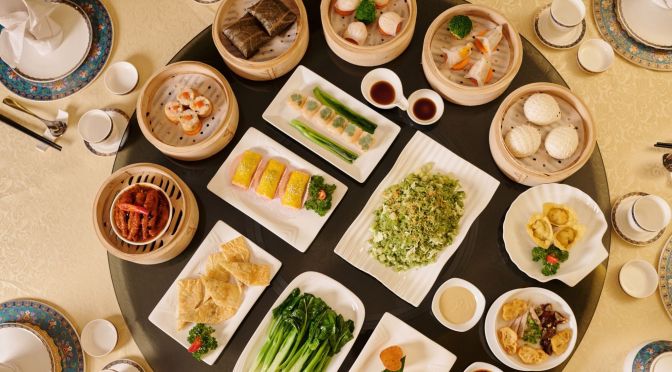
Chinese cuisine is composed of meat and vegetarian dishes, as well as hot and cold dishes, with cold dishes being served before the hot. An average of one dish per attendee is usual; when mostly men are in attendance, more dishes can be ordered and with a larger percentage of meat; when more women are in attendance, it is suggested that the majority of dishes ordered be vegetarian or low in fat.

And when ordering, it is best not to ask or try to haggle about prices, even in jest, as this can give the impression of being stingy, a trait severely looked down upon.

Eating usually commences with a signal from the host and can be accompanied by a speech at more formal events. By and large, most Chinese banquet tables are round, seat eight to twelve people, and contain center turntables on which dishes are placed.

Although some dishes contain their own serving utensils, it is more common in China to use personal chopsticks to serve oneself, even at formal banquets. This does not violate any rules of etiquette. It is advised to wait until a dish is directly in front of you before serving yourself, and then only in relatively small amounts, as doing otherwise can give the impression of greediness.

Lastly, when dealing with pieces of meat that contain bones (there are no knives at most Chinese dinners and banquets), it is common, though not required, to place the entire piece in the mouth, chew until all meat is removed, and then place the bone on the plate.

Drinking and Toasting 

Toasting in China

Drinking during meals is common throughout Chinese dinners and banquets and has deep roots in Chinese history as a method of demonstrating respect.

Although this subject in its entirety is too extensive for this article, several general rules can be followed by Westerners doing business China:

  1. Company leaders or the highest-ranking executive are the first to give and receive toasts (host and guest), after which the rest of the attendees can engage in toasting.
  2. If you are a regular attendee, your first toast should be given to the highest-ranking person at the table (the person most deserving respect).
  3. When delivering a toast, it is customary to stand and use both hands to hold your glass or cup.
  4. Multiple attendees are allowed to deliver a toast to a single person (e.g., the CEO), but it is against the rules of etiquette for a single attendee to toast multiple attendees, unless the person delivering the toast is the highest-ranking attendee.
  5. If drinking from a larger glass (e.g., for beer), use the right hand to hold the glass, with the left hand cushioning the bottom. Smaller glasses (e.g., shot glasses) should be grasped with both hands, one on either side.
  6. When delivering a toast, it is respectful to dip the tip of your glass below that of the person you are toasting. If you are the leader of the host delegation, this is not required.
  7. To give the proper amount of face and demonstrate your generosity, it is important to make sure you toast everyone at least once, starting with the highest-ranking attendees and moving down.
  8. A toast should be accompanied by a few words or a short speech.

 Advice for Westerners in China

Lastly, aside from the dining rules discussed above, there are also several cultural issues that Westerners should be aware of as they seek to build and develop relationships with their Chinese counterparts over meals:

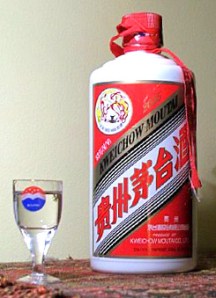
Read More About Chinese Baijiu (Click Here)

First, on many occasions while dining in China, there will likely be at least some undercurrent with regard to building relationships. 

And since Westerners may find that meetings and office environments in China are often the arenas of unclear communication and half-truths, it is therefore advisable, even necessary, to take advantage of meals (formal or otherwise) to get to know your business partners, friends, and acquaintances.

Details or facts that a Chinese businessperson may find inconvenient to mention in front of a boss or colleague may come forth more easily when combined with a filling meal, several beers, and an enjoyable time.

Second, as China becomes internationalized, business will conversely become more local, with much new business taking place in second-, third-, and fourth-tier cities.

The significance here is that, in contrast to the bustling metropolises of China’s Eastern seaboard, many Chinese businesspeople in the more local areas speak English and foreign languages to a lesser degree, and are less Westernized in how they conduct business.

Therefore, it is likely that developing guān xì over meals, as well as understanding the many complex dining rules and customs, will become even more important for Western businesspeople to understand.

And, remember that developing real guān xì has little to do with having a sharp business presentation, wearing a smart suit, working for a well-known firm, or being introduced by someone.

Those factors may get a deal done on one occasion,  but be insufficient to convince your Chinese counterpart to engage in a long-term business relationship. Therefore, don’t neglect the importance of the Chinese customs and ideas of proper behavior with regard to dining, such as toasting, showing respect, or sitting in the proper places.

Yes, many Chinese people have indeed adapted to the Western way of doing things, but remember that to develop guān xì you must make your Chinese counterpart feel comfortable, not yourself.

More and more Chinese people are now studying Western methods…..however, the Chinese people’s tradition of emotional exchanges over a meal will continue to be preserved and maintained. – Jeff Zhang, General Manager


If you’re interested in thoughtful perspectives on China, cross-border work, and how culture, incentives, and organizations shape real outcomes, you’re welcome to subscribe to China Culture Corner and receive future posts by email.

I also share related ideas and longer-form video commentary on LinkedIn and YouTube, and post updates across the channels linked above.

If you or your organization is navigating China execution or cross-border alignment challenges, I work with teams on an embedded and remote basis. Reach out directly: Sean@SageSightConsulting.com

 

The Significance of Family in China

Many challenges await the Western businessperson in China, but one factor that may escape immediate notice is the significance of the Chinese family.

While family in China is primarily a social issue, its centrality within Chinese everyday life, as well as the changes and pressures forced upon it by the rapid rise of the Chinese economy, often creates an inescapable impact on businesses in China.

Why are Chinese employees more likely to resign after the New Year holiday than at other times of the year? Why are Chinese employees passive and not prone to taking the initiative? Why do Chinese employees seem to feel an inordinate amount of pressure?

Understanding these issues and the role of the family in China can help Western businesses to better manage their operations in China as well as maintain better relationships with their employees.

The History of Family in China

The family has long been a key component within Chinese society, and many aspects of Chinese life can be tied to honoring one’s parents or ancestors.

In fact, the majority of the “five relationships” espoused by Confucius were directly centered on the family. Due to this focus on the family, it was common for the Chinese, even when fully grown with children of their own, to not only remain in or close to their hometown, but also have many, if not all, living generations of a family living under the same roof (sì shì tóng táng; 四世同堂).

Chinese who may have done business far from home, or may have been appointed to government posts far away, would normally have found time to return home regularly, giving rise to the popular Chinese saying: “falling leaves returning to the root of the tree that sired them.” 

The concept of family in China was so important that it was one of the few moral and ideological concepts to survive the decade-long turmoil and chaos of the Cultural Revolution relatively unscathed. While many Chinese elders lament the fact that young adults born in the 1980’s or later possess no clear moral compass or strong standards of behavior, no one in China has forgotten the importance of family.

The Chinese Family Structure

The Chinese family structure has traditionally been rigid and hierarchical, with elders still receiving the largest degree of reverence, respect, and obedience, a practice that has continued into the modern age.

And while Confucius may have preached that showing respect and filial piety to one’s elders did in no way require blind obedience, in actual practice throughout Chinese history and today, many parents and grandparents expect their children/grandchildren to do as they are told.

Within the traditional Chinese family structure, each family member has a specific form of address in Chinese, with different forms of address for an older and younger brother, sisters, aunts, uncles, grandfathers, and grandmothers, on both the maternal and paternal sides of a family.

And while this naturally can appear complicated to the uninitiated Westerner, in fact, it was and is incredibly important to the Chinese family structure.

A significant aspect of life in the Chinese family is showing the proper amount of respect to the appropriate members of the family. For example, a father’s elder brother will accordingly rank higher than his younger brother, and there exist separate terms to differentiate the two, to both members of the family as well as to outsiders.

And these terms also offer insight into the position of a girl within the traditional Chinese family unit. Many of the terms for family members on the maternal side of the family begin with the character “Wài (外),” literally meaning “outside, ” indicative of the fact that Chinese women, even after marrying into a new home, were still considered to be outsiders.

China’s Rapid Economic Growth and Working Away from Home

In the new China, the Chinese family faces many challenges and contradictions to the old way of life that threaten its traditional stability.

As China’s economy continues to grow and expand, many young and seasonal workers have been drawn to the bigger cities in the more prosperous regions of China. They come to find better jobs and more money, in many cases sending much of what they earn to their families, who may reside in small towns where income is very low.

But as Chinese young adults enter their late twenties, they come under increasing pressure from family to marry, have children, and settle down, which, much of the time, requires moving back home.

Also, unlike Westerners, many young Chinese have a hard time away from home and do not do well alone and on their own. Every year as the Spring Festival rolls around, almost all Chinese living away from home begin the long and sometimes arduous journey back to their hometowns.

Free from the stress, loneliness, and toil of the big cities, it is not uncommon for young workers to decide abruptly to “take a break,” quickly giving notice (if at all) to their current employers, and it is common for workers to take off weeks or months at a time.

And while some Western employers may be prone to assume that their young employees lack loyalty, morals or good character, it is important to remember that family is the highest priority in China and trumps loyalty to all else.

The One-Child Policy

The situation with family in China is in some ways made worse by the Chinese One Child Policy, which was first implemented in the late 1970‘s.

The policy had previously allowed parents only one offspring, leading to an upset in the traditional structure of the family. Instead of the usual bottom-heavy structure, one child is now supported and brought up by two parents and four grandparents, resulting in an inordinate amount of attention and pressure placed upon the child.

With regards to the workplace, this can potentially have two negative side effects. First, with only one child available to succeed and support them in their old age (expected by parents in China), parents and grandparents will aim to be even more in control of their child.

In modern China, every aspect of a child’s life, including courses of study, careers, friends, and free time, is decided and managed by the parents and other relatives. When those children later enter the workplace, they generally not only have little to no experience thinking and making decisions on their own, but also as a result of a school system focused on memorization and diminished free-thinking, they have been specifically taught to avoid such things.

Second, under the sole focus and care of so many family members, Chinese children of the post-1980’s generation have acquired a reputation for being spoiled and self-centered, also known as the “Little Emperor Syndrome.”

One result is that young talent in China is more likely to become dissatisfied with their current employment. They are much more likely than their Western counterparts to switch jobs after short periods, chasing happiness or a larger paycheck.

What to Be Aware of as a Westerner

Westerners in China, unfamiliar with the Chinese family and the local talent market, can find themselves with workers that they don’t understand, an unproductive office staff, high turnover rates, and endless headaches.

However, with patience, the right mindset, and proper planning, the impact of these issues can be reduced. First of all, many young Chinese (and older ones as well) can indeed adapt to a “Western working model,” but it is unfair to immediately expect them to change their ways.

Remember that in a local Chinese company (or even among their own families), showing initiative, displaying individuality, or offering suggestions to managers will not only likely be ignored, but can also lead to workers being criticized or ostracized by their colleagues and managers.

It is important to be patient while these workers learn, and show that you are willing to listen to them on a consistent basis, and not just when it’s convenient.

Also, be ready for the likely event that not all workers will want to be managed in a Western manner. In this case, it’s important to acquaint oneself with the basic concepts of Chinese culture, and be sure to give them the proper amount of face and respect for a job well done, and not to take it away in front of others.

Concerning the high turnover rates you might experience around the time of the Chinese New Year, make sure to plan ahead and have potential candidates identified by HR early, before it’s too late.

And remember that a Chinese worker’s loyalty is to their family first; it’s not that they have no loyalty or have shoddy principles, that’s just the way the culture is. For a Western business or businessperson in China, in order to succeed, it’s important to learn and adapt.


If you’re interested in thoughtful perspectives on China, cross-border work, and how culture, incentives, and organizations shape real outcomes, you’re welcome to subscribe to China Culture Corner and receive future posts by email.

I also share related ideas and longer-form video commentary on LinkedIn and YouTube, and post updates across the channels linked above.

If you or your organization is navigating China execution or cross-border alignment challenges, I work with teams on an embedded and remote basis. Reach out directly: Sean@SageSightConsulting.com