Tag Archives: 面子

3 Ideas For More Effective Networking With the Chinese

Networking in China

Do you want to expand your circle of Chinese business contacts? Do you want to make more Chinese friends? Are you unsure how to talk with the Chinese at networking and other social events?

Networking events have become a very popular pastime in Mainland China, especially in areas with a large numbers of Western expatriate workers. But aside from providing Westerners with the opportunity to relax and expand valuable networks of Western business and personal contacts, there is the potential to connect with the Chinese as well. Although the more conservative ideas and beliefs of the Chinese on social and business relationships do not often mesh well with more open and relaxed Western networking practices, this has not prevented a growing number of Chinese locals from attending networking events, especially  in the big cities. These not only include younger Chinese who have previously studied and worked overseas, but also more “local” business people and officials.

Despite the opportunities presented by this upswing in Chinese attendees, connecting with them is not as easy as you might first think. Overcoming differences in culture, language, and communication styles might initially seem like a simple proposition, but in realty can present a greater challenge. However, with a little practice and some insights into how the Chinese communicate, things can become a lot simpler. In the following article I share a few important tips on how to take the first step in connecting with the Chinese, whether for business or pleasure.

It’s Important To Actually Approach the Chinese

Creating relationships with the ChineseOne problem I’ve seen prevent other Westerners from effectively connecting with the Chinese at events is an initial unwillingness or hesitance to approach them. This does not usually stem from any kind of ill will, but rather from language barriers and differences in communication styles. Many Westerners new to China have not had much experience with the Chinese language or culture, and this can lead to a great deal of stress, especially following a long work day. Many Chinese attendees, especially those older or more senior, are more reserved or hesitant to speak in English for fear of embarrassment. Thus, it might be no surprise that at these types of after work social and networking events, the room often separates out into two distinct groups – locals speaking Chinese and Westerners speaking in English (or another Western language).

However if you are really interested in making new Chinese contacts, someone has to take the first step, and why not you? Simply find a group, and insert yourself into the conversation with a hello or “ni hao,” and the group will almost certainly move to welcome you. In addition, it’s worth considering that any Chinese “loners” at a given event may turn out to be a more senior, or possibly more local individual (with more local connections), and seeking them out will at the very least provide you with a a good introduction to more local Chinese communication styles, and potentially a good contact with local industry connections.

 Try To Create an Emotional Connection 

It is also worthwhile to consider the idea that, through emulating local Chinese communication styles, you may allow yourself to create a greater degree of rapport with the Chinese. While this prospect may seem difficult or uncomfortable to some readers, for those who sincerely wish to expand their network of Chinese contacts, creating an emotional connection in your conversations with the Chinese can be incredibly effective. Due to traditional Chinese concepts such as Face, and ideas of proper behavior, conversations can take on a slightly different tone between Chinese attendees of networking events, and contain nuances separate from the experiences of most Westerners. And because Chinese relationship networks tend to be much more personal than many in the West, the Chinese prefer to feel some sort of emotional connection when networking or meeting new contacts. If Westerners can tap into this type of connection when networking with the Chinese, then it will be possible to more quickly and effectively create new friendships or partnerships.

In practice actually emulating or copying specific Chinese communication styles effectively can be difficult at first. Therefore from my own experience in China I have selected several simple methods, displayed below, which Westerners can use to immediately start building an emotional rapport with the Chinese:

  1. Offer more compliments than usual: Face is such a rudimentary part of Chinese people’s daily lives that even among close friends and business partners little compliments fly back and forth simply on pure reflex. If you can pick up on this “rhythm” of the conversation, native Chinese will likely feel more comfortable around you.
  2. Let your enthusiasm show through: The Chinese focus on Face and relationships also combine to create what can only be described as an atmosphere of greater enthusiasm, as if everyone were best friends. Therefore its not advisable to be cool, and reserved when trying to make new Chinese friends and contacts.
  3. Defer to age and seniority: There is a cultural attitude among the Chinese to respect those that are older, more experienced, more senior, or simply those who have a higher status (e.g. famous). Those in these positions expect this type f respect even at casual events, and providing it can engender positive feelings between the two of you.
  4. Try out some Chinese: The Chinese take pride in their country, culture, and language and seeing a Westerner try to speak Chinese with them will usually impress them and demonstrate your own appreciation of China. And when you are talking with Chinese people who are unsure of their own English language skills, being able to communicate in Chinese is an easy way to get the conversation started.

With regard to the above ideas on emulating Chinese communication styles, it should be noted that the Chinese (all of us, in fact) respond to interpersonal communications both consciously as well as subconsciously. This means that although a Chinese person will almost certainly consciously recognize that Westerners communicate differently, they can rarely escape the subconscious reaction to respond positively to the application of Face or other Chinese communication styles. In contrast, a Westerner who adamantly refuses to adapt to local communication styles, may find it difficult to create strong and lasting connections with the Chinese.

Know How the Chinese Think About Relationships

20120817001Another very Chinese concept you might want to keep in mind when networking with the Chinese, is that of Yuanfen. While many Westerners may have never heard of this term, the idea behind it is simple enough, that some relationships are predestined, and some people are pulled together by the mysterious forces of the universe. While many younger Chinese only give credence to the romantic implications of Yuanfen, older and more traditionally minded Chinese are much more likely to view Yuanfen as relevant to all relationships, including business and politics. And when a Chinese person believes in Yuanfen, first impressions can matter a lot. Specifically, if a Chinese person discovers you share a common background, interest, or professions, in addition to experiencing the type of emotional connection described above, they may decide they have Yuanfen with you right away. Therefore make sure you put your best face forward lest a potential friend or business partner slip through your fingers and a potential opportunity be lost.

Final Thoughts

When networking in China, whether for fun or professional reasons, the more time and effort you invest, the more you get can get back. In my opinion, by not networking with the Chinese, a Westerner loses out on a potential valuable opportunity to make new friends and learn about a new culture. For the business minded, you never know who might be a potential business partner you might not have approached otherwise. All in all, life is a journey, and knowing more people helps you get where you want to go faster, and have more fun along the way.

Thanks for reading!

Do you have any additional questions about communicating effectively with the Chinese at networking events? Do you have positive stories of your own you would like to share with other readers? Please feel free to post your thoughts in the comments section below.

Follow the China Culture Corner to to receive regular updates by email!

 

China Expat Survival Tips: 15 Ways to Apply “Face” in China

Watch and SuitMany Western business people working in or traveling to China for the first time have heard of the Chinese concept of Face. However, understanding the basic elements of Face and knowing how to apply it within an office environment are very different. Applying Face correctly can depend on a deep and comprehensive knowledge of the Chinese people, society, and culture, which many Westerners new to China may lack. However, it is also possible for Westerners is to learn about and adopt common methods used by the Chinese to give Face to each other and earn Face for themselves. In this way, Western business people can more easily show respect to the Chinese which can lead to a more harmonious and effective working environment and a better China experience in general.

An article published by efinancialcareers provides a useful list of 15 ways for Western expatriates working in Chinese companies to effectively apply the Chinese concept of Face. A number of the most useful tips, based upon the author’s own experiences in China, are explained below. 

Create Face for Yourself

  1. Buy and wear well-known brands
  2. Have a successful family
  3. Pay the bill when dining out
  4. Learn about Chinese culture

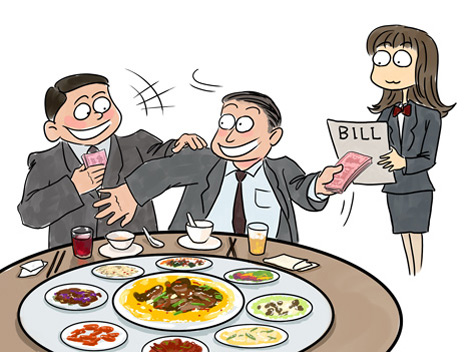
Creating Face for yourself is a good way to build your reputation and prestige within the office in China. For instance, wearing well known brands (as appropriate for your workplace) can show that you are well off and stylish without bragging. Similarly, as family is important to the Chinese,  demonstrating that you have a stable and successful family, through photos or attendance at company outings, can earn the respect and admiration of coworkers. When dining with colleagues in China, paying for the bill, or more specifically paying for the bill over the objections of others, is a way to gain Face for yourself and show respect and friendship to your coworkers.  The Chinese Paying the bill gives Faceidea of courtesy and reciprocity provides that everyone needs to take a turn at paying the bill sooner or later, but attempting to pay it more than your equal share of the time can show you to be generous and helps to build and maintain relationships with your coworkers. Even when a coworker is taking “their turn” at paying the bill, making half an attempt to pay the bill shows that you care.  This and other efforts to learn about and understand Chinese culture will show that you are committed to China and can significantly increase your own Face at the workplace.

Work Harmoniously With Your Coworkers

  1. Don’t openly flaunt money or possessions
  2. Don’t trip over vague or misleading phrases
  3. Support your boss
  4. Be over-generous to team members
  5. Avoid complex English

Respect Chinese employeesYour work life in China can be made a lot easier when you respect the Face of your Chinese coworkers as well as giving them Face directly. Although many Chinese respect the possession of money and expensive items, it is considered immodest and rude to opening flaunt or brag about them and can insult your coworkers.  Being on good terms with your boss is important, and giving Face when appropriate can accomplish a good deal in this regard. For instance, a manager or boss in China places a huge deal of importance on their own Face and prestige as a leader. Praising the leadership of your boss in front of clients, quickly and efficiently carrying out their orders and giving them useful ideas or suggestions which they can receive credit for can cement your position in a given role and open up avenues for promotion in the future. Likewise, it is important to not trip over or misunderstand directives from your boss which are worded in a vague or roundabout manner. For example, you may be asked if you would be able to attend a conference on the weekend, or how you feel about working overtime in a given week. In each of these scenarios your boss likely is telling you to do these things, and not making him or her tell you directly will give Face Give Face to build relatonshipsand preserve your relationship with them. In many cases if you refuse your boss, he or she may not actually order you to comply but feel a loss of Face and regard you as less of a team player. Relationships with coworkers are important too, and while many managers and white collar workers in China tend to copy the “get ahead quick” attitude of their Western colleagues, it is not considered polite to show it. Instead, show you are a team player by praising contributions of your colleagues, even if you have done most of the work. In this way you can preserve their Face and gain Face for yourself for acting as a generous team member. Lastly, try and avoid making your coworkers or business partners feel embarrassed or awkward. Despite a nationwide focus on learning English in China, not many Chinese speak it fluently.  This is especially true of successful local business tycoons located far from China’s huge eastern metropolises. Thus, insisting on using complex English can result in you being misunderstood, and can also cause a loss of Face through embarrassment for the Chinese. Instead focus on simpler language and building mutual understanding and respect.

Don’t Cause a Severe Loss of Face

  1. Don’t disagree openly with your boss
  2. Don’t be seen as a threat
  3. Take time before you criticize
  4. Resolve differences ahead of time

Hierarchy is important in ChinaA big mistake to make in China is causing your coworkers to lose Face, especially those that are above you in the office hierarchy or those that can negatively influence your career. The worst mistake with regards to causing a loss of Face applies to your boss or other high ranking Chinese executives. For instance, disagreeing with your boss in front of others is a sure way to make them lose Face. It doesn’t matter who is right or wrong, by disagreeing OPENLY, you are questioning their leadership. Instead speak with them in private if you find it necessary to question one of your boss’ decisions.  Also, most Chinese leaders feel like they need to be the smartest or most competent to maintain their prestige as a leader. If you act as though you are smarter or have more experience than your boss, you may immediately be labeled as the enemy and slowly forced out. Until you are promoted, focus on acting as an effective #2. In addition, it is a good idea to avoid criticizing coworkers and do your utmost to settle any differences in advance of public meetings or discussions. Even if you directly criticize one of your subordinates, it still has the potential to backfire. When an employee is criticizing can backfirecriticized directly, especially if it is in front of others, he or she could feel embarrassed and lose Face to the extent that it negatively affects the employee’s relationship with you, negatively affects the employee’s work, or causes them to leave the company in embarrassment or anger. And if you argue with others in meetings there is the potential leave a bad impression and have others label you as a troublemaker. Thus, it is always a good idea in China to settle any differences beforehand and by all means avoid criticizing others when possible.

To see the full list of 15 ways to apply Face along with perspectives from China business experts,  the article,  “The ancient Chinese cultural concept that could save your banking career,” can be viewed HERE on efinancialcareers’ website.

As can be seen from list items presented above, in China, Face is all about respect. And to use Face properly you must 1) create Face for yourself, 2) give Face to others, and 3) don’t make others lose Face. Creating Face for oneself is easier to a degree, while giving Face to the Chinese and preventing them from losing it can be much harder. And while gaining a comprehensive understanding of how to use Face in China can take many years of studying Chinese culture and working among the Chinese people, following the tips above is a good place to start.

Thanks for reading!

Do you have any additional questions on how to apply the concept of Face in China? Do you have any additional tips or ideas on how to apply Face based on your own experiences? Please feel free to post your thoughts in the comments section below.

Follow the China Culture Corner to receive regular updates by email!

 

What ‘Face’ Means in Chinese Business Culture

Most Westerners who are planning to travel to China for business have almost certainly heard of the concept of “Face,” or Miàn Zi (面子). China’s more hierarchical society certainly places a great deal more emphasis on Face daily life, business, and politics.

However, it can be difficult for Westerners new to China to understand specific rules for Face in China, as well as the different contexts in which it should be used.

For example, what actions will cause someone to gain or lose Face? In what situations should Face be given? And how will Face affect your business and life in China?

In the following article, several of the basic points surrounding Face will be explained, which all Westerners need to be familiar with to succeed in China.

What is Face?

In China and much of Asia, Face represents a person’s reputation and feelings of prestige within multiple spheres, including the workplace, the family, personal friends, and society at large. The concept of Face can be understood more easily by breaking it down into three separate components: the individual view, the community view, and actions.

The Individual View:

This pertains to the amount of prestige individuals feel based on their accomplishments and the amount of respect they feel they are due based on their position and status, such as in a company or at home.

For example, in the modern Chinese economy, there are many opportunities to buy status symbols, which help a person gain prestige.  And in China’s hierarchy-focused society, the respect a person is due (or felt due) is determined first by status relative to another person’s, not necessarily by personal achievements.

The Community View:

This pertains to the amount of respect individuals feel necessary to give to someone else based upon that person’s position or status, such as in business, the family unit, or within a group of friends.

For example, status in a Chinese family is divided by very distinct roles, with separate terms of address used for older and younger cousins, aunts, and uncles. Giving the same amount of respect to older and younger aunts or uncles could be viewed as a breach of etiquette.

Actions:

This pertains to the various activities that can cause an individual to gain or lose Face. Based upon one’s position relative to someone else, several different actions can be employed to either cause a loss or gain of Face.

In some cases, these actions might occur unintentionally or instead be used as a tactic to achieve a specific result. For example, giving someone Face (e.g., more than they might deserve) can be used to build relationships and influence decisions. Causing someone to lose Face could be used to reinforce one’s own authority and status, or pressure someone toward a desired action, such as quitting their job or fulfilling a promise.

Face and Business in China

Face can be very visible in the Chinese business environment and play an important role in inter- and intra-company communication, business negotiations, and the development and maintenance of relationships. In China, company hierarchy is much more important than in many Western countries.

Not only are leaders and managers placed on a higher pedestal, but the distinction between different levels of management is much clearer and more important. Chinese leaders and managers usually expect respect from their subordinates and, in some cases, expect to be obeyed without question, no matter the rationality or fairness behind a request. 

Not obeying “the will” of a Chinese leader or manager does not give them the perceived necessary prestige they (and others) feel is deserved. Indeed, survival in a Chinese company depends on knowing one’s place, and Face plays a very important role in facilitating that function.

When Chinese businesspeople build relationships with one another, Face is very important. On one hand, relationships in China are built and maintained by giving Face and increasing the prestige of one’s friends and contacts.

With two business people of the same relative position or status, Face is often given and received equally and is the cement that holds a relationship together.

“To me, your “face” is your position and standing in the eyes of others, and it also has to do with the degree of respect you receive. Face can also be saved up over time and used to accomplish things later on. If you drove a fashionable or luxurious car to attend a friend’s party, then the majority of your friends would feel that you had face. Also, if you can achieve something through your personal contacts that others cannot through normal channels, you would also be thought to have face. You can gain face if you are praised by your boss, or if you accomplish a difficult task at work. However, if you greet others warmly at social events, but are met only with indifference, then you would lose face. Questioning someone’s  ideas or opinion in a public setting would cause that person to lose face.”

– James Tan, Sales Manager

On the other hand, when a client relationship is established in China, the client more often than not receives more Face in the early stages of a relationship from the “seller.” Face must be given to the client to make them believe that the seller is worthy of their money and time. Sometimes giving Face to a contact entails simply words and compliments, though sometimes gifts are required and invitations to dinners, entertainment, or other social events.

To the Chinese, there is a natural order in society as well as business, and if one is unwilling or unable to show the proper amount of Face to those who feel they deserve it, then one will likely be judged to not have good character. This has the potential to wreck business deals and sour relationships, so with regard to the issue of Face, most Chinese businesspeople tread with care.

Examples of Gaining & Losing Face

Even after understanding the basic mechanics and uses of Face, it can be difficult to understand how the concept actually works in practice. Below, I have listed several specific examples of how giving and losing Face could play out in China.

 Management: A Chinese company director is leading a team of researchers to complete a consulting project for a client. At the project’s end, the director’s subordinates successfully present their findings and reference and praise their superior’s role in managing and leading the project. The actions of the report being completed successfully, as well as being praised in front of the client, give Face to the director.

Family: A Chinese mother makes many efforts to give her child the opportunity for a good education, both through financial and emotional support. The result is that the child is accepted at a prestigious foreign university. Not only do the parents feel proud of their child’s achievements, but they also feel that they have gained Face through the child’s achievement.

Marriage: A young Chinese man is trying to find a woman to marry, but has met with no success. After reaching his early thirties, all of his close friends have already married, and some even have children. In light of his failure to marry when his family,  friends, and society expect him to, he feels a significant internal loss of Face. In addition, the young man’s friends may look down on him due to his failure to marry, and hence give him less Face through their actions and words during social gatherings.  These actions would then further compound the loss of Face.

Employment: A young Chinese woman is stuck in a stressful job with an abusive manager at a local Chinese company. Through no fault of her own, she is constantly blamed for her manager’s failings and shortsightedness. Through being berated daily in front of her coworkers, the young woman continuously feels she is losing Face. In the end, she feels she has lost so much Face that she cannot bear to face her coworkers and decides to quit her job.

Advice for Overseas Professionals

While Face sounds complicated – and it is – there’s no need to despair. First of all, foreigners are not always expected to adhere to the same exacting standards of respect and prestige as locals in China are.

The influx of Western culture into many of the larger Chinese coastal cities (and other more developed areas), along with greater numbers of local Chinese with experience dealing with Westerners, has led to more flexible interpretations of business and social etiquette.

Also, Chinese culture in and of itself has both liberal and conservative interpretations, even before China’s modernization. Just as there are highly conservative Chinese managers, executives, and leaders who demand respect be paid to them at all times, there are also Chinese who have a less formal attitude and focus on getting results over respect.

However, when the issue of Face cannot be avoided, several things should be kept in mind:

  1. Whenever someone outranks you or is older than you, it’s probably a good time to show them more respect.
  2. Don’t forget to give Face when you want something from someone in China (e.g., a business deal or a favor).
  3. While giving face is always important, don’t forget to develop the relationship over the long-term.
  4. Giving Face will always be appreciated, even from Chinese people who have a lot of experience interacting with Westerners. Face is deeply rooted in Chinese society and mindset, and its importance will not fade over time.

While it’s true that some Westerners protest that they won’t “play the game” while in China, it is important to remember that when you are in someone’s house, it’s only polite to play by their rules, or you may be asked to leave. While overseas professionals certainly might be given more leeway when it comes to the Chinese way of doing things

At the very least, small gestures of respect are easy and go a long way toward demonstrating that you understand the importance of Face (and are willing to make an effort to understand Chinese culture) and that you are committed to a long-term relationship with the Chinese. Something as simple as this can be a crucial factor that can land important business deals and lead to rewarding friendships that will last a lifetime.

Final Note for 2026

This article was originally written in 2013, and much time has passed since then, both in terms of my own career development and experience in China, as well as China’s development, both economically and socially.

While the above article can still act as a strong foundation to help overseas professionals and visitors understand the nuances of respect and relationships in China, it should also be noted that China is not a monolith. Cultural practices and social expectations can vary by province, industry, educational background, and personal style. Many Chinese professionals and managers are also more experienced with overseas management and working styles.

In using this article as a guide for a career in China, or merely a trip here, it is best to use this article as a base foundation, remembering to observe the behavior and preferences of those around you and adapt how you employ Face and respect, depending on the person and situation. Best of luck!


If you’re interested in thoughtful perspectives on China, cross-border work, and how culture, incentives, and organizations shape real outcomes, you’re welcome to subscribe to China Culture Corner and receive future posts by email.

I also share related ideas and longer-form video commentary on LinkedIn and YouTube, and post updates across the channels linked above.

If you or your organization is navigating China execution or cross-border alignment challenges, I work with teams on an embedded and remote basis. Reach out directly: Sean@SageSightConsulting.com