Category Archives: LIFE IN CHINA

The Difficulties in Connecting With Influential Chinese

In China it is common to encounter Western business people looking for introductions to Chinese executives or government officials. This is usually accompanied by the idea that these kinds of powerful connections, or guanxi, can be the lynchpin in establishing a successful business or venture in the Chinese market. And while possessing strong guanxi in China can indeed help one’s business to grow and flourish, actually obtaining it is not as easy as some may think.

The Chinese think about introductions and networking in a very different manner than most Westerners. While many Western business people thrive on an open and all inclusive model for meeting new people, influential Chinese business people are more low-key, and prefer to remain within their own social circles. Despite this, it is indeed possible to network with and obtain introductions to the influential in China, though, to succeed, it is essential for Westerners to study and understand the Chinese mindset. Below, the author lists several common points of concern he has observed in Chinese executives and officials.   

“Who Are You and Why Should I Care?”

Power and money are the true capital in modern China, and the Chinese business and political “influencers” do not exit on the same level as the rest of Chinese society. In order to be able to directly connect and converse with these influential Chinese power players, it is vital to possess something to which they can respect and relate. For example, CEOs and top executives from well known Western MNCs will have a better chance at obtaining introductions or meetings with their Chinese counterparts. This is not merely due to a relative equality in position and power, but also because high-level Western business people (and politicians) are likely to have high-level connections within their own countries. However, for entrepreneurs and executives of smaller companies, a lack of prestige and connections may prove to be a barrier to obtaining introductions. Status is very important in China, and unfortunately some people just do not “make the cut.”

“Why Should I Share My Network With You?”

Although the Chinese in general are very polite and enthusiastic when talking to Westerners, they are also usually more reserved and cautious with their personal network of contacts. To a greater extent than many countries in the West, the Chinese rely deeply on their networks for both social and business functions, which are essential to life and business in modern China.  In fact, many successful and influential business people in China have succeeded specifically due to their own networks. As such, the Chinese are usually very cautious about opening up such an important part of their life to someone they don’t know, no matter how powerful. Therefore, networking in China seldom occurs as it might in Western countries. Generous amounts of time is required for both parties to get to know one another other, both before and after an introduction takes place. After all, to paraphrase an English expression, the Chinese don’t let just anyone see the goose that laid the golden egg.

“What’s In It For Me?”

Even if an influential Chinese person is impressed with a Westerner’s position and with what he or she can offer, there may be an additional factor causing an influential Chinese business person to hesitate. After all, if a Westerner is offering a potential Chinese contact, introduced through a Chinese intermediary, a chance to increase their own money, influence or power, why should the intermediary not get anything in return? In fact, many introductions that take place in China are not necessarily one close friend introducing another. If a Chinese person claims to have guanxi in a certain sector, they may simply mean that they “know a guy” who then knows “another guy.” Therefore, if the person that they are introducing may not actually be a close friend at all, there may be no guarantee of a payout for the Chinese contact. In these cases the Chinese which a Westerner hopes will provide an introduction may feel more comfortable waiting until they get something which they want. It is also common practice in China, especially in sales, for facilitators of business deals to receive unofficial commissions or other perks. Within the sometimes-murky realm of high-level personal relationships in China, nothing is free.

“Will This Damage My Relationship With My Contact?”

Lastly, the Chinese people are universally concerned about staying on good terms with their business and personal contacts. Thus, before providing introductions into their network, one issue an influential Chinese person will consider is not only the potential benefit (for their contact as well as themselves), but also any potential risks as well. For example, if a Chinese person discovers any risks to a valuable relationship, he/she will likely choose to pass on providing a specific introduction.

How Can “Regular” Western Business People Get Introductions in China?

Unfortunately, there just isn’t any quick and easy way to gain instant access to the rich and powerful in China, especially if one lacks power and prestige of one’s own. However, this does not mean that it is impossible to gain access to influential Chinese business people.  This author, through his own experience in China, points out a few tips below that could help:

1) Spend time on-the-ground in China: When it is impossible to reach out and connect with powerful Chinese directly, it may be necessary to first spend some time in China, learning about the business environment and working within the local business community. Many Chinese cities, especially the large metropolises, possess numerous business and trade organizations at which it is very easy to meet and greet a variety of Chinese business people. Through this type of networking, it may be possible over time to slowly get in touch with influential Chinese.

2) Create a Successful Company: Creating your own company or venture, which either has a strong advantage in the Chinese market or presents advantages for Chinese companies doing business abroad, can create new corridors for connecting with influential business people in China. On one hand, a successful company or brand may entice offers for partnership or purchase. On the other, certain Western regions (e.g. Silicon Valley in the USA) have large entrepreneur communities focusing on the Chinese market. Networking in your home country in this context may present the opportunity to meet powerful Chinese VC executives, who in turn would have their own powerful circles of contacts.

3) Expand your network in your home country: Building a strong network of connections in one’s own country is also a method which can build a foundation for later contact with China’s business “influencers.” This is especially relevant in light of the fact that an increasing number of Chinese companies are starting to set up operations in foreign countries. While its true that many Chinese returnees or overseas workers join these companies, there is no substitute for a lifetime of experience in one’s home country. If a Westerner has something the Chinese want (e.g. connections and knowledge), they may have the chance to get to know some of the powerful executives in charge of these firms.

Thanks for reading!

Do you have any additional questions about connecting with the influential business elite in China? Do you have any helpful examples from your own experiences from working with the Chinese that you would like to share? Please feel free to post your thoughts in the comments section below.

Follow the China Culture Corner to to receive regular updates by email!

 

China Expat Survival Tips: Joining a Chinese Company

group activeChinese companies in Mainland China are expanding and improving their operations to increase profits and compete globally. Part of this includes sourcing top-tier Western talent for a variety of functions including finance, operations, sales, and marketing. However, for the Western business professional contemplating a move to Mainland China, it is essential to first be aware of the many differences present in Chinese companies. The office culture of many companies in Mainland China, even those operated by Western companies, can cause stress and worry for the unprepared Western expatriate as a result of differences in culture, business practices and unspoken social rules. Research  suggests that at least 30% of  expatriates on assignment in foreign countries  may not complete their entire assignments. It is likely that some of these failures in China are a result of stress and other difficulties brought on by cultural differences. To increase an expatriate’s chances of success and reduce the time required for cultural acclimation, it is a good idea to first be aware of the basic elements at play within a Chinese office environment.

An article published by efinancialcareers lists a number important points to be aware of before joining a company in the Chinese finance industry. In fact, many of these lessons can be applied to Chinese companies in many sectors throughout China. Some of the more widespread issues are listed and expanded on below:

  1. You Need to Understand Guānxì. Guānxì is your relationships with coworkers and the favors owed between you and them. The Chinese make use of gifts, social dinners, and other methods to maintain their relationship networks and navigate the office environment. To get things done in a Chinese company, it is essential to form friendships and alliances with your coworkers and supervisors.
  2. Account for Yearly Bonuses. When accepting a contract at a Chinese company, be aware that your actual salary is based upon 13  months rather than 12. It is  customary in China for all employees to receive a yearly bonus before the Chinese new year equal to one month’s pay.
  3. Don’t Rush Meetings. Meetings can take time in China. On one hand, when meeting with new people the Chinese will want to get to know you first and will not want to get down to business immediately. At internal company meetings, social etiquette can prevent direct communication as no one wants to cause embarrassment. Don’t try to rush things or it is possible to alienate or annoy clients and coworkers.
  4. Learn the Company’s Hierarchy. In a Chinese company there is much more space (or power distance) in a company between the highest and lowest level employees. While in Western companies there can be much more freedom for low and mid level employees to talk and mingle with company executives, this is usually not the case in China. You probably won’t be able create relationships higher than your direct supervisor.
  5. Orders are not Debatable.The leadership model in many Chinese companies is markedly different than many successful Western firms. Chinese leaders are not accustomed to discussing courses of action and getting everyone’s opinion and buy-in. They give orders and expect them to be carried out.
  6. Don’t Cause a Loss of Face. Causing a loss of face can be dangerous in China as it strains relationships. It can also drive away coworkers or prevent a promotion. Also, be careful when criticizing others, or offering up an opinion lest you become a disliked member of the office.
  7. After Work Company Entertainment May Not be Optional. When invited to attend a company dinner or karaoke event after office hours, attendance  is likely expected. These occasions not only offer an opportunity to relax, but also act to reinforce the various relationships within the company. If you don’t attend, it can reflect badly on you and your supervisor may feel you are not demonstrating the proper amount of respect and loyalty for the company.
  8. Expect to Minimize Expenses. No matter what official company policy might be, the Chinese have different ideas than some Westerners on company expenses. For example employees in Chinese companies are expected to be proactive in saving the company money. This might include things such as sharing hotel rooms on business trips, using personal cell phones for company calls,  and providing personal receipts for the company to write off as business expenses. Not complying can cause one to be seen as greedy and not a team player.

For the full list from efinancialcareers’s website including perspectives from local experts in China, the article,  “Ten things to know before you join a Chinese bank,” can be viewed HERE.

All in all, Chinese companies are not so different from Western ones in that they have similar goals; they simply have different ways in which they go about achieving those goals. A solid foundational understanding of Chinese business culture and the Chinese office environment can go a long way towards preparing new Western expats for China and preventing costly mistakes. For more information on the fundamentals of Chinese culture, take a look at the China Culture Corner’s section on Culture Basics.

Thanks for reading!

Do you have any additional tips, advice, or questions about working in a Chinese company? Please feel free to post your thoughts in the comments section below.

Follow the China Culture Corner to to receive regular updates by email!


Understanding Chinese Nationalism

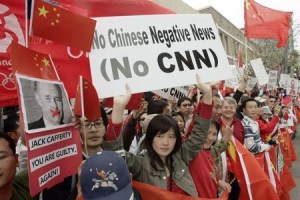
In recent years Chinese nationalism has become much more prominent in the international world, sometimes taking on a life of its own. It not only affects international relations but also foreign businesses in China. Not only does the Chinese government pursue a nationalistic agenda at the governmental level, but Chinese citizens and consumers have also more and more frequently advocated their country’s standing and reputation in the world. This can have a negative impact on foreign businesses as anything deemed offensive to the Chinese nation, people, culture, or history can quickly lead to dissension among consumers, outrage through social media platforms, and pressure from the Chinese government. In this article we examine some of the key issues that determine the Chinese stance on nationalism, the way nationalism manifests itself in the Chinese market, as well as how Western businesses can handle this very sensitive issue.

China’s National “Face”: Historical Pride and Shame

China’s 5,000 years of cultural and dynastic history are a point of pride among the Chinese. For a millennia China was the epitome of Asia’s (and in some cases, the civilized world) scientific, cultural, and political achievement and such thinking plays a large role in Chinese thinking today. Chinese culture has long placed a strong emphasis on respect and tradition, tending to look to the past for example as opposed to dreaming of new future possibilities. So when the Chinese look to past dynasties to define ideas on art, politics, etiquette, and culture in general, they also remember their own mistakes and perceived slights and wrongs perpetrated against them with clarity unknown to many Westerners.

“Patriotism in China has a contradictory mentality. As a people we love our country very much, but we also don’t know how to demonstrate our patriotism. When the interests of our country are infringed upon, we then become angry and emotionally patriotic. But during the course of our everyday lives we rarely do anything actively for our country. So it seems that to me that the idea of patriotism among ordinary Chinese people is not put into practice much, and therefore our country needs real and genuine leaders to guide us in this respect.”
-Sarah Zhao (White-collar Worker, Shanghai)

Historically, the Chinese also possess a certain mindset for revenge against parties that have wronged them. Until such a time that the wrong is righted and the guilty party punished, the person responsible for righting the wrong (be it son, brother, politician, or citizen) will usually feel a strong sense of shame and humiliation. From the standpoint of Chinese nationalism, as the Chinese nation moves forward into the modern world, it is mentally unable to do so without also remembering how far it has fallen, and the countries that have done it wrong. Thus, Chinese nationalism in the 21st century today contains a unique dualism, with elements of both pride and shame. And while most Chinese go about their lives without many overt displays of nationalism (e.g. loud protests), it should not be assumed that this means the average Chinese does not care about their country’s “Face.”

Key Influences of Chinese Nationalism

One of the more prominent issues affecting Chinese nationalism is with regard to Japan and its invasion and occupation of China before and during World War Two. To all Chinese this era is represented by Japanese soldiers murdering the Chinese, raping women, burning villages, and almost any other heinous act imaginable. anti-Japanese sentiments in ChinaThe Japanese occupation is akin to a brand seared onto the Chinese consciousness and the result is an extreme sensitivity surrounding this history for the average Chinese citizen. While many Chinese (especially the younger ones) are not automatically biased against Japanese individuals, whenever there is a nationalistic reaction to the Japanese (whether individual, company, or government), the results can be sudden and explosive.

Matters are not helped by the fact that the Japanese government seems un-attuned to these Chinese sensitivities: Japanese leaders routinely visit the Yasukuni Shrine in Tokyo where Japanese war dead (including those convicted of war crimes) are buried; some Japanese textbooks have been whitewashed, largely glossing over or changing Japan’s recorded history during World War Two. The Chinese also continue to protest that Japan never formally apologized (or did enough to repent) for its role during World War Two. With both sides seemingly unwilling to compromise, the Japanese element will likely continue to be a sore topic within Chinese nationalism for years to come.

National unity is also a strong influence prevalent in Chinese nationalism today, with the key theme being that all of Chinese territory should remain forever united (e.g., Taiwan, Hong Kong, and other internal territories). This sometimes ferocious attitude toward preserving Chinese territorial unity has its roots in the late 19th and early 20th centuries, when many territorial concessions were forced upon the Chinese government due to lost wars and the increasingly dysfunctional and ineffective Qing dynasty government of the era. The many Western powers began to carve out colonies for themselves, with the result being that China possessed little at home and even less internationally. The Chinese were looked down upon, even within China, and they were branded the “sick man of Asia.”

Thus as China increasingly takes a greater role in the international world, its government and citizens are understandably very sensitive to any (perhaps well-meaning) activists, protesters, or governments that might suggest that Taiwan is its own country, or that Chinese internal territories should be independent. After enduring almost 100 years of often partial occupation by foreign powers, the Chinese would for all intents and purposes rather die than give up another inch of land.

New Trends Affecting Nationalism

While nationalism and national pride have been part of China for thousands of years, there are several trends that have appeared over the last few decades that are having a profound effect on Chinese nationalism.

Television plays a large entertainment role in the life of the average Chinese citizen (i.e., the large lower class), and dramas make up a large percentage of the available shows on Chinese television. Some of the more popular shows are historical dramas, many taking place during World War Two or in the early 20th and late 19th centuries. And while many are cheaply (and sometimes badly) produced, many of these dramas showcase the horrors (real and imagined) perpetrated by Japan and other foreign powers against China. Although most Chinese likely realize that these dramas are merely entertainment, it undoubtedly keeps the horrible tragedies of the past at the forefront of the Chinese mind.

As the spending power of Chinese consumers continues to increase, a single-minded focus on cost is a thing of the past, and today the Chinese consumer more and more considers a product’s brand. In an internationalized China where global companies compete with domestic ones, a product or company’s country of origin naturally can be a part of determining its overall brand value. Japanese products have likely suffered the worst, as Chinese consumption of certain Japanese goods routinely dips during spats between the Japanese and Chinese governments. Recently in 2013, Apple was lambasted by a Chinese government TV broadcast for providing Chinese consumers with second-rate service options when compared to consumers in Western countries, with outrage following on Chinese social media. A quick PR response from Apple may have effectively dealt with the problem, but there is no denying that the Chinese consumers are savvy shoppers, and if they feel they are treated with no respect, they will not buy.

中国爱国主义Social media is also playing a large role in fostering grassroots nationalism among Chinese citizens. The Chinese are much more guarded with respect to social media and personal information being available online. Due to the fact that China is ruled by an autocratic government with absolute power, the Chinese are also understandably very guarded about offering criticisms (officially anyway) that can be traced back to them. Social media offers the perfect outlet for Chinese citizens to discuss interests and grievances (nationalism included), and through the power of the World Wide Web a small disturbance can grow to a huge storm overnight.

Advice for Westerners

For Western business people new to China, there are several simple yet important tips that can prevent blunders and mistakes relating to Chinese nationalism. First, do your homework and study up on Chinese history, including the last few centuries in which China was subjugated by Western countries. Understanding Chinese history is a sure-fire way to be aware of Chinese sensitivities and sore spots. And developing a degree of cultural empathy with your Chinese customers and staff can only result in a better understanding of the market and more effective leadership skills.

Second, accept that in China there are certain things that are best not said, no matter what your personal beliefs may be. Don’t talk about anything related to independence of any Chinese territories; the Chinese will almost certainly not be swayed by your arguments, and any arguments you give are likely to be viewed as “Western arrogance” or “Westerners trying to meddle in China’s internal affairs.” Additionally, don’t talk about politics; it will not ingratiate you or your business with the Chinese authorities, and most Chinese people simply don’t actively care about politics. Don’t make the mistake of assuming the many protests you see in the news have anything to do with democracy or political change on a national level. Most don’t, and instead are local issues focused on companies, and local governments. These topics will likely result in increased attention by government censors and potentially have a negative effect on your business.

Third, keep your finger on the pulse of the Chinese government, national as well as local. The Chinese government takes an active hand in the development of the Chinese market through its support of Chinese state- owned companies as well as specific policy initiatives. By following Chinese governmental policies and announcements one can be forewarned as to which countries (or companies) may become a target of China’s propaganda machine, and prepare accordingly.

UPDATE: a new round of tensions have been touched off with the creation of the Chinese air defense identification zone (ADIZ) in the East China Sea. Despite the rise of tensions China has ignored pressure from the US and Japan to rescind the zone, all of which has led to many nationalistic sentiments being displayed over Chinese social media.

Thanks for reading!

 What are your thoughts regarding nationalism in China? Please feel free to post your thoughts in the comments section below.

Follow the China Culture Corner to receive regular updates by email!