Chinese Baijiu (bái jiǔ, 白酒), pronounced BUY JEE-OH, is the national drink of China, though it remains rather misunderstood by Westerners.
Sometimes called “rice wine” in English, Baijiu has developed a bad reputation among Western expatriates and businesspeople due to its high potency and strong, unfamiliar taste.
However, despite its perceived unpleasantness, drinking Chinese Baijiu, and alcohol in general, is an extremely important part of doing business in China.
Therefore, in this short article, I will explain a few Baijiu basics and attempt to help Westerners understand this elusive liquor, as well as make a case for why Westerners should take up drinking, or at least be open to sampling, Chinese Baijiu.
A Short History of Alcohol in China
Before the birth of the Baijiu we know today, alcohol had already been present in China for thousands of years. Alcohol is said to have appeared in China as early as 5,800 – 7,000 B.C., and later took on a revered role in Chinese society.
Considered to be a luxury in ancient China, it was used by the political and religious elite to commune with the spirit world, as a part of various rites, during important state banquets, and as a prestigious gift. Baijiu (or something close to it) first appeared sometime during the Song dynasty (960–1270) or Yuan dynasty (1271–1368), when foreign distillation techniques were first introduced into China.
This new and much cheaper form of alcohol (compared to that favored by the Chinese elite) quickly spread throughout China, and was manufactured primarily with sorghum (meaning that “Rice Wine” is not a particularly accurate description), though rice and certain types of wheat were used as well.
Baijiu in Modern China
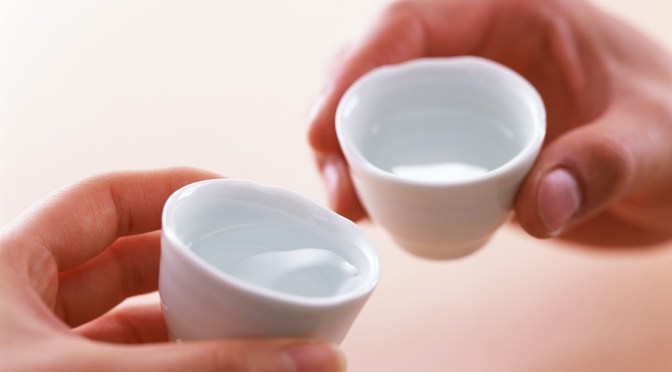
In China today, Baijiu is drunk almost exclusively at meals, as alcohol is a very important part of Chinese dining culture. Baijiu is served in shot-sized glasses and used during toasts to show respect and build relationships.
When toasting, the Baijiu glass is gripped with both hands, with either one hand on either side, or with one hand/finger on the bottom of the glass. After a toast, the Baijiu is usually consumed in one gulp, though exceptions are sometimes made, usually out of respect, for those not accustomed to Baijiu’s potency.
Following a toast, the glass can be turned upside down or tilted forward to display that one has consumed the entire glass, and thus give face to your friend, partner, or host (for more rules on toasting, click HERE).
Unfortunately, the very nature of drinking Bajiu is partly to blame for why many first-time Western drinkers quickly grow to hate it. As it is common for multiple shots to be drunk in quick succession, Westerners usually have no time to adapt to the flavor. (While Westerners may sip Whiskey and other liquors, the Chinese, as a rule, do not sip Baijiu.)
In addition, while Face is and will always be important in China, its interaction with toasting and Baijiu can make for a very unpleasant experience for the uninitiated. In many places in China, especially northern China, the drunker a person becomes via being toasted with Baijiu (or other liquors and alcohols), the more Face has been conferred upon them.
Therefore, it can be common for visitors to China to be entertained by well-meaning Chinese hosts who are intent on showing them as much respect as possible, by getting them as drunk as possible, on a completely unfamiliar and relatively strong liquor. Needless to say, this does not provide an ideal foundation for Westerners to learn to like and appreciate Baijiu.
There’s Actually More than One Type of Baijiu
Another element that may contribute to Westerners’ misunderstandings regarding Chinese Baijiu is in the name itself. Baijiu, which literally means “clear alcohol,” is not so much one type of alcohol, but rather a common term used to refer to many different types of Chinese liquor. Different types of Baijiu vary in taste, ingredients, quality, and price.
The cheapest type of Baijiu is small 2-5 RMB bottles of low-quality (and potentially hazardous) alcohol, which can be found almost anywhere. In contrast, more expensive brands can often go for over 1,000 RMB per bottle. Below is a short introduction to the key types, or aromas, of Baijiu:
- Strong Aroma (nóng xiāng, 浓香): this is the most popular variety of Chinese Baijiu. It is fermented in earthen pits and made with either a single or multiple types of grain. It has a strong, fiery flavor with a hint of sweetness. This type of Baijiu has strong ties with the Sichuan province and some areas in eastern China.
- Light Aroma (qīng xiāng, 清香): this type of Baijiu is distilled using sorghum and rice husks and fermented in ceramic jars. Barley and peas are used in the process to give it a mild sweetness. It is most common in northern China.
- Sauce Aroma (jiàng xiāng, 酱香): this type of Baijiu requires a good deal of resources and labor, and it is fermented in underground pits. Its taste is said to resemble that of soy sauce, and it is closely associated with the southeastern Sichuan and northwestern Guizhou provinces.
- Rice Aroma (mǐ xiāng, 米香): this type of Baijiu is distilled from long grain or glutinous rice, and is sometimes fermented in combination with Chinese medicinal herbs. This type of Baijiu is often infused with fruits, tea leaves, and herbs. It is common throughout all of southern China, particularly in the Guangxi and Guangdong provinces.
There are many other lesser-known aromas of Baijiu as well. For more in-depth information on all the different types, I highly recommend taking a look at “Baijiu: The Essential Guide to Chinese Spirits,” by Derek Sandhaus.
Why I Drink Baijiu, and Why You Should Too
When I first came to China, like many others, I quickly acquired a negative impression of Baijiu, which in my case was brought on by drinking multiple shots of cheap (and possibly counterfeit) local variety.
This initial impression worsened when, while studying abroad in Chengdu, I later had the disturbing experience of sampling a type of Chinese alcohol called Snake Wine (shé jiǔ, 蛇酒), which was basically a big jar of Baijiu with a dead snake fermenting inside.
However, despite this rocky beginning, I was able to slowly become accustomed to drinking Chinese Baijiu and experience it in several different settings. I’ve drunk Baijiu with local government officials in the Zhejiang province, with friends in Tianjin, with local businessmen in Beijing, and with coworkers in Shanghai and Shenzhen.
And while I cannot yet say I drink Baijiu just like one of the locals (i.e., profusely), I have found there to be a great value to drinking Baijiu that is completely separate from one’s subjective impressions of its taste. As mentioned previously, drinking in China, including Baijiu, is a very important part of Chinese dining culture, a time when important relationships are built and maintained.
And while in my experience the Chinese will usually never coerce or expect a Westerner to drink Baijiu, the Chinese are universally pleased and surprised when a Westerner is willing to proactively bridge the (dining) culture gap and drink Baijiu with them.
Therefore, for any Westerner who is currently doing business in China or plans to in the future, I would strongly recommend exploring Chinese Baijiu in advance. It can be somewhat shocking to the uninitiated, but given a little time, one’s palate can adjust to it, making attending Chinese banquets and developing Chinese friendships a much more enjoyable experience.
Sources and Additional Reading
- Baijiu: The Essential Guide to Chinese Spirits
- 300 Shots at Greatness – a blog on Baijiu by Derek Sandhaus
- Will baijiu kill you? – 300 Shots at Greatness
- In Defense of Baijiu – Foreign Policy
- Baijiu producers look globally for China hangover cure – CNN
- Baijiu is coming to America, but will the popular Chinese liquor go down smooth? – PRI
- Chinese baijiu spirits knock profits at Diageo – The Independent
- A Guide to Chinese Alcohol – Lost Laowai
If you’re interested in thoughtful perspectives on China, cross-border work, and how culture, incentives, and organizations shape real outcomes, you’re welcome to subscribe to China Culture Corner and receive future posts by email.
I also share related ideas and longer-form video commentary on LinkedIn and YouTube, and post updates across the channels linked above.
If you or your organization is navigating China execution or cross-border alignment challenges, I work with teams on an embedded and remote basis. Reach out directly: Sean@SageSightConsulting.com