
35 Ways to Wish Someone Well in Chinese

Well-wishing is an important part of Chinese culture and is vital to conveying respect and building and maintaining social relationships. There are also a number of occasions in China when offering someone a respectful greeting is not only recommended but may be seen as necessary by the host or organizer.

These types of situations can include weddings, birthdays, holidays, meeting the in-laws, opening a new business, and many others. There are a number of forms well-wishing can take, and one of the more common is Chinese idioms: quick four-character phrases with a lot of meaning.

I have compiled a list below of some of the most common idioms that can be used to wish someone well. Learning several of these idioms will give any Westerners attending an event in China a big head start in terms of knowing what to say and making an impression on the Chinese.

If you’re learning Chinese or navigating Chinese social and professional settings, I regularly share practical tips here and on LinkedIn.

A Quick Note on Usage

When using one of the below idioms, although they can be used on their own, it is more common to first begin by addressing the person in question and saying 祝你 (zhù nǐ), which basically means “I wish you (to have)…” This phrase can then be followed by any idiom on the list below. And while it is fine to simply use one idiom at a time, in China it is more common to use multiple idioms for a single greeting.

While this not only confers more respect from a Chinese point of view, a Westerner using multiple idioms is almost guaranteed to make an even bigger impression with Chinese friends and hosts. For example: “zhù nǐ + idiom 1, idiom 2, idiom 3.”

However, it’s important to understand that trying to use more than three to four idioms at one time might also be seen as showing off, even for a Westerner. So, it’s always best to keep modesty in mind as well.

In any event, take a look at the idioms below for a sure-fire way to make a great impression at a Chinese party or event!

Wishing a Happy Marriage

  1. Prepare an appropriate Chinese Idiom before weddings and parties
    早生贵子 (zǎo shēng guì zǐ): May you soon give birth to a son.
  2. 永结同心 (yǒng jié tóng xīn): May you forever be of one mind.
  3. 百年好合 (bǎi nián hǎo hé): May you have a harmonious union that lasts one hundred years.
  4. 互敬互爱 (hù jìng hù ài): May you have mutual love and respect.
  5. 白头偕老 (bái tóu xié lǎo): May you live together until your hair turns white with old age.
  6. 举案齐眉 (jǔ àn qí méi) May you have harmonious marital relations.

Wishing a Happy New Year

  1. Idioms can be used to wish a family well
    新年快乐 (xīn nián kuài lè): May you have a Happy New Year.
  2. 恭贺新禧 (gōng hè xīn xǐ): May you have a Happy New Year.
  3. 年年有余 (nián nián yǒu yú): May you have excess every year.
  4. 岁岁平安 (suì suì píng ān): May you have peace year after year.
  5. 新春大吉 (xīn chūn dà jí): May you have a lucky New Year.

Wishing Business Success

  1. 开业大吉 (kāi yè dà jí): May you have the best of luck with your new business.
  2. 财源广进 (cái yuan guǎng jìn): May your wealth be plentiful.
  3. 财源滚滚 (cái yuán gǔn gǔn): May profits pour in from all sides.
  4. 生意兴隆 (shēng yì xīng lóng): May you be endowed with a thriving business and prosperous trade.
  5. 和气生财 (hé qì shēng cái): May you succeed through harmony and friendship.
  6. 日进斗金 (rì jìn dòu jīn):  May you earn huge profits every day.
  7. 招财进宝 (zhāo cái jìn bǎo): May you have wealth and success (also traditionally said during the new year).

Wishing a Long Life

  1. Idioms are traditional greetings in China
    长命百岁  (cháng mìng bǎi suì): May you live for one hundred years.
  2. 福如东海 (fú rú dōng hǎi): May your luck be as immense as the Eastern Sea.
  3. 寿比南山 (shòu bǐ nán shān): May you live as long as Mount Nan.

Wishing a Happy Family

  1. 天伦之乐 (tiān lún zhī lè): May you have domestic bliss.
  2. 欢聚一堂 (huān jù yī táng): May you gather happily under one roof.
  3. 幸福美满 (xìng fú měi mǎn): May you be blessed and happy.
  4. 平平安安 (píng píng ān ān): May you be blessed with safety and peace.
  5. 团团圆圆 (tuán tuán yuan yuán): May you be blessed with unity and happiness.

Wishing Success at Work

  1. Use Chinese Idioms to give face to Chinese friends
    步步高升 (bù bù gāo shēng): May you rise steadily (at work).
  2. 平步青云 (píng bù qīng yún): May you rise rapidly in the world (social status or career).
  3. 前程似锦 (qián chéng sì jǐn): May your future be as brilliant as embroidered cloth.

General Well-Wishing

  1. 心想事成 (xīn xiǎng shì chéng): May all your wishes come true.
  2. 出入平安 (chū rù píng ān): May you have peace wherever you go.
  3. 一帆风顺 (yī fān fēng shùn): May you have smooth sailing (i.e. figuratively).
  4. 吉祥如意 (jí xiang rú yì): May you be as lucky as you desire.
  5. 紫气东来 (zǐ qì dōng lái): May “lucky air” come to your house from the East (used when someone moves to a new house).
  6. 金玉满堂 (jīn yù mǎn táng): May treasures fill your home (can refer to children or money).

Final Thoughts

The above 35 idioms should provide a good start, though it is always a good idea to try and pick up additional sayings based on individual needs. For example, someone who does a lot of business travel would almost certainly want to focus on knowing 10-20 business-related idioms.

By contrast, a Westerner with Chinese in-laws would likely want to focus on remembering a number of idioms related to family and longevity. Keep in mind that there are hundreds of Chinese idioms that can be used for well-wishing. For those passionate about Chinese idioms, there are many more waiting to be learned!

Best of luck!


If you’re interested in thoughtful perspectives on China, cross-border work, and how culture, incentives, and organizations shape real outcomes, you’re welcome to subscribe to China Culture Corner and receive future posts by email.

I also share related ideas and longer-form video commentary on LinkedIn and YouTube, and post updates across the channels linked above.

If you or your organization is navigating China execution or cross-border alignment challenges, I work with teams on an embedded and remote basis. Reach out directly: Sean@SageSightConsulting.com

12 Important Symbols of the Chinese Spring Festival

The Chinese New Year, or Spring Festival, is the most important holiday in Mainland China and is also celebrated by millions of ethnic Chinese around the world. Despite modern commercialism, the Spring Festival remains primarily a family holiday, and an important time of reunion.

While many Westerners may never have the chance to observe first-hand how the Chinese celebrate the festival in their own homes, every year Chinese cities and towns are filled with a multitude of decorations, all of which contain strong symbolism with regard to the Chinese Spring Festival, and what the Chinese people value at the start of a new year..

I have put together a list of some of the key symbols and themes Westerners are likely to see around the time of the Chinese Spring Festival, along with short descriptions of their meanings and history. In learning about these symbols, Westerners will be able to understand how the Chinese celebrate this important festival.

So the next time a Chinese friend or business partner asks, “Do you know why we use XX during the Spring Festival?” you can give them a nice surprise!

the color red in China signifies good fortune
The Color Red

In Chinese culture, the color red is closely associated with good fortune and happiness. It is a common theme throughout the Chinese Spring Festival, and many items are made partly or entirely in red, including clothing, firecrackers, and various decorations.

In China, the importance of the color red is also linked to a beast called a “Nián (年)” which is said to have terrorized a village in ancient China on the first day of every New Year. The villagers eventually realized that the Nián was scared of the color red and began using it to decorate their houses as they prepared for the coming of the new year.

In addition to its usage during the Spring Festival, the color red is also commonly used in weddings and when a new business opens.

The color yellow means good luck in China
The Color Yellow

The color yellow was traditionally the symbol of the Chinese emperor, and even in modern society, it can be seen as denoting a higher status.

While yellow is often viewed as a symbol of cowardice in Western societies, this bias does not exist in China, as the color is a symbol of heroism. In China, the color yellow is also seen as symbolizing good luck.

However, the color yellow should be used carefully by those not familiar with Chinese culture, as in some circumstances it can refer to pornography or lewd behavior.

The Chinese hang Fu characters during the new year
Fú Characters

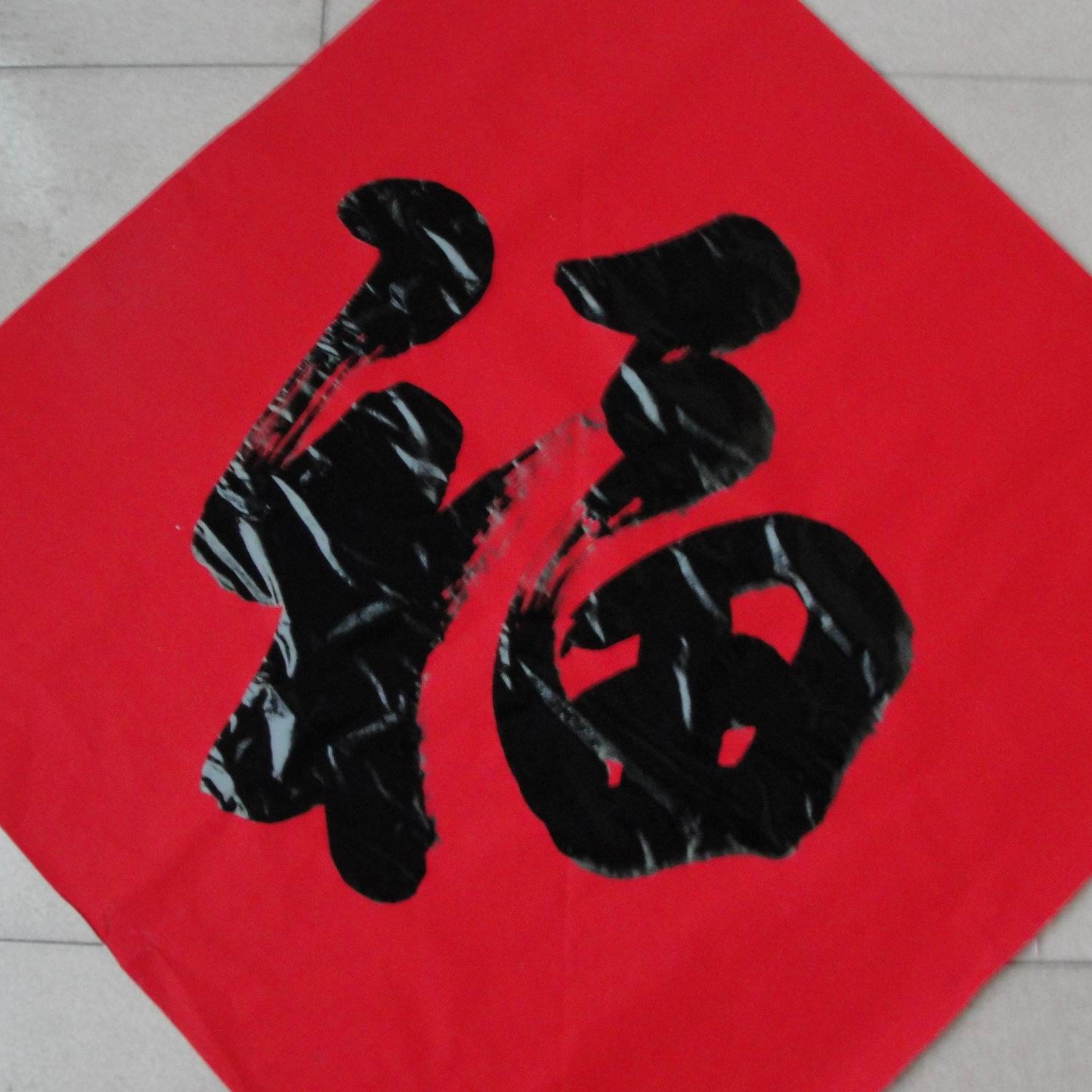
A very common decoration during the Chinese Spring Festival is the “Fú (福)” character, which means good fortune in Chinese. A square of red paper adorned with the Fú character is pasted to the outer side of the door to one’s home, and sometimes the character is also used to adorn interior doors.

While in the past the decoration usually consisted of a red square of paper with black-colored calligraphy, many modern versions are much more elaborate and use a golden color for the character, and are decorated with other characters from cartoons or the zodiac animal of the current year.

In addition, a tradition practiced in some, but not all, regions in China is to paste the Fú character upside down. In Chinese, the word for upside down,”dǎo (倒),” sounds similar to the word for arrive, “dào (到).” Thus, pasting the character upside down implies that good fortune has, or will arrive.

Chinese couplets contain important messages for the new year
Couplets

Couplets, or “duì lián (对联)” in Chinese, consist of two vertical strips usually comprising 7-11 characters, and sometimes a third horizontal strip comprising 4 characters.

Duì lián are intended as permanent fixtures adorning the outer gates of a home and can embody one’s hope with regard to several different themes, including prosperity, peace, and success, among others.

“Chūn lián,” by contrast are a non-permanent version displayed before, during, and after the Chinese Spring Festival. Red strips of paper are used, with characters written in black or gold ink.

Hong Baos are used to give money to children
Red Envelopes

During the Chinese Spring Festival, it is a common practice for elders and married couples to gift small amounts of money to children and young adults.

This money, referred to as “yā suì qián (压岁钱),” is presented in small red envelopes, also called a “hóng bāo (红包).” The money is given both to make children happy and to give them good luck in the new year. Interestingly, the practice’s roots are related to fending off evil spirits and protecting the children, as opposed to merely blessing them with good luck.

Historically, large amounts of money were not given to children in these red envelopes. However, following China’s democratic reforms, cash amounts have increased, especially with a smaller number of children in each family.

"may you have fish every year" is a common saying in China
Fish

Fish are a very common theme in Chinese Spring Festival decorations, mainly due to a common blessing during the New Year, “nián nián yǒu yú (年年有鱼).”

This saying,  “may you have fish every year,” is pronounced exactly the same as “may you have extra every year” in Chinese. Thus, when one wishes for someone to have fish every year in Chinese, one is also wishing for them to never have a deficit with regard to food, money, or other matters.

Fish are therefore a common decoration, not just during the Chinese Spring Festival, but for anyone hoping for a little “extra” in their lives.

Paper Cutting is a traditional craft in China
Paper Cutting

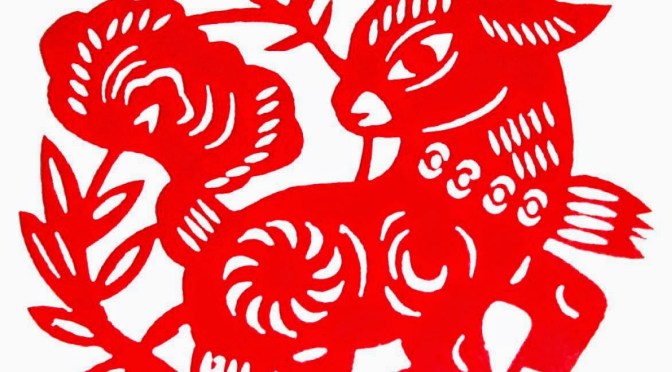
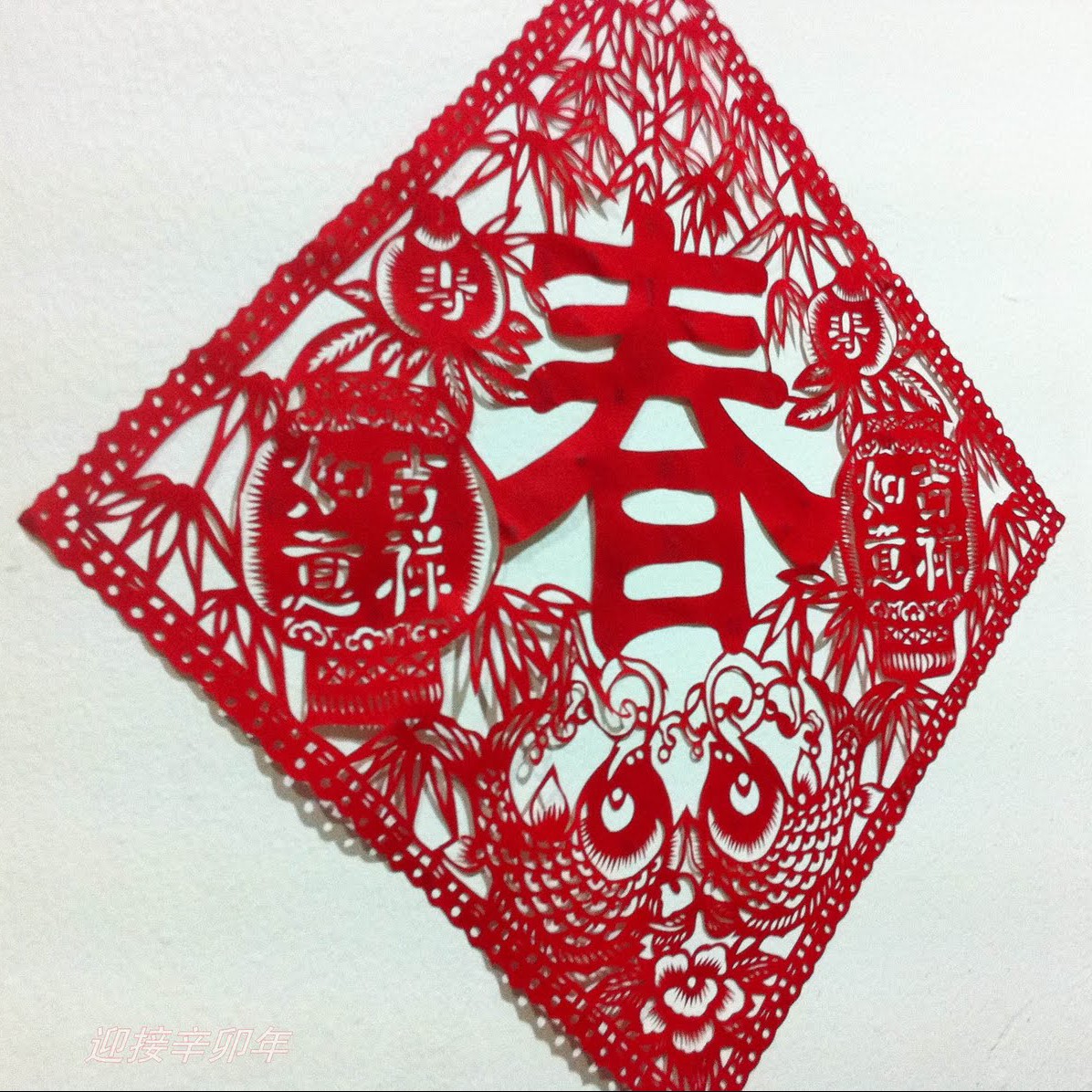
Paper cutting is another traditional Chinese craft commonly seen during the Spring Festival. The cutting of designs and patterns supposedly began thousands of years ago as a way to worship the gods, and the tradition is said to have begun prior even to the invention of paper.

During the Chinese Spring Festival, some of the most common designs are the Fú character, fish, and the zodiac animal of the current year. Paper cuttings are also commonly found at weddings and other types of Chinese celebrations. The material used in this craft is almost always the color red.

Red lanterns re everywhere during the Chinese Spring Festival
Lanterns

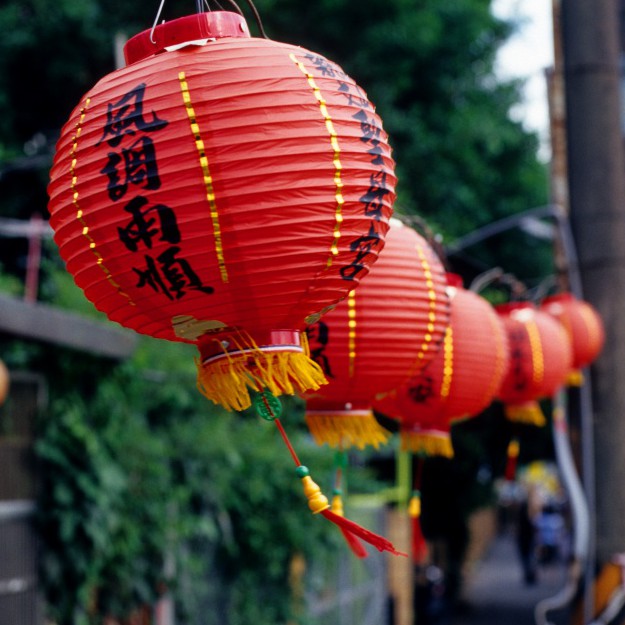
While there are many types of Chinese lanterns, the ones prevalent during the Chinese Spring Festival are always red in color and are almost always round or oval in shape.

They can be made out of either paper or cloth, and are usually decorated with black or gold calligraphy, and sometimes with other prosperous symbols. Common messages of goodwill on Chinese lanterns during the new year refer to happiness, peace, good fortune, and prosperity, among others.

Firecrackers are meant to scare away evil spirits
Fireworks

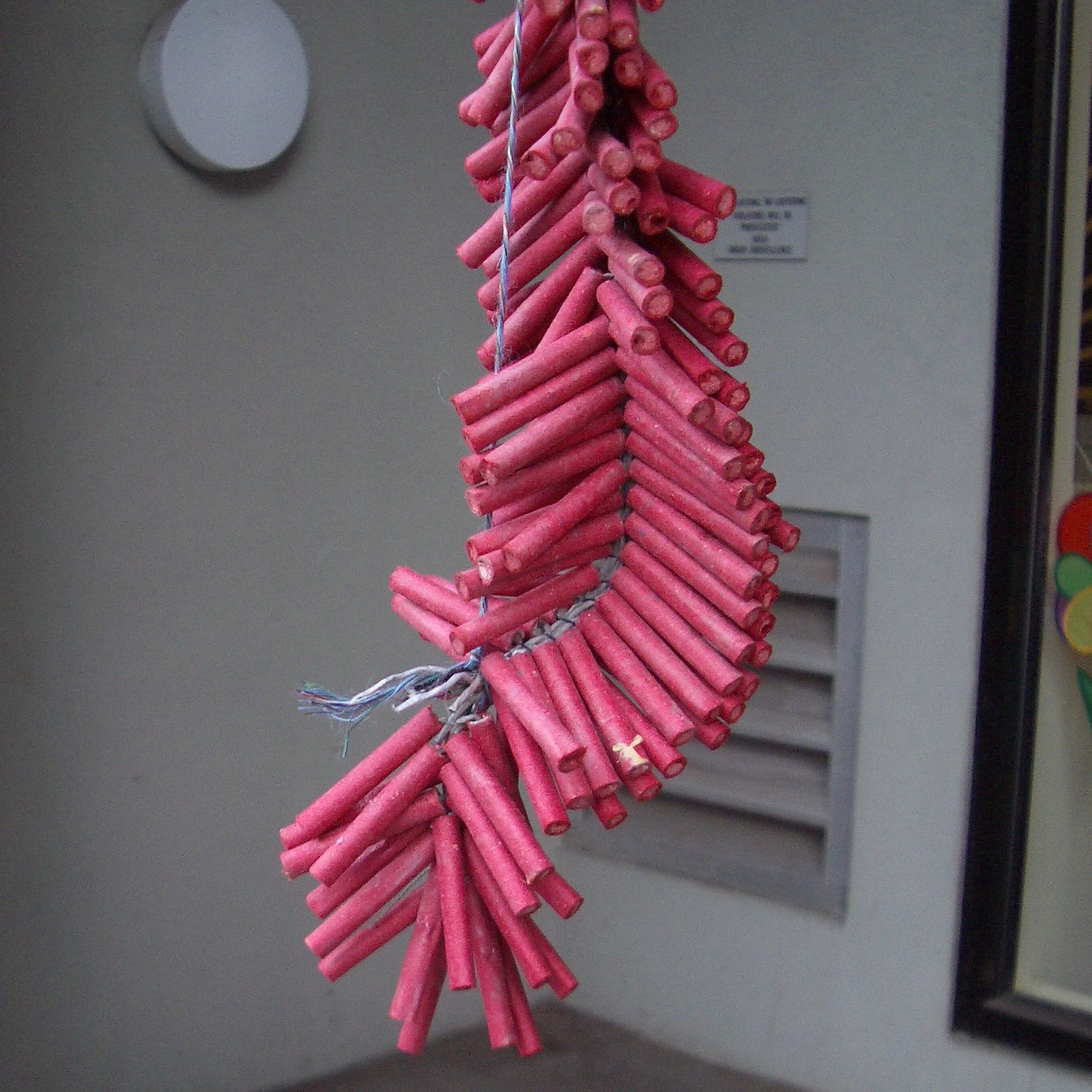
In China, fireworks and firecrackers were first made out of bamboo stems filled with gunpowder, and used to drive away evil spirits. Modern Chinese fireworks and firecrackers are painted red or wrapped in red paper.

While there are wide varieties, one of the most common is a long string of popping firecrackers (sometimes numbering in the hundreds). Setting off these firecrackers is deafening, and in addition to the Spring Festival, they are also very common at weddings and business openings.

The Chinese God of the Kitchen is names Zao Jun
The Kitchen God

Zào Jūn (灶君), or the kitchen god, is a traditional deity widely revered in ancient China. Traditionally, pictures of the kitchen god are hung above the fire in the kitchen, and he is thought to be a protector of the family.

At the end of the year, it is believed that the kitchen god will travel to heaven to report on the family’s doings to the Jade Emperor. Various practices are meant to ensure he does not say anything bad, including smearing the lips of his portrait with honey to sweeten his words, and presenting him with an offering of glutinous rice so that his mouth will be too full to speak.

At the end of the year, his portrait is burned so that he may return to heaven, and a portrait is put up on the first day of the Spring Festival. It is worth noting that while a new portrait is put up at the start of the new year, the actual activities relating to the kitchen god actually occur on a separate “mini festival” before the Chinese Spring Festival begins.

Gate Gods are one type of Chinese ”nian hua (年画)“
The God of Gates

The tradition of gate gods dates back to the Tang dynasty, when the emperor fell sick after having a bad dream in which ghosts were searching for him in the palace.

As the people of China took ghosts very seriously at the time, the emperor asked two of his top generals to stand guard at his door while he slept. On the following nights, the emperor instead hung portraits of the generals outside his door to protect himself.

The story spread throughout China, and to this da,y the Chinese people paste pictures of these gate gods outside their homes around the time of the Spring Festival in order to ward off evil spirits and bring on good luck.

In addition, gate gods are in fact part of a larger category of “nián huà (年画),” which are paintings or pictures pasted on the doors to one’s home during the new year. Other types of paintings include children and red carp.

"Cai Shen (财神)" is the Chinese god of money and wealth
The God of Money

“Cái Shén (财神),” the Chinese god of money/wealth, is a deity believed to be able to bring wealth to those that revere him. Pictures of Cái Shén are traditionally hung in the family home, and family members often visit his temple during the Spring Festival to burn incense. 

Cái Shén is one of the reasons for the common Chinese New Year’s greeting “gōng xǐ fā cái (恭喜发财),” which means “may you become wealthy.”

Final Thoughts

The above symbols and decorations are those that I personally have observed in China, and those which I know to be of significant importance to the Chinese people and Chinese culture. Of course, customs can differ from place to place, and it is not uncommon for specific Chinese regions, cities, and towns to have their own customs and even variations on those I listed above. So when in China, or in regions with large Chinese populations before, during, and after the Chinese Spring Festival,  be on the lookout for these enduring symbols of the Chinese Spring Festival!


If you’re interested in thoughtful perspectives on China, cross-border work, and how culture, incentives, and organizations shape real outcomes, you’re welcome to subscribe to China Culture Corner and receive future posts by email.

I also share related ideas and longer-form video commentary on LinkedIn and YouTube, and post updates across the channels linked above.

If you or your organization is navigating China execution or cross-border alignment challenges, I work with teams on an embedded and remote basis. Reach out directly: Sean@SageSightConsulting.com


Baijiu: the Misunderstood Drink of China

Chinese Baijiu (bái jiǔ, 白酒), pronounced BUY JEE-OH, is the national drink of China, though it remains rather misunderstood by Westerners.

Sometimes called “rice wine” in English, Baijiu has developed a bad reputation among Western expatriates and businesspeople due to its high potency and strong, unfamiliar taste.

However, despite its perceived unpleasantness, drinking Chinese Baijiu, and alcohol in general, is an extremely important part of doing business in China.

Therefore, in this short article, I will explain a few Baijiu basics and attempt to help Westerners understand this elusive liquor, as well as make a case for why Westerners should take up drinking, or at least be open to sampling, Chinese Baijiu.

A Short History of Alcohol in China

Before the birth of the Baijiu we know today, alcohol had already been present in China for thousands of years. Alcohol is said to have appeared in China as early as 5,800 – 7,000 B.C.,  and later took on a revered role in Chinese society.

Considered to be a luxury in ancient China, it was used by the political and religious elite to commune with the spirit world, as a part of various rites, during important state banquets, and as a prestigious gift. Baijiu (or something close to it) first appeared sometime during the Song dynasty (960–1270) or Yuan dynasty (1271–1368), when foreign distillation techniques were first introduced into China.

This new and much cheaper form of alcohol (compared to that favored by the Chinese elite) quickly spread throughout China, and was manufactured primarily with sorghum (meaning that “Rice Wine” is not a particularly accurate description), though rice and certain types of wheat were used as well.

Baijiu in Modern China

In China today, Baijiu is drunk almost exclusively at meals, as alcohol is a very important part of Chinese dining culture. Baijiu is served in shot-sized glasses and used during toasts to show respect and build relationships.

When toasting, the Baijiu glass is gripped with both hands, with either one hand on either side, or with one hand/finger on the bottom of the glass. After a toast, the Baijiu is usually consumed in one gulp, though exceptions are sometimes made, usually out of respect, for those not accustomed to Baijiu’s potency.

Following a toast, the glass can be turned upside down or tilted forward to display that one has consumed the entire glass, and thus give face to your friend, partner, or host (for more rules on toasting, click HERE).

Unfortunately, the very nature of drinking Bajiu is partly to blame for why many first-time Western drinkers quickly grow to hate it. As it is common for multiple shots to be drunk in quick succession, Westerners usually have no time to adapt to the flavor. (While Westerners may sip Whiskey and other liquors, the Chinese, as a rule, do not sip Baijiu.)

In addition, while Face is and will always be important in China, its interaction with toasting and Baijiu can make for a very unpleasant experience for the uninitiated. In many places in China, especially northern China, the drunker a person becomes via being toasted with Baijiu (or other liquors and alcohols), the more Face has been conferred upon them.

Therefore, it can be common for visitors to China to be entertained by well-meaning Chinese hosts who are intent on showing them as much respect as possible, by getting them as drunk as possible, on a completely unfamiliar and relatively strong liquor. Needless to say, this does not provide an ideal foundation for Westerners to learn to like and appreciate Baijiu.

There’s Actually More than One Type of Baijiu

Another element that may contribute to Westerners’ misunderstandings regarding Chinese Baijiu is in the name itself. Baijiu, which literally means “clear alcohol,” is not so much one type of alcohol, but rather a common term used to refer to many different types of Chinese liquor. Different types of Baijiu vary in taste, ingredients, quality, and price.

The cheapest type of Baijiu is small 2-5 RMB bottles of low-quality (and potentially hazardous) alcohol, which can be found almost anywhere. In contrast, more expensive brands can often go for over 1,000 RMB per bottle. Below is a short introduction to the key types, or aromas, of Baijiu:

  1. Strong Aroma (nóng xiāng, 浓香): this is the most popular variety of Chinese Baijiu. It is fermented in earthen pits and made with either a single or multiple types of grain. It has a strong, fiery flavor with a hint of sweetness. This type of Baijiu has strong ties with the Sichuan province and some areas in eastern China.
  2. Light Aroma (qīng xiāng, 清香): this type of Baijiu is distilled using sorghum and rice husks and fermented in ceramic jars. Barley and peas are used in the process to give it a mild sweetness. It is most common in northern China.
  3. Sauce Aroma (jiàng xiāng, 酱香): this type of Baijiu requires a good deal of resources and labor, and it is fermented in underground pits. Its taste is said to resemble that of soy sauce, and it is closely associated with the southeastern Sichuan and northwestern Guizhou provinces.
  4. Rice Aroma (mǐ xiāng, 米香): this type of Baijiu is distilled from long grain or glutinous rice, and is sometimes fermented in combination with Chinese medicinal herbs. This type of Baijiu is often infused with fruits, tea leaves, and herbs. It is common throughout all of southern China, particularly in the Guangxi and Guangdong provinces.

There are many other lesser-known aromas of Baijiu as well. For more in-depth information on all the different types, I highly recommend taking a look at “Baijiu: The Essential Guide to Chinese Spirits,” by Derek Sandhaus.

 Why I Drink Baijiu, and Why You Should Too

When I first came to China, like many others, I quickly acquired a negative impression of Baijiu, which in my case was brought on by drinking multiple shots of cheap (and possibly counterfeit) local variety.

This initial impression worsened when, while studying abroad in Chengdu, I later had the disturbing experience of sampling a type of Chinese alcohol called Snake Wine (shé jiǔ, 蛇酒), which was basically a big jar of Baijiu with a dead snake fermenting inside.

However, despite this rocky beginning, I was able to slowly become accustomed to drinking Chinese Baijiu and experience it in several different settings. I’ve drunk Baijiu with local government officials in the Zhejiang province, with friends in Tianjin, with local businessmen in Beijing, and with coworkers in Shanghai and Shenzhen.

And while I cannot yet say I drink Baijiu just like one of the locals (i.e., profusely), I have found there to be a great value to drinking Baijiu that is completely separate from one’s subjective impressions of its taste. As mentioned previously, drinking in China, including Baijiu, is a very important part of Chinese dining culture, a time when important relationships are built and maintained.

And while in my experience the Chinese will usually never coerce or expect a Westerner to drink Baijiu, the Chinese are universally pleased and surprised when a Westerner is willing to proactively bridge the (dining) culture gap and drink Baijiu with them.

Therefore, for any Westerner who is currently doing business in China or plans to in the future, I would strongly recommend exploring Chinese Baijiu in advance. It can be somewhat shocking to the uninitiated, but given a little time, one’s palate can adjust to it, making attending Chinese banquets and developing Chinese friendships a much more enjoyable experience.

Sources and Additional Reading


If you’re interested in thoughtful perspectives on China, cross-border work, and how culture, incentives, and organizations shape real outcomes, you’re welcome to subscribe to China Culture Corner and receive future posts by email.

I also share related ideas and longer-form video commentary on LinkedIn and YouTube, and post updates across the channels linked above.

If you or your organization is navigating China execution or cross-border alignment challenges, I work with teams on an embedded and remote basis. Reach out directly: Sean@SageSightConsulting.com