All posts by Sean Upton-McLaughlin

Sean is a business and communications professional based in Shenzhen, focused on China, culture, and cross-border work. His writing explores how language, incentives, and organizational structures shape real outcomes when Chinese and overseas teams work together.

It Began with a Band Trip: Snapshots of China’s Past and Present

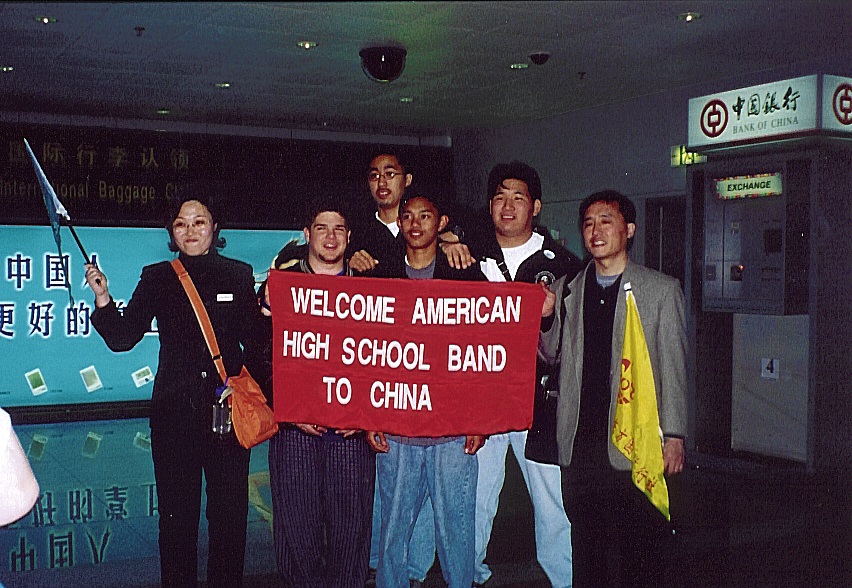
The NMC Band traveled to China in 2001In 2001 when I was finishing up my final year of high school, my own China journey was about to begin, though I couldn’t know it at the time. Back then, I lived as an average American teenager: going to school, hanging out with friends, playing video games, and generally not paying much attention to the outside world.

But everything suddenly changed when my high school band, of which I was a member, was invited to travel to China and participate in a musical and cultural exchange. At that time, the band traveled with a group of around 200-300 people (students and chaperons), and visited four Chinese cities: Beijing, Shanghai, Xi’an and Shijiazhuang. A whole new world was opened to me, and while more of my interest in China developed when I studied abroad there several years later, my band trip to China was unquestionably the starting point.

At first I thought it would be interesting to share some of my experiences from that life-changing trip, and contrast them to China today, but then I had another idea. My trip to China in 2001 was unique in that not only did I get to go, but my entire family did as well (my brother as a band member and my parents as chaperons). Therefore, in order to provide some interesting insights on China then vs. now, I sat down and talked with my parents, Richard McLaughlin and Diana Upton. In the following interview, they share their impressions of China in 2001, and then discuss how they differ with their more recent experiences touring southern China, with me, in October of 2015.

I hope their experiences in both 2001 and 2015 will serve as an interesting lens for you, the reader, to learn more about China, its people and the rapid pace at which the country has developed.

The First Visit (2001): A Band Trip to China

China Culture Corner: What was your first reaction when you arrived in China?

Richard: Anticipation and excitement.

Diana: First, after flying for perhaps 14 hours we arrived in Beijing and had to go through customs when we were really tired. That whole process was very confusing. I think I was interested and curious about what we would see, and perhaps a bit anxious since we did not speak Chinese. I think the anticipation was made more exciting since we were traveling with friends who had children in the band. We felt proud that our children’s’ school had been chosen to represent the US in a cultural music exchange.

China Culture Corner: What preconceptions did you have before trip?

Richard: A  closed, very controlled society with limited freedom.

Diana: I think I still held the view that the Chinese were very controlled by the government. Even though it was more than 10 years after Tiananmen Square, that picture was still very much in my mind.

China Culture Corner: What did it feel like being in China the first time?

Beijing's Tiananmen Square
Taking a turn around Tiananmen Square.

Richard: Our movement was controlled to a high degree and it took several days before we were able to go out on our own.

Diana: I was exhausted when we arrived in Beijing after our long flight. One thing I remembered about our first few days was a lovely garden we toured in Shanghai; as a gardener, I love to see gardens and learn about plants. We then we came across a Starbucks. That familiar association brought me pleasure and a sense of the familiar which always helps one to feel comfortable. One disadvantage of the trip was that we were traveling with over 200 people, and it constrained what we could do. Of course since we were with a tour group, the itinerary was very set and determined by the band’s musical performances. We soon found that we had a tour guide that remained with us throughout the trip, Jason, and this was very comforting. He was very personable and explained a lot of history to us as well as giving us helpful tips about traveling in China.

Another thing that was very moving was the massive scale of the city spaces. In particular, I was fascinated by the size of Tiananmen Square. Another community space that impressed me was Xi’an’s city wall. The idea of a wall that surrounded the city was intriguing to me. Our relatively short history in the US has always been based on the freedom of movement and security of laws, so the idea of a city needing fortification was foreign to me. In addition, the sense of history could be felt and that was awe-inspiring.
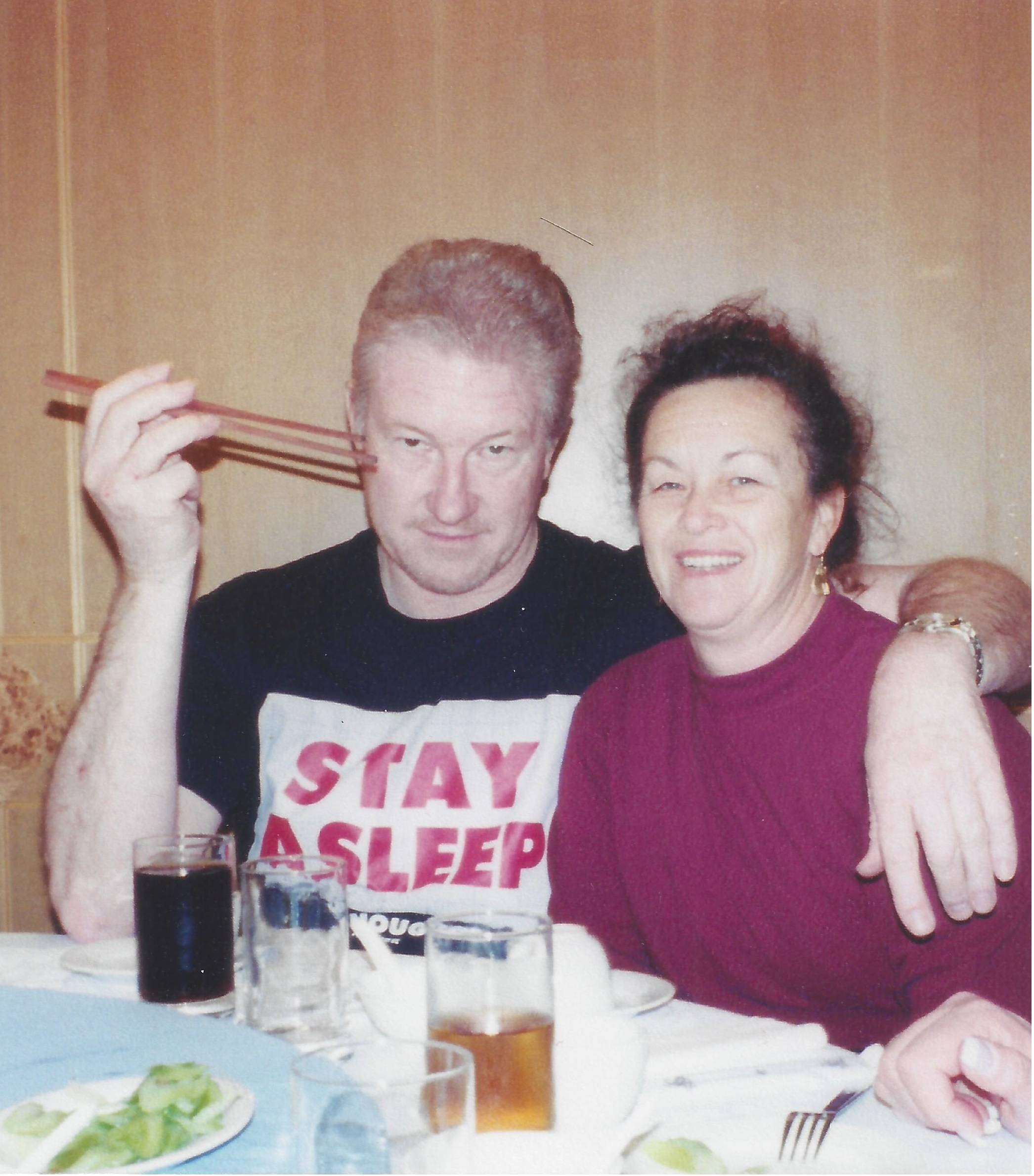
Enjoing a meal in China
“Yes, we know how to use chopsticks.”

Another difference that was amazing to me was all the construction going on. I remember traveling on the bus through one city in particular, Shanghai I believe, and seeing bamboo being used as scaffolding everywhere. Again, I was amazed – I was worried that it would all collapse.  I do not remember ever seeing so much construction happening at once in the US.

China Culture Corner: What cultural differences stood out?

Richard: Everyone was spitting. People would make insulting remarks within your hearing and did not care if you heard or not. Traffic was heavy and not managed well.

Diana: I felt, in general, that the people did not seem friendly. Often, we found streets to be dirty. In the large cities traffic was unsafe and felt crazy – that was a surprise. I enjoyed the variety of cultural performances that we saw. I remember a Chinese acrobatic performance that we saw that was very impressive. I seem to remember hearing some Chinese singing somewhere on the trip, and it was not melodic or pleasing to me…it was strange and I could not see how people would appreciate it.

China Culture Corner: What was it like conversing with regular Chinese people?

Richard: Generally pleasant, though we needed the help of an interpreter as few people spoke English.

Diana: I did not feel that we got to converse with regular Chinese. This was a disadvantage of traveling in a large group. Aside from our tour guide, I felt that our encounters with the Chinese were either the street vendors who practically accosted us, and the staff of the Friendship Stores who had the impression that all Americans are rich.

China Culture Corner: What did you enjoy most about your trip?

Musical exchange with Chinese highschool students
Meeting with Chinese students.

Richard: A trip through a back alley in Beijing which looked like a 1930s movie set; the Terracotta warriors; the walled city of Xi’an.

Diana: I enjoyed the musical exchanges and seeing our kids perform. Aside from that, what I remember enjoying most was Tiananmen Square, the Great Wall, Xi’an’s city wall, and the Terracotta Warriors. I loved these for the sense of history that they conveyed. As I said before, the US is a relatively young country and so experiencing a culture that is so old gives one a very different way to think about the world.

China Culture Corner: Can you describe an interesting experience?

Richard: Once, we left our hotel in one city and saw dozens of people stealing power by tapping into the 440 Volt three phase line which was hanging almost at eye level because of all the lines attached to it. No one seemed concerned about this.

Diana: As we drove from Beijing to another city, the freeway was cleared for us – it was totally empty. That was a mystery. Also, our experiences in the Friendship Stores were also interesting; the Chinese seemed to have the idea that Americans were rich.

China Culture Corner: What was the hardest part about adapting to China at the time?

Old bike in China
“Maybe I’ll go for a ride…”

Richard: Having a rigidly controlled itinerary, including only being able to shop at Friendship Stores.

Diana: I think the hardest thing was the pressure when shopping that I HAD to buy stuff. I am someone who takes time when shopping and chooses carefully. The idea that I was supposed to buy, buy, buy was uncomfortable for me.

China Culture Corner: How did your perception of china change during the trip?

Richard: There seemed to be more freedom than I expected, especially the number of small entrepreneurs that existed.

Diana: I don’t think my perception of China changed, but I would say I was intrigued to learn more. This is a benefit of travel. In fact, the trip, as well as my son studying China, led me to read extensively about China. In enjoyed reading Red Dust, Foreign Babes in Beijing, Three Swans, Mongolia, and Last Days of Old Beijing, among others.

The Second Visit (2015): Touring Southern China

China Culture Corner: During your most recent trip, what differences did you notice compared to 2001?

Richard: There were many more taxi cabs, much better driving, and the cities were much more crowded. There were no fat people at all, and there were many Western businesses, such as KFC, Pizza Hut, 7-11, as well as shopping malls.

Diana: Well, the obvious one is that we were traveling with three of us rather than more than 200. I don’t remember this when we traveled in 2001, but there were so many people with babies or young children on the backs of motorcycles or Vespas. I could not get over how casual they were about this. We have a lot of laws in the US that govern behavior and safety practices. Driving on motorcycles with young children would be unheard of here.

China Culture Corner: How did your experiences differ?
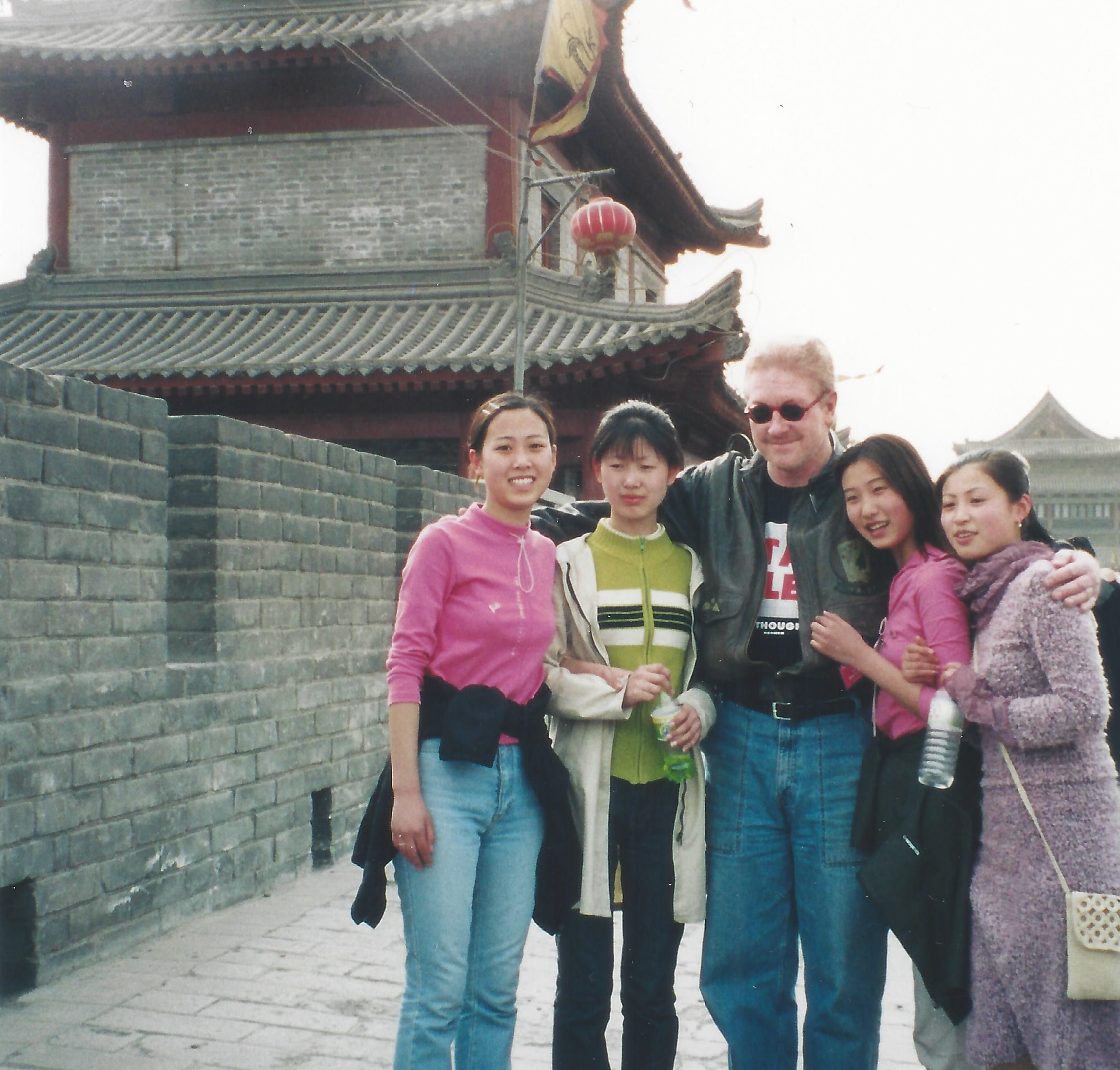
Making friends on Xi'an's city wall
Making friends in Xi’an.

Richard: We were not controlled and had freedom of movement. We also got to interact with regular Chinese citizens. However, the climate on this trip, in contrast to Beijing and the other cities we visited in 2001, was quite hot, humid and very uncomfortable.

Diana: I think that having freedom of movement allowed us to see more of the nitty-gritty of the cities we visited.

China Culture Corner: What experiences did you most enjoy with regard to Chinese people, cultural and society?

Richard: I enjoyed interacting with the tour group, how friendly they were, the freedom of movement, riding the bullet train to Guilin, and not drowning in the Li River [Editor’s note: Richard was worried about the seaworthiness of the tour boats].

Diana: Although most people spoke Chinese, I found them to be very friendly for the most part. When we traveled for several days with a small tour group, the Chinese were very deferential to us, perhaps because we were older or American, which was very sweet. One of my favorite experiences on this trip was talking with the two Chinese women who did speak English. They were very nice, and we thoroughly enjoyed talking with them.

China Culture Corner: How has your impression of China changed in the last fifteen years? How much has your time in China influenced these perceptions?

Richard: I’ve really been impressed by the sheer industriousness of the Chinese people and the apparent freedom of movement in day-to-day life without evidence of police control.

Diana: I think most of my impressions have come from the media, though I try to choose what I read carefully and keep an open mind. As I stated earlier, travel is a great way to broaden the way we think about the world. Because we have just been there for two short trips and seen different parts of China on each trip, I don’t think I can speak of my impressions changing. Instead I am getting a better and better picture of the country and the people each time I visit. But it would take a long time and many trips to get a full picture of the people and the culture.

China Culture Corner: What would you tell other Americans about the “real China?”
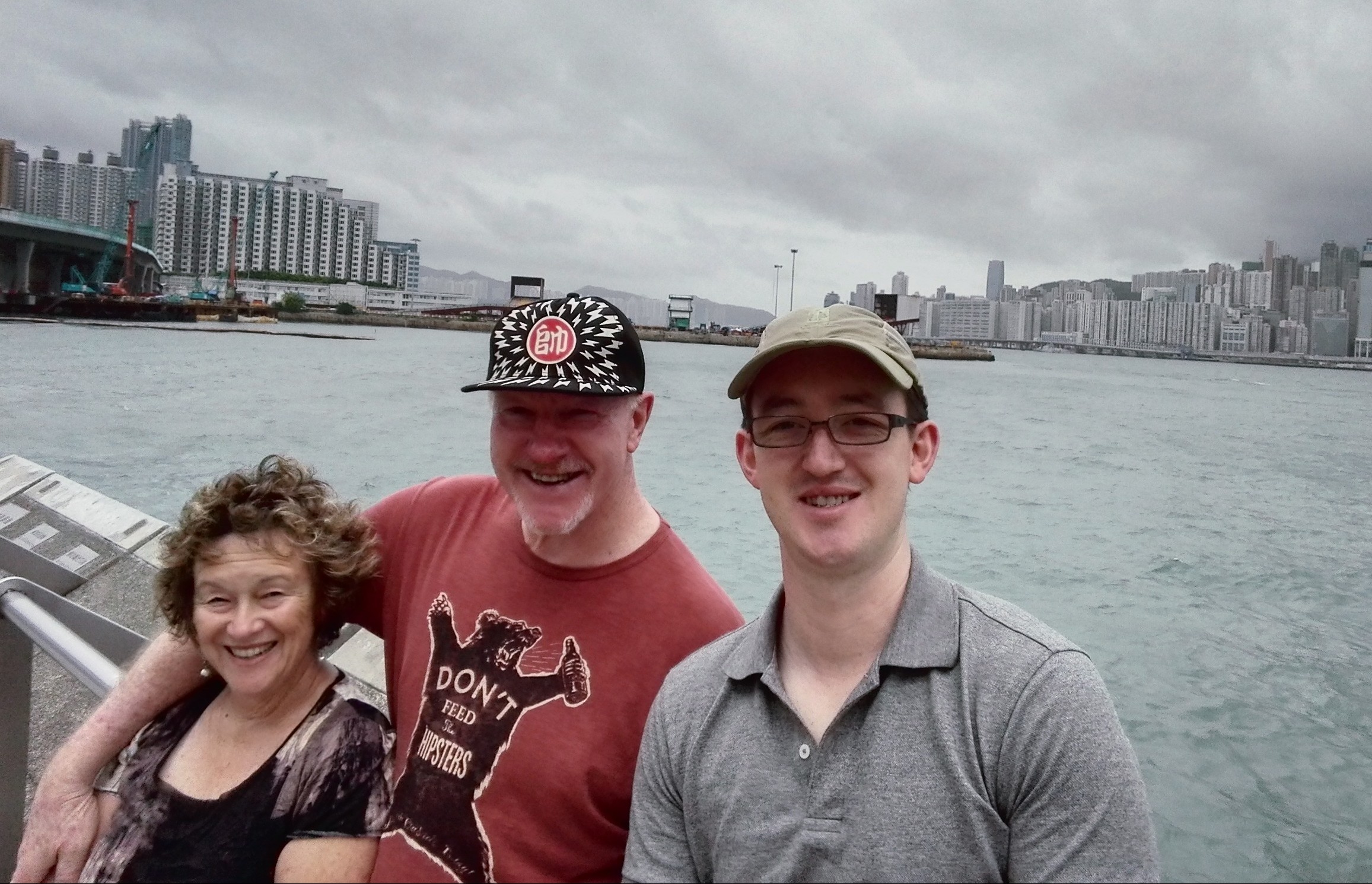
Hong Kong's Victoria Harbour
Enjoying the Hong Kong waterfront in 2015.

Richard: The Chinese are very hard-working, they are willing to sacrifice and save to a degree not seen in the US. They work harder than Americans, the save more, they are more active – everyone was walking. They impressed me as very hardworking, serious and hungry for the things Americans take for granted.

Diana: Well, I still feel I have so much to learn about “the real China”. After two weeks there, my curiosity was piqued and I wanted to stay and learn more. I certainly want to go back to visit, though not when the temperature is 30 degrees Celsius.

China Culture Corner: Do you think it’s worthwhile to study Chinese and learn about China?

Richard: I don’t think it’s worthwhile to learn Chinese unless you’re going to work or live there. It’s difficult and there is no place to practice the language skills. Learning about china on the other hand is important because they are a major geo-political competitor and our economies are closely intertwined.

Diana: I agree. China is a civilization thousands of years old that we can learn from, and having a knowledge and understanding of their culture, as part of the human experience, enriches ourselves.

Thanks for reading!

Do you have any questions or comments about traveling in China and learning about the Chinese people? Would you like to know more about the two China trips mentioned in this interview? Please feel free to post your thoughts in the comments section below.

Follow the China Culture Corner to receive regular updates by email!

 

How “Chinese” Should You Act in China?

mp1538457_1423329768198_2Living and working in China can be a rewarding experience for some and a trying ordeal for others. What “makes or breaks” Western visitors to China is often their ability, or lack thereof, to adapt to Chinese culture and society. This usually involves learning some Chinese, adapting to Chinese communication styles, learning about local working environments and giving up (i.e. not being able to fully follow) some of the customs, habits, or norms of their home country. And while this process is both natural and necessary, it is by no means simple. After all, when living in China, exactly how much should you adapt, and how much of your old culture should you be prepared to give up?

This is a contentious issue, and I have seen it debated on many social media platforms (e.g. LinkedIn, Facebook, and Quora). Both sides have strong proponents, each with their own ideas on the best ways to “survive” in China and the most effective ways to interact with the local Chinese. While I have an obvious preference for localization and adaptation, I’d like to briefly share my thoughts on both sides of the argument, as well as how to quickly, healthily, and effectively adapt to life and work in China. Broadly speaking, there are two main camps: those that want to live a more Western (or non-Chinese) lifestyle, and those that are favor of doing things the Chinese way.

The International Expat

To some extent, the international expat (or expatriate) could be considered a holdover from a bygone era when international business and economics was clearly led by Western countries (e.g. the USA, UK, Germany, etc.) and China was still an underdeveloped country. In the 1970’s and 80’s when Western companies began expanding into China, it was natural for high-level experts,  managers and executives to be deployed to China, complete with expensive benefit packages. Due to the differences in culture, language and economic class, it was natural for Western expats to live apart from the local Chinese, banding together for comfort and companionship. However, despite over 30 years of break-neck development in China, this trend has continued. Life for many expats in China still exists in a bubble, and a number of large cities (e.g. Beijing, Shanghai, Guangzhou and Hong Kong) have their own expat districts or communities. In these areas, expats can distance themselves from Chinese society and culture, and live a life similar to one from their home countries.

Western expats in China don't adaptBut is this really necessary? I have seen a number of comments by Westerners and non-Chinese on social media (sometimes in response to my own posts), saying they will “never, ever, give in and start doing things the Chinese way.” While I have nothing against trying to maintain one’s own cultural identity in China (I do so myself), refusing to do anything the Chinese way can result in some fairly obvious negative consequences:

  • An US vs. THEM mentality
  • A lack of trust between Chinese coworkers and partners
  • A lack of learning opportunities
  • A potentially miserable experience in China

It’s true that a visitor to China can’t really be expected to completely adapt to or accept everything about living and working in China. However, for those of us that choose to live here, it is worthwhile to remember that this was our choice. While it is completely acceptable to disagree with certain aspects of Chinese culture, society or business practices on a personal level, refusing to participate may do more harm than good. Remember, Western expats are now leaving China in increasing numbers, partly because more and more Chinese locals can do their jobs, AND because they understand the culture. While there will likely always be some need for Western expats and experts in China, those that refuse to adapt will not last long.

The Zhōng Guó Tōng

A zhōng guó tōng (中国通), can be roughly translated as: “someone from outside China who possesses a high level of Chinese language skills, a deep appreciation and understanding of Chinese culture, and the ability to fluently engage and interact with Chinese people from different backgrounds.” The zhōng guó tōng is an ever-increasing phenomenon in China, and it not restricted to specific groups or backgrounds. They can be foreign students studying at Chinese universities, travelers exploring the Chinese countryside, or adventurous professionals from all over the world working for Chinese companies. There are an increasing number of Westerners and non-Chinese learning about the Chinese language and culture and adapting to local Chinese customers and practices. This includes: networking and spending time with Chinese locals, imbibing generous amounts of Chinese Baijiu, trying local Chinese delicacies, and doing things in a more Chinese style.

Doing things the Chinese way in ChinaWhile the number of zhōng guó tōng is comparatively smaller than that of International Expats, their numbers are growing. After all, China is full of new, strange, and exciting opportunities, and it makes sense that many would want to experience all they could. However, based on my time in China,  as well as my conversations with other Westerners and non-Chinese, there are several potential negative side effects to this lifestyle. For example:

  • Reverse culture shock can be greater when returning home
  • Other Westerners or non-Chinese often mistake a zhōng guó tōng’s passion for showing off
  • Becoming too close to the Chinese world can distance you from useful Western networks and contacts

The path of a zhōng guó tōng or any non-native Chinese with a love for Chinese culture can be both easier and harder than others. On one hand, with knowledge of the Chinese language, culture and people, it is easier to communicate and get things done. However, on the other hand, this knowledge and passion takes us to faraway shores, and it can be easier to lose one’s way, or at the very least lose heart, from time to time.

Finding a Balance

During my time in China, I have come to the or conclusion that, for Westerners and non-Chinese truly interested in learning about and living in China, trying to choose between Chinese culture and one’s own is not realistic. Just as shutting ourselves off from the Chinese world by living in isolationist expat complexes does nothing to help us adapt, shutting ourselves off from other Westerners while we study Chinese language and culture can also be unhealthy. If we truly aim to live in China (and this applies more to larger cities), it’s very important to live with one foot in each world.

Balancing Chinese and Western customs is importantIn the modern era, there are multiple reasons to stay involved with the international/Western world, some cultural, and some more related to career development prospects. For young Westerners wanting to live and work in China long-term, and who aren’t content with potentially low-paying or illegal jobs teaching English, the bigger international firms offer key opportunities. With this being the case, it definitely pays (sometimes quite literally) to maintain ties with the Western or non-Chinese communities. Therefore, whether through social networks (such as LinkedIn) or through personal relationships, I feel it is very important to maintain ties to the international community.

Lastly, it is important to remember that one reason English and Western culture have dominated the world for the past several centuries is due to continued economic superiority. With the rise of China, this global focus on English and the West can at least be partly expected to shift to China and Chinese. In fact, a trend towards China and the Chinese language is already clear is certain areas. Western expats have in recent years been leaving China in increasingly greater numbers as Chinese with local experience connections replace them. Across the Pacific, I have seen certain Chinese firms in Silicon Valley require fluency in Mandarin as a job prerequisite for some roles, effectively keeping many Americans of non-Chinese decent out of the running. In short, Westerners who want to work in China can no longer afford not to understand the Chinese language (including the writing system) and culture, or not to be comfortable interacting with the local Chinese.

Final Thoughts

In the end we all have to make our own choice on how much to adapt to local Chinese customs and behavior. Some people naturally feel more comfortable in a Western environment, or one resembling their own home country, while others might feel more at home among the Chinese locals. However I believe its important to realize that the Chinese world is becoming increasingly important to global affairs, both economically and politically. When dealing with the Chinese world, those that feel comfortable “walking the walk” will undoubtedly be better prepared, and able to do more.

Thanks for reading!

Do you have any about living and working in China? Do you prefer to live more of an expat lifestyle, or localize and adapt to the local Chinese environment? Please feel free to post your thoughts in the comments section below.

Follow the China Culture Corner to receive regular updates by email!

 

“Little Sisters” and “Older Brothers” in China

In a previous article, I discussed China’s traditional family hierarchy and how it continues to influence Chinese society in modern times. Here, I’d like to introduce how common familial terms (e.g., mom, dad, auntie, uncle, etc.) have evolved in modern times.

Specifically, I’ll share some of my own observations and experiences on how China’s younger generations use the terms “little sister” and “older brother” to show respect, as well as build and maintain relationships.

These terms offer an interesting look at modern Chinese society and can be very valuable for Westerners who want to try doing things the “Chinese way” in order to get a taste of local life and culture.

Little Sisters and Older Brothers

In my experience, the terms Mèi Mei [妹妹, younger sister] and Gē Ge [哥哥, older brother], have become very common over the last several decades.

While Mèi Mei used to only refer to one’s actual younger sister, it is now also commonly used as a colloquial form of address for younger women. Gē Ge, meaning older brother, is now also a more general term for boys or men.

These terms are used in many parts of China, though different regions can often have their own versions or pronunciations. They are commonly used among friends, at the workplace, online, and even on the dating scene.

And while knowing the terms is easy enough, if you use them improperly, it is possible to embarrass yourself or confuse your Chinese friends and colleagues.

Related Article: Learn How to Pronounce “Mèi Mei” and “Gē Ge”

Creating a Warm and Respectful Environment

These two terms are largely used to create a warm and familial environment, often between friends and coworkers. They can also be used to engender trust and create a collaborative working environment and stronger relationships.

Interestingly, the terms are also used to express interest in and to flirt with a member of the opposite sex. But no matter the intended usage, I’ve found the use of both terms to create an emotional reaction in the Chinese, which relates strongly to the terms’ perceived and implied meaning.

The terms Mèi Mei and “Ge Ge” have changed somewhat over the past 20 years. In the 1980’s, they chiefly functioned as a form of address that distinguished between different ages, even when there were no family ties. Today, they focus less on age, and are commonly written shorthand as MM and GG. Using these terms can close the distance between two people, no matter whether they have previously met, or how well they know each other. – Fiona Ma, White Collar Worker

Addressing a girl or woman as a little sister in Chinese implies that she is young, attractive, and desirable. Addressing a boy or man as an older brother implies that he is mature and handsome, and in some cases that he possesses power and authority.

In my experience, the platonic use of these terms among the Chinese can be likened to casual flirting. This type of flirting can often create a strong and positive emotional response in most people (not just the Chinese), and emotions are one of the important elements necessary to build and maintain relationships in China.

And as relationships and status are so important in Chinese society, these terms often act to help maintain relationships and make things flow more smoothly.

Differences Between Forms of Address

It’s worth noting that there are small yet distinct differences between using the term little sister or older brother with terms you might use to address a stranger.

To give a few examples, when you are ready to order at a restaurant (mainly those in Southern China), you can call a waiter over with the terms Měi Nǚ [美女, beautiful girl] or Shuài Gē [帅哥, handsome guy]. When addressing a man or woman older than you in public that you do

not know, you can use the terms Dà Gē [大哥, older brother] and Jiě Jie [姐姐, older sister], respectively. And while Dà Gē and Gē Ge can both be translated as “older brother,” the former conveys more respect while the latter is more familial.

How Can Westerners Use These Terms Effectively?

For the Westerner interested in trying out Mei Mei or Ge Ge in conversation, I have prepared the following pointers, based on my experience:

  1. Only use Mèi Mei or Gē Ge with people you know, such as friends or colleagues.
  2. Before trying out one of the terms, first pay attention to how your friends and colleagues address one another, to see if these terms are commonly used in your own social circles (not everyone uses them).
  3. Pay attention to how a friend or coworker reacts to either term, so you can decide whether it is welcome or causes awkwardness.
  4. Don’t use either term constantly. Instead ,save them for specific occasions, such as making requests or offering praise or congratulations.
  5. Men should generally not use the term Gē Ge to address another man, and instead stick to Dà Gē or other polite forms of address. However, it is perfectly acceptable for women to refer to other women and girls as Mèi Mei.
  6. I would strongly caution those new to China against using the terms Mèi Mei and Gē Ge with romantic intent. While they are also commonly used in China

In this context, it can be easy for Westerners to mix up the slight nuances that exist between the platonic and romantic usages of Mèi Mei and Gē Ge.

Final Thoughts

At the end of the day, these terms are an important part of how modern Chinese communicate and interact. While they are not absolutely necessary for the Westerner living, working or traveling in China, they can certainly add some local flavor to everyday life.

In addition, for the Westerner interested in building relationships the Chinese way, these terms can be a useful addition to one’s linguistic and cultural toolkit. Enjoy!


If you’re interested in thoughtful perspectives on China, cross-border work, and how culture, incentives, and organizations shape real outcomes, you’re welcome to subscribe to China Culture Corner and receive future posts by email.

I also share related ideas and longer-form video commentary on LinkedIn and YouTube, and post updates across the channels linked above.

If you or your organization is navigating China execution or cross-border alignment challenges, I work with teams on an embedded and remote basis. Reach out directly: Sean@SageSightConsulting.com