

Tag Archives: Chinese Language

SeekPanda: Revolutionizing the Chinese Interpretation Market

SeekPanda can help you succeed in China!In March 2015, I sat down with Matt Conger and Phil Kohn, two young China entrepreneurs from the United States who are pursuing their China dream in Beijing. Matt and Phil are the co-founders of SeekPanda, which aims to revolutionize China’s interpretation market by providing Western businesspeople with easy-to-find, top-quality interpreters who can truly help their clients bridge the China-West cultural divide. In this interview, I speak with Matt and Phil about the SeekPanda business model and their experiences in China thus far.

China Culture Corner: So, in a nutshell, what is SeekPanda?

SeekPanda: SeekPanda is China’s top curated marketplace for on-demand, professional interpreters and translators. Founded in 2014, we have served 200+ customers, including government delegations such as U.S Secretary of Commerce Penny Pritzker, in over 1,000 meetings, including several of the world’s leading expert networks. Our management team is based in Beijing and Seattle, and has previous work experience at Credit Suisse, Bain & Company, and other major professional services firms.

China Culture Corner:  When we first spoke, you mentioned the interpretation market in China was broken. Can you tell me more about the specifics? How and when did you first discover this?

Seek Panda was founded to help Westerners do business in China
SeekPanda founders, Matt Conger and Phil Kohn

SeekPanda: In general, unless you use an interpretation agency it is very hard for first-time business travelers to find trusted freelance interpreters. At the same time, it is hard for these interpreters to find good clients. In addition, the world of agencies is full of unfavorable circumstances, including:

  • Agencies price discriminate and lack price transparency
  • Agencies keep much of what the client pays, often well over 50%, and sometimes up to 70%
  • Agencies “bait and switch,” meaning they show a client the CV of one interpreter but then assign a different interpreter to do the job.

As we were forming SeekPanda, we also discovered through LinkedIn that even if an interpreter looks reliable on paper, they might not have adequate IQ [traditional intelligence] and EQ [emotional intelligence] to succeed as a business interpreter.

China Culture Corner: What made you decide that revolutionizing the current interpretation business model was the way to go? Do you feel there is a lot of room for growth?

SeekPanda: At the end of the day, we are committed to helping people succeed in doing business in China, and very early on, we sensed the difficulty of this in the pre-SeekPanda world. This realization, coupled with the agency issue, made it clear that this market is ripe for innovation and needed to change. In terms of growth, we believe that once we master the Chinese market, we can apply this business model to other countries that have similar language and cultural barriers, such as Japan, Korea, Vietnam, and others.

A skilled Chinese interpreter equals effective meetings in China
A good interpreter makes a “noticeable” difference

China Culture Corner: Are you worried about other businesses copying your model? Could a local Chinese company come in and be a second SeekPanda at a lower cost?

SeekPanda: There will definitely be SeekPanda copycats and people can certainly copy the basics of our model. However, we hold three key competitive advantages:

  • First, we’ve established strong relationships, not just with interpreters themselves, but also with the institutions they’ve graduated from – basically we have a strong control over the supply.
  • Second, we are building a powerful matching algorithm and tech solutions.
  • Third, our management team has a unique combination of business education, job experience, China work experience, and Chinese language skills.

China Culture Corner: Can you tell me more about SeekPanda’s interpreters? How are they different from those you would find through agencies, or are they?

SeekPanda: To begin with, they are exclusively either graduates from the world’s top masters in interpretation programs (e.g. MIIS, the University of Bath, Shanghai International Studies University, Beijing Foreign Studies University), or seasoned industry experts, such as someone who worked on a wind farm in the USA for seven years. Beyond that, we vet each interpreter for their “people skills” to make sure they have the proper EQ needed to be successful.
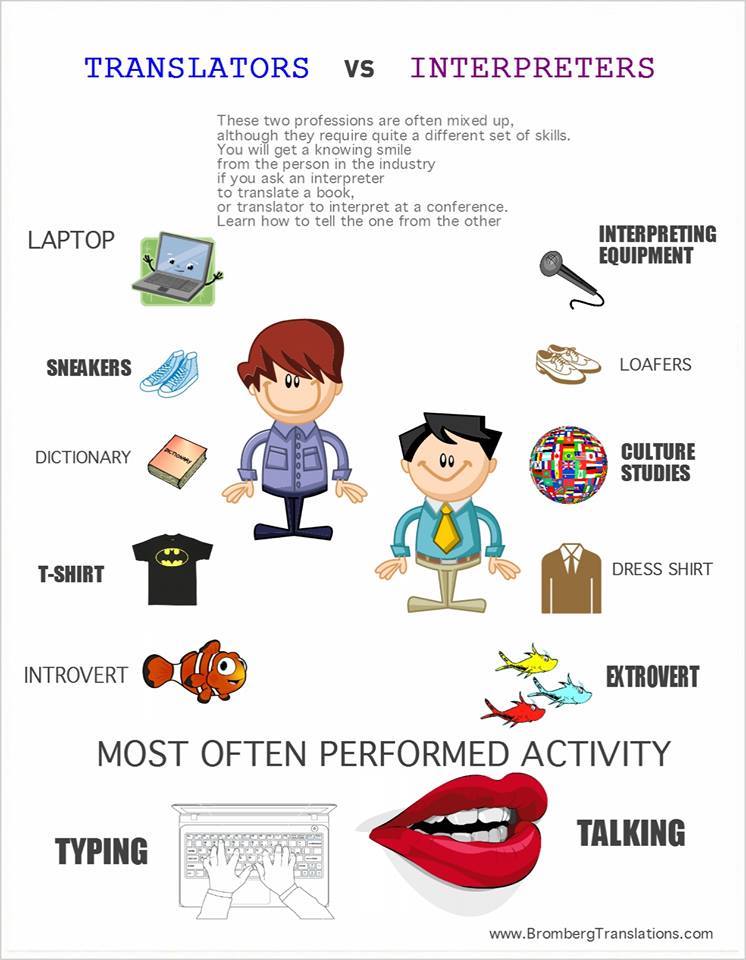
How are interpreters and translators different?
The difference between interpreters and translators

China Culture Corner: Based on your experience, what makes a good interpreter versus a bad interpreter? What about a good versus bad interpretation experience for a Western businessperson?

SeekPanda: A good interpreter is much more than just a walking dictionary. They have EQ, not just IQ. They can manage the mood of the meeting and help the client relate to what is really being said, not just a literal interpretation.

A great example that we like to refer to is as follows: consider a situation where a customer has flown all the way to China for a highly anticipated and important meeting with a government official that has been cancelled, rescheduled, cancelled, and then finally rescheduled again. The customer is in the middle of the meeting with this high level government official, when suddenly the government official gets a phone call and blurts out “不好意思我有急事” [literal translation: I’m sorry, I have an important matter] and immediately leaves the room.

Only an interpreter with high EQ will succeed in this situation. “I’m sorry I have an emergency” is the low-EQ answer. It may be factually accurate, but could alarm the client. “I’m sorry but something has come up” is also accurate, but implies disrespect to the visitor who has waited so long for the meeting. A good interpreter would pay attention to the mood throughout the meeting, such as whether the official was looking for an excuse to end the meeting, and then make a judgment call for how to convey the message to the client. Perhaps the message to the client would be “he had something to take care of quickly. It’s not clear what has happened but let’s just wait and see. Don’t worry.”
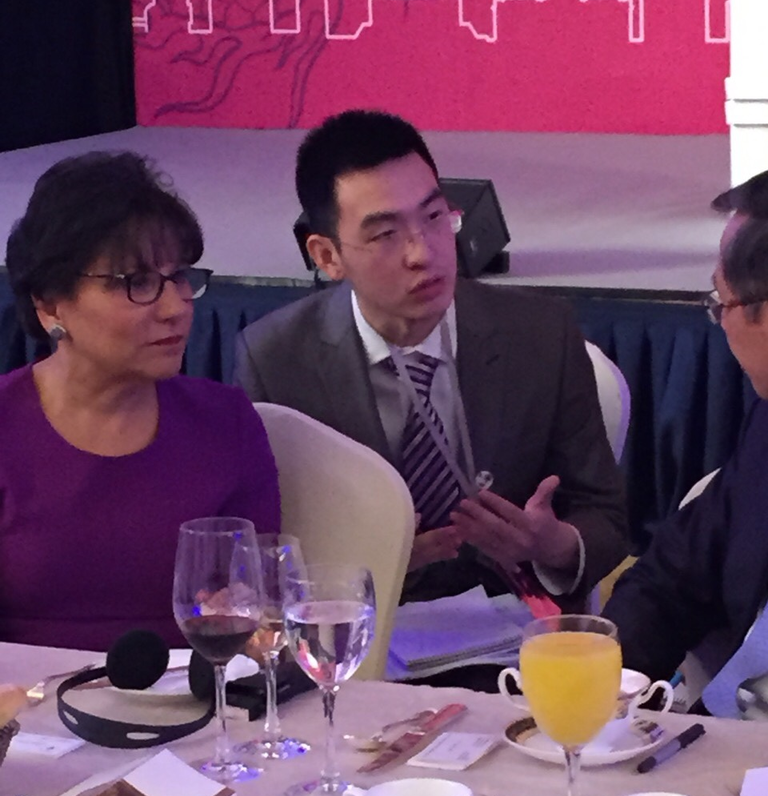
A good interpreter can help bridge the China-West divide
A SeekPanda interpreter with U.S Secretary of Commerce Penny Pritzker

China Culture Corner: I understand SeekPanda’s interpreters receive a much larger cut of the interpretation fee than they would from an agency. Does that also mean that SeekPanda’s total fees are higher too?

SeekPanda: No, the total pie is still 100% – we just allow the interpreter to keep more of it. And, we can afford to do this because we have a much lower cost, highly efficient operation.

China Culture Corner: What advice would you give to a Westerner who is coming to China for the first time and is in need of an interpreter? What are the key things they need to know?

SeekPanda: Don’t assume that being bilingual in English and Chinese is synonymous with a good interpreter. Many companies choose to bring their bilingual analyst or associate from their law firm along to meetings to translate. These individuals lack the extensive training that interpreters go through during their two to three years of graduate school. Interpreters learn special methods of note-taking, etiquette, and concentration skills that even the most fluent bilingual speakers lack.

China Culture Corner: What originally drew you to China? Was it the culture? The language? Or mainly business opportunities?

SeekPanda: For Matt, it was a combination of language and business opportunities. For Phil, it was a combination of the language and culture. This is part of what makes us such a powerful team.

China Culture Corner: Do you have any interesting China stories you can share? What really surprised or shocked you after you arrived in China for the first time?
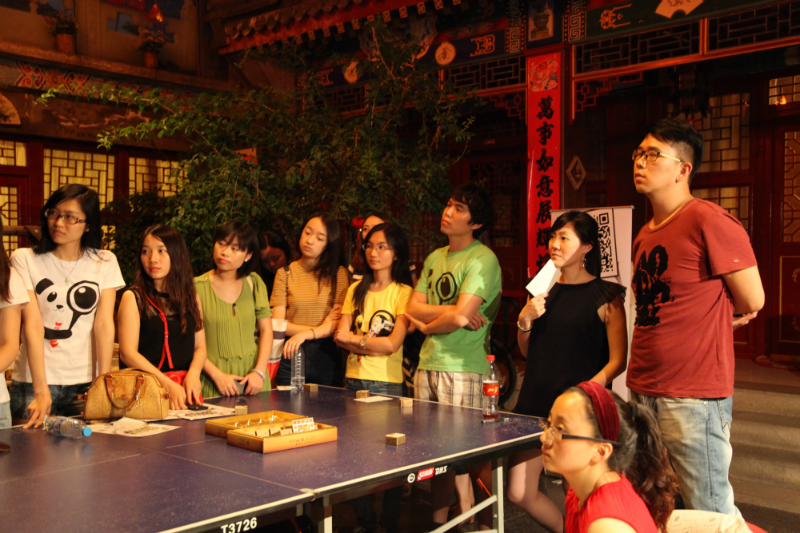
SeekPanda was launched in 2014 in Beijing, China
The SeekPanda launch party at a traditional Beijing Courtyard

Phil: During one of my initial business visits to China I went to Hainan for a day of meetings. I arrived in the meeting room, sat down at my assigned seat, which had a name-card that read 孔菲尔 [kǒng fēi’ěr, a Chinese transliteration of Phil Kohn], which I figured was a really cool name at that time. There was also a plate of fruit, tea and a coconut. What a cool meeting setup in tropical southern China! That night I remember eating sand worms, which was a truly unique delicacy.

Matt: I was on an investor roadshow and we were pitching to three to four companies a day. The most prestigious company on the list, whose founder was one of China’s richest men at the time, had us pitch at 8pm on a Saturday evening. It was the first time I had encountered the famous Chinese work ethic so obviously, this time coming from a 金领 [jīn lǐng: a gold collar worker, a highly paid professional or executive] and not a 蓝领! [lán lǐng: a blue collar worker]

China Culture Corner: What words or expressions would you say best sum up your China experience thus far?

SeekPanda: Full of excitement, surprises, challenges, twists and turns, and new experiences.

Thanks for reading!

If you would like to learn more about SeekPanda, please feel free to visit their website at http://www.seekpanda.com. If you have any thoughts or questions on the interview, or on the interpretation market in China, please feel free to post your thoughts in the comments section below.

Follow the China Culture Corner to receive regular updates by email!

 

35 Ways to Wish Someone Well in Chinese

Well-wishing is an important part of Chinese culture and is vital to conveying respect and building and maintaining social relationships. There are also a number of occasions in China when offering someone a respectful greeting is not only recommended but may be seen as necessary by the host or organizer.

These types of situations can include weddings, birthdays, holidays, meeting the in-laws, opening a new business, and many others. There are a number of forms well-wishing can take, and one of the more common is Chinese idioms: quick four-character phrases with a lot of meaning.

I have compiled a list below of some of the most common idioms that can be used to wish someone well. Learning several of these idioms will give any Westerners attending an event in China a big head start in terms of knowing what to say and making an impression on the Chinese.

If you’re learning Chinese or navigating Chinese social and professional settings, I regularly share practical tips here and on LinkedIn.

A Quick Note on Usage

When using one of the below idioms, although they can be used on their own, it is more common to first begin by addressing the person in question and saying 祝你 (zhù nǐ), which basically means “I wish you (to have)…” This phrase can then be followed by any idiom on the list below. And while it is fine to simply use one idiom at a time, in China it is more common to use multiple idioms for a single greeting.

While this not only confers more respect from a Chinese point of view, a Westerner using multiple idioms is almost guaranteed to make an even bigger impression with Chinese friends and hosts. For example: “zhù nǐ + idiom 1, idiom 2, idiom 3.”

However, it’s important to understand that trying to use more than three to four idioms at one time might also be seen as showing off, even for a Westerner. So, it’s always best to keep modesty in mind as well.

In any event, take a look at the idioms below for a sure-fire way to make a great impression at a Chinese party or event!

Wishing a Happy Marriage

  1. Prepare an appropriate Chinese Idiom before weddings and parties
    早生贵子 (zǎo shēng guì zǐ): May you soon give birth to a son.
  2. 永结同心 (yǒng jié tóng xīn): May you forever be of one mind.
  3. 百年好合 (bǎi nián hǎo hé): May you have a harmonious union that lasts one hundred years.
  4. 互敬互爱 (hù jìng hù ài): May you have mutual love and respect.
  5. 白头偕老 (bái tóu xié lǎo): May you live together until your hair turns white with old age.
  6. 举案齐眉 (jǔ àn qí méi) May you have harmonious marital relations.

Wishing a Happy New Year

  1. Idioms can be used to wish a family well
    新年快乐 (xīn nián kuài lè): May you have a Happy New Year.
  2. 恭贺新禧 (gōng hè xīn xǐ): May you have a Happy New Year.
  3. 年年有余 (nián nián yǒu yú): May you have excess every year.
  4. 岁岁平安 (suì suì píng ān): May you have peace year after year.
  5. 新春大吉 (xīn chūn dà jí): May you have a lucky New Year.

Wishing Business Success

  1. 开业大吉 (kāi yè dà jí): May you have the best of luck with your new business.
  2. 财源广进 (cái yuan guǎng jìn): May your wealth be plentiful.
  3. 财源滚滚 (cái yuán gǔn gǔn): May profits pour in from all sides.
  4. 生意兴隆 (shēng yì xīng lóng): May you be endowed with a thriving business and prosperous trade.
  5. 和气生财 (hé qì shēng cái): May you succeed through harmony and friendship.
  6. 日进斗金 (rì jìn dòu jīn):  May you earn huge profits every day.
  7. 招财进宝 (zhāo cái jìn bǎo): May you have wealth and success (also traditionally said during the new year).

Wishing a Long Life

  1. Idioms are traditional greetings in China
    长命百岁  (cháng mìng bǎi suì): May you live for one hundred years.
  2. 福如东海 (fú rú dōng hǎi): May your luck be as immense as the Eastern Sea.
  3. 寿比南山 (shòu bǐ nán shān): May you live as long as Mount Nan.

Wishing a Happy Family

  1. 天伦之乐 (tiān lún zhī lè): May you have domestic bliss.
  2. 欢聚一堂 (huān jù yī táng): May you gather happily under one roof.
  3. 幸福美满 (xìng fú měi mǎn): May you be blessed and happy.
  4. 平平安安 (píng píng ān ān): May you be blessed with safety and peace.
  5. 团团圆圆 (tuán tuán yuan yuán): May you be blessed with unity and happiness.

Wishing Success at Work

  1. Use Chinese Idioms to give face to Chinese friends
    步步高升 (bù bù gāo shēng): May you rise steadily (at work).
  2. 平步青云 (píng bù qīng yún): May you rise rapidly in the world (social status or career).
  3. 前程似锦 (qián chéng sì jǐn): May your future be as brilliant as embroidered cloth.

General Well-Wishing

  1. 心想事成 (xīn xiǎng shì chéng): May all your wishes come true.
  2. 出入平安 (chū rù píng ān): May you have peace wherever you go.
  3. 一帆风顺 (yī fān fēng shùn): May you have smooth sailing (i.e. figuratively).
  4. 吉祥如意 (jí xiang rú yì): May you be as lucky as you desire.
  5. 紫气东来 (zǐ qì dōng lái): May “lucky air” come to your house from the East (used when someone moves to a new house).
  6. 金玉满堂 (jīn yù mǎn táng): May treasures fill your home (can refer to children or money).

Final Thoughts

The above 35 idioms should provide a good start, though it is always a good idea to try and pick up additional sayings based on individual needs. For example, someone who does a lot of business travel would almost certainly want to focus on knowing 10-20 business-related idioms.

By contrast, a Westerner with Chinese in-laws would likely want to focus on remembering a number of idioms related to family and longevity. Keep in mind that there are hundreds of Chinese idioms that can be used for well-wishing. For those passionate about Chinese idioms, there are many more waiting to be learned!

Best of luck!


If you’re interested in thoughtful perspectives on China, cross-border work, and how culture, incentives, and organizations shape real outcomes, you’re welcome to subscribe to China Culture Corner and receive future posts by email.

I also share related ideas and longer-form video commentary on LinkedIn and YouTube, and post updates across the channels linked above.

If you or your organization is navigating China execution or cross-border alignment challenges, I work with teams on an embedded and remote basis. Reach out directly: Sean@SageSightConsulting.com

27 Idioms For More Effective Communication with the Chinese

Working in Mainland China can be tough for Westerners, not simply because of the incredibly different culture and society, but also because almost everyone else speaks a different language.

And while learning Chinese can increase one’s ability to engage with Chinese colleagues and add value within a Chinese organization, most Westerners and those born outside Chinese-speaking countries will always be at a disadvantage compared to native Chinese speakers.

This can lead Westerners in Chinese organizations to feel left out of the loop or looked down on for not being able to communicate effectively. Mainland China has long been an enclosed and isolated country.

When combined with China’s long and illustrious culture, it can be hard for Mainland China natives to accept that non-Chinese are truly capable of understanding them, their culture, or their language.

This can amplify communication difficulties initially caused by language barriers, and make it much harder for Westerners to reach an understanding with their Chinese coworkers and partners.

争先恐后 (zhēng xiān kǒng hòu) is an expression that describes modern Chinese society after Deng Xiaoping’s economic reforms – everyone is “struggling to get ahead” because they are “afraid they will be left behind”.

However, there is an easy solution based on my own experience working with the Chinese, specifically to learn and use Chinese idioms. Chinese idioms are linked to the very cultural history that the Chinese value so highly, and can help Westerners build bridges and communicate more effectively with the Chinese.

In this article, I will introduce the concept of Chinese idioms and set phrases, including their background and significance to the Chinese, and how they can be used when communicating with the Chinese. For those interested in jumping straight in, a list of easy-to-use idioms I often use in business settings is provided at the end of this article.

打草惊蛇 (dǎ cǎo jīng shé) can be literally translated as “beating the grass and startling the snake.” It actually has nothing to do with snakes and instead refers to alerting your enemies to your plans through carelessness.

The History of Literary Knowledge in Mainland China

Chinese idioms (often 4 characters) and set phrases (often 4-10 characters) are short sayings that contain a specific message or moral. They are often based on events or stories of historical significance and are viewed as an important part of the Chinese language and culture.

They possess the added bonus of delivering complex ideas in a quick and concise format. The one downside is that these phrases can not be ad-libbed.

There is only one way to say a particular combination of characters (hence the term “set phrase”), and thus they must be memorized exactly. Knowledge of literary phrases and texts has been highly regarded in Mainland China for hundreds, if not thousands, of years.

A prime example is the ancient imperial examination system, which began coming to prominence in the Tang dynasty (618–906 AD). During the Tang dynasty, the Confucian classics were introduced as a core part of the higher-level examinations, and candidates were expected to memorize sections and even entire texts word for word (or character for character) if they expected to have any chance of success.

As a result, for hundreds of years, Imperial China’s government bureaucracy was dominated by so-called scholar elites, who possessed an outstanding knowledge of Chinese literature and Confucian philosophies (e.g., not science or economics).

And while modern China has now developed beyond this narrow definition of elite status, those in China with academic distinction, including those related to language and culture, continue to be admired for their knowledge and accomplishments.

闭门造车 (bì mén zào chē) is used to refer to someone who “closes their door and builds a cart,” which means to attempt a task that one has no prior knowledge of while disregarding the advice of experts.

Idioms in Modern China

Idioms and set phrases are very common in modern China, and while they are more often found in books, articles, and reports, they are common in spoken language as well.

I have observed them being used regularly by business leaders, academics, and others who desire to demonstrate their knowledge or refinement. Idioms and set phrases are also a very common sight in the Chinese entertainment industry.

In Chinese TV sitcoms, which often feature tales from ancient China, communist heroes, or modern business professionals, it is common for main characters to make use of idioms, which makes them appear smarter, more refine,d or in control of the situation.

Idioms even have specific game shows devoted to them, in which participants have to guess the correct phrase based on a clue. Needless to say, whoever has spent the most time studying and memorizing the idioms will come out ahead.

井底之蛙(jǐng dǐ zhī wā) refers to the story of a “frog at the bottom of a well,” who believed that the well was the whole world,  and that the speck of light above him was the sun. This idiom refers to people who are narrow minded or who discount things outside of their own experiences.

My Experiences Using Chinese Idioms

While I initially learned some idioms and set phrases over the course of my Chinese studies in college, I only really started using them after moving to China for work.

While working in China, I started to notice that idioms were employed in professional environments, mainly by managers, executives, and experts. I also observed that correctly employing idioms and set phrases in conversations with native Chinese speakers almost always led to a very surprised reaction, even more so than when using a colloquial Chinese phrase or greeting.

The correct use of idioms and set phrases in a conversation has almost always resulted in the Chinese speaker expressing their admiration and respect for a Westerner putting in the time to extensively study the Chinese culture and language.

Since then, I have continued to study idioms and set phrases, and have found them to be a very useful tool in my communications with Chinese managers and executives. For me, and I hope for you as well, these phrases have helped to bridge the cultural and language barriers between China and the West, and have allowed greater degrees of trust and cooperation to flourish between Chinese colleagues.

三人成虎(sān rén chéng hǔ), or “three people can turn into a tiger,” warns that a repeated rumor can become fact, or at least believed by the public at large.

Here Are Some Idioms to Get You Started!

I have provided a shortlist of idioms and set phrases below (in addition to the five links above), which I have personally found to be very useful and relatively easy to apply in conversations with the Chinese.

The trick to effective idiom study and usage for non-native Chinese speakers is to choose and focus on a set number that you can see yourself using on a regular basis.

After that, it’s a simple matter of practice and repetition. To start with, try combining idioms you like with simple phrases such as “this/that is,” “don’t,” “remember…,” and “we should…, ” etc.

For those of you new to the Chinese language, I would suggest first checking out this guide to Hanyu Pinyin and basic pronunciation. Good Luck!

Simple Idioms and Set Phrases

 一举两得 (yī jǔ liǎng dé): to achieve two gains in one effort. This means the same thing as the English expression, “to kill two birds with one stone.”

入乡随俗 (rù xiāng suí sú): when entering a village, obey all the local customs and traditions. This is the Chinese version of “when in Rome, do as the Romans do.”

前所未有 (qián suǒ wèi yǒu): unprecedented (e.g. of a situation).

不可思议 (bù kě sī yì): unimaginable or unfathomable.

骑虎难下 (qí hǔ nán xià): when one is riding a tiger it is hard to dismount. The idea behind this idiom is that when one is stuck in a difficult situation, all one can do is continue onwards and do one’s

Chinese idioms are an important part of Chinese language and culture
best.

讨价还价 (tǎo jià huán jià): to haggle over a price.

精益求精 (jīng yì qiú jīng): to improve something that is already outstanding.

对牛弹琴 (duì niú tán qín): playing a lute to a cow. This saying describes talking to the wrong audience or to an unappreciative one.

功亏一篑 (gōng kuī yī kuì): failing for lack of a final bucketful. This saying refers to failing due to the lack of a final effort.

实事求是 (shí shì qiú shì): to seek the truth from facts. This saying means to be practical and realistic.

班门弄斧 (bān mén nòng fǔ): to play with one’s axe in front of the house of Lu Ban, the master carpenter. This saying refers to showing off one’s slight skill in front of an expert.

好事多磨 (hǎo shì duō mó): good things do not come without toil, or the road to happiness is paved with hardships.

听天由命 (tīng tiān yóu mìng): to consign oneself to the will of heaven. This saying means to resign oneself to fate or trust to luck.

情不自禁 (qíng bù zì jīn): unable to restrain one’s emotions; cannot help oneself.

半途而废 (bàn tú ér fèi): to give up halfway or leave something unfinished.

 Longer Set Phrases:

万事俱备,只欠东风 (wàn shì jù bèi, zhǐ qiàn dōng fēng): everything has been prepared, and all that is needed is an easterly wind. This saying means to lack only one crucial (and final) item.

  • 读万卷书,行万里路 (dú wàn juǎn shū, xíng wàn lǐ lù): to read 10,000 books and walk 10,000 miles. This saying extolls the virtues of both knowledge and experience.
  • 天外有天,人上有人 (tiān wài yǒu tiān, rén shàng yǒu rén): there is a heaven outside  of heaven and a person above a person. This saying reminds us that there will always be someone better or more skilled.
  • 不经一事,不长一智 (bù jīng yī shì, bù zhǎng yī zhì): wisdom only comes through experience.
  • 兵马未动,粮草先行 (bīng mǎ wèi dòng, liáng cǎo xiān xíng): before the troops get underway all the supplies must be prepared. This saying extolls the importance of being prepared ahead of time.
  • 千军易得,一将难求 (qiān jūn yì dé, yī jiàng nán qiú): while it is easy to raise an army of 1,000, a competent general is hard to come by. This saying means that it is hard to find a good leader.
  • 单丝不成线,独木不成林 (dān sī bù chéng xiàn, dú mù bù chéng lín): a single thread cannot become a cord, and a single tree does not make a forest. This saying extolls the necessity of cooperation or being part of a greater whole.

  • If you’re interested in thoughtful perspectives on China, cross-border work, and how culture, incentives, and organizations shape real outcomes, you’re welcome to subscribe to China Culture Corner and receive future posts by email.

    I also share related ideas and longer-form video commentary on LinkedIn and YouTube, and post updates across the channels linked above.

    If you or your organization is navigating China execution or cross-border alignment challenges, I work with teams on an embedded and remote basis. Reach out directly: Sean@SageSightConsulting.com